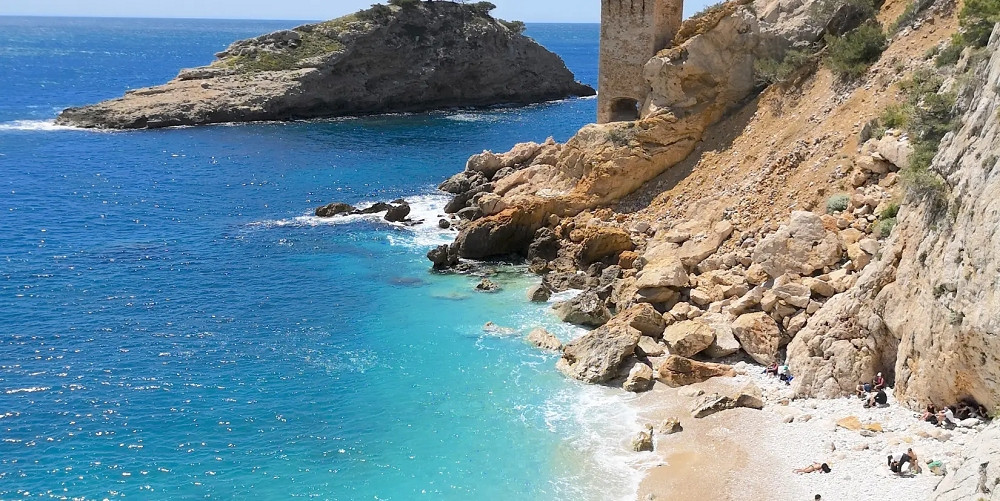

Discover the stunning Lake Sainte-Croix in the Verdon
The turquoise waters of Lake Sainte-Croix have become one of the iconic images of Provence.

Situated between the Alpes de Haute-Provence and the Var, at the heart of the Verdon Regional Nature Park, this 2,200-hectare lake offers landscapes of rare beauty and crystal-clear waters. It is here that the Verdon unfolds beyond the gorges, in almost total silence — combustion engines are banned here.
Swimming in fresh water at 24°C in summer, kayaking at the entrance to the gorges, a quiet cruise on an electric boat, and unspoilt beaches accessible on foot beneath the oak trees: Lake Sainte-Croix has everything you could wish for when you really want to get away from it all. A complete circuit of the lake is around sixty kilometres, passing through the villages of Sainte-Croix-du-Verdon, Les Salles-sur-Verdon and Bauduen — all perfect spots to stop, take a dip, or simply take in the views. This guide takes you to the shores of one of the most beautiful lakes in the world.

Where can you go for a swim at Lake Sainte-Croix?
Swimming is what most visitors come here for. And the turquoise waters of Lake Sainte-Croix do not disappoint. The water is calm, with no waves or currents, and its temperature rises to 24–25 °C in the height of summer. You can swim in remarkably clear fresh water, with cliffs and hills as a backdrop.

The busiest beaches are located near the villages of Sainte-Croix-du-Verdon, Les Salles-sur-Verdon and Bauduen. Each has its own atmosphere. The main beach at Sainte-Croix-du-Verdon is within walking distance of the village centre, with a gentle slope into the water in some areas. Ideal for families.
Margaridon Beach, in Les Salles-sur-Verdon, is shaded and has a supervised swimming area. It is the most spacious in the area. The beach at Bauduen, with its white pebbles, is considerably quieter and unspoilt.
Near the Galetas Bridge, the Étoile water sports centre offers breathtaking views of the lake and direct access just a few hundred metres from the Verdon Gorges. It is one of the most spectacular spots on the lake.
For those who prefer peace and quiet, the lake also offers coves accessible on foot via the paths running along the shores on the Aiguines side. These unspoilt beaches have no lifeguards or facilities, but they’re well worth a visit. Make sure you wear sturdy shoes to get down to them.
Activities at Lake Sainte-Croix
Swimming is just the start. Lake Sainte-Croix is, above all, a comprehensive outdoor destination, offering water sports for all levels and tastes.

Pedalos and canoeing and kayaking are particularly popular at the entrance to the Verdon Gorges, from the Galetas Bridge, where you can travel upstream for several hundred metres. It’s an experience in its own right: gliding between cliffs that rise to several hundred metres, on water of an almost unbelievable blue.
Stand-up paddleboarding allows you to explore the shores at your own pace. You can set off to discover the wild coves or the lake’s more secluded corners entirely at your own pace. Mornings are ideal, when the water is still as smooth as a mirror.
Internal combustion engines are strictly prohibited on the lake. Gentle forms of water transport therefore reign supreme: electric boats, sailing, rowing and kayaking. The result is a rare tranquillity for such a popular destination.
For those wishing to learn, the Voile et Nautisme association offers sailing and rowing courses during the school holidays. Water sports tourism is well organised around the lake, with several centres and boat hire companies. There’s no need to bring your own equipment.
The most beautiful views of the lake
Lake Sainte-Croix is as much a place to admire as it is to enjoy. From the surrounding hills, the panoramic views are breathtaking — and some of the viewpoints are among the most beautiful in the whole of Provence.

The Col d’Illoire, the first vantage point as you approach from the Var side via Aiguines, offers a panorama combining the emerald waters of the Verdon below with, in the distance, the blue of the lavender fields on the Valensole plateau. The late-afternoon light here is particularly beautiful.
The Galetas Bridge also offers an iconic view of the junction between the gorges and the lake — an easily accessible spot from which you can see both the cliffs and the pedalos venturing beneath the rock faces. It is the meeting point between two worlds.
The viewpoint above Aiguines offers a 180-degree panorama of the Chabassole peninsula. For hikers, the Plein Voir viewpoints trail covers 9.85 km with an elevation gain of 804 metres, featuring two successive viewpoints and breathtaking views of the lake and the Provençal forests.
The Col d’Illoire viewpoint, high above the water, is perfect for taking in the whole of the lake at a single glance. In the early morning, the white cliffs are reflected in the calm water — a moment that few visitors take the time to experience, yet one that remains etched in the memory.
What is the surface area of Lake Sainte-Croix?
Lake Sainte-Croix is a large-scale artificial lake. It covers an area of approximately 22 km², or 2,200 hectares, with a storage capacity of nearly 760 million m³ of water. The lake stretches for around 10 to 11 kilometres in length.

This reservoir is the fourth largest in mainland France by surface area, after Lake Der-Chantecoq, Lake Serre-Ponçon and Lake d’Orient. This ranking gives an idea of the scale of the site.
The dam is approximately 95 metres high and over 130 metres long at its crest. It also houses a hydroelectric power station. Its construction between 1971 and 1974 profoundly transformed the landscape of the Verdon Valley.
The villages of Sainte-Croix and Bauduen were saved from being submerged. Les Salles-sur-Verdon, on the other hand, was the only village doomed to be submerged. The new village was rebuilt higher up, on the plateau. The old one still lies beneath the turquoise waters.
When is the best time to visit Lake Sainte-Croix?
Lake Sainte-Croix can be visited all year round, but each season offers a different experience. It all depends on what you’re looking for.

uly and August are the peak season. The water reaches 24–25 °C, swimming is comfortable, and the beaches come alive. It’s the ideal time to enjoy water sports and the Provençal atmosphere. The downside is that it gets very busy, car parks fill up quickly, and it’s best to arrive early in the morning.
June is a very good alternative. The days are long, the light is superb, and the lake is significantly less crowded than in peak season. Water sports providers are open, the beaches are accessible, without the pressure of July and August.
September remains the best compromise: the water is still warm, there’s autumnal light, and there are fewer visitors. It’s also the time of year when the gorges and lakeshores begin to take on golden hues. Photographers know this all too well.
In spring, between April and May, the lake regains its colours after winter. Nature is in bloom, the water is still a bit too cool for swimming, but the viewpoints and walking trails are accessible and deserted. An ideal time to explore the region on foot or by car.
The charming villages around the lake
Lake Sainte-Croix is surrounded by villages, each of which is well worth a stop. Six villages lie around the lake: Aiguines, Bauduen, Sainte-Croix-du-Verdon, Les Salles-sur-Verdon, Baudinard-sur-Verdon and Moustiers-Sainte-Marie. Each has its own character, atmosphere and way of life by the water’s edge.
Aiguines is perched at 821 metres on a rocky outcrop at the southern end of the lake. The village overlooks the lake on one side and the ridges of the gorges on the other. It is a strategic base from which to explore the region. Its castle with its colourful roofs and its woodturners’ museum also make it a destination in its own right.

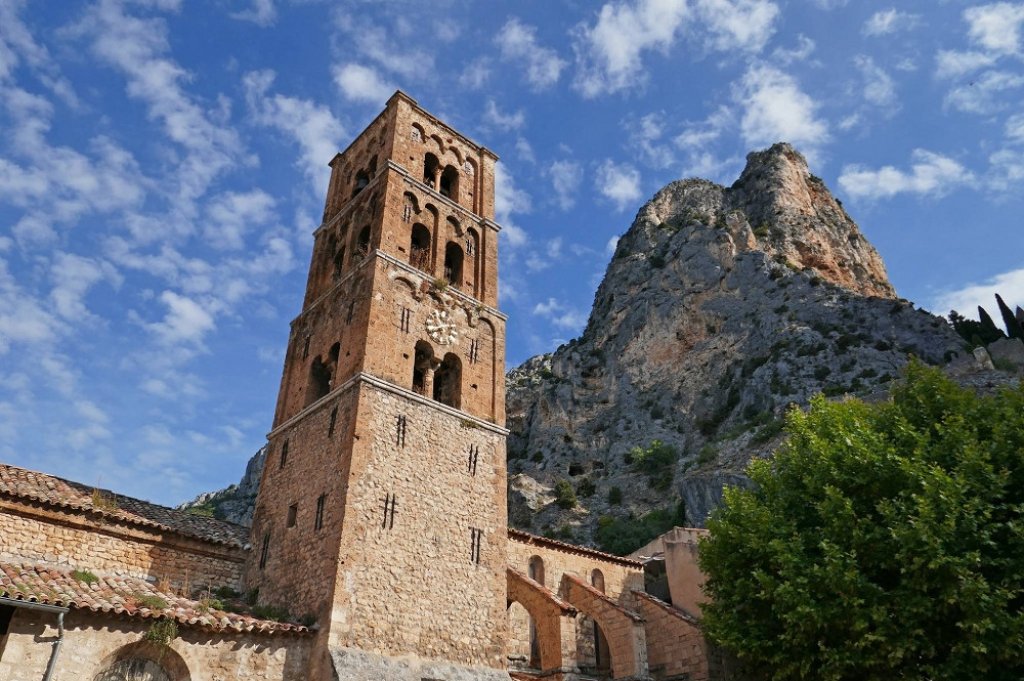
Moustiers-Sainte-Marie is listed as one of the most beautiful villages in France. World-renowned for its earthenware, it is dominated by a golden star suspended between limestone cliffs. The village is just a stone’s throw from the lake and stands out for its distinctly Provençal and lively character. Allow half a day to explore it.
Bauduen clings to its hillside on the southern shore of the lake. A quiet village, less crowded than its neighbours, it offers direct access to the water and a more unspoilt atmosphere.

Les Salles-sur-Verdon, which was rebuilt after the dam was filled, boasts the lake’s most spacious beaches.
How do you get to Lake Sainte-Croix?
There is no convenient public transport service to Lake Sainte-Croix. A car remains the most efficient way to make the most of your visit. The site is about 1½ hours from Marseille, Toulon or Manosque. Here is a map to help you locate the access roads and nearby villages:
Depending on your starting point, there are several routes to the lake. From Aix-en-Provence or Marseille, take the road via Manosque then Riez towards Moustiers-Sainte-Marie. From the Var coast, head north via Draguignan and Aups towards Les Salles-sur-Verdon or Bauduen.
For the Galetas Bridge and the entrance to the gorges, a car park (subject to a charge in summer) is available on site, costing around €5 per day. A small free car park is located 500 metres before the bridge. In July and August, it’s best to arrive before 10.00 to find a space.
On the Sainte-Croix-du-Verdon side, car parks are available near the village, though they get busier in high season. The villages of Bauduen and Les Salles-sur-Verdon also have car parks close to the beaches.
A complete drive round the lake is about 60 kilometres and takes an hour — not including stops, of which there will be plenty. It’s a route worth doing at least once to get a sense of the scale of the area and spot your favourite spots before settling in.