
All our tips for seeing lavender in Provence
The lavender fields of Provence are a must-see at the beginning of summer in our beautiful region! Tourists from all over the world come to photograph it and enjoy its beauty and fragrance. In this article, we will reveal everything you need to know about lavender in Provence: flowering period, best locations, estates to visit, and more.

You'll discover the most beautiful sites for viewing lavender on the Valensole plateau in the Alpes de Haute-Provence, in the Drôme Provençale around Grignan, and in the Luberon near Sault. These three lavender routes offer panoramic views as far as the eye can see, distilleries to visit, and authentic hilltop villages. You can also enjoy the lavender festivals held in July in several towns. Fine lavender essential oil has a protected designation of origin that guarantees its quality.
Photographing lavender in full bloom is a unique experience. The purple fields stretch out under the Provençal sun with Mont Ventoux in the background. You will learn to distinguish true lavender from lavandin in the fields. The two aromatic plants do not grow at the same altitudes and do not produce the same quality of essential oil.
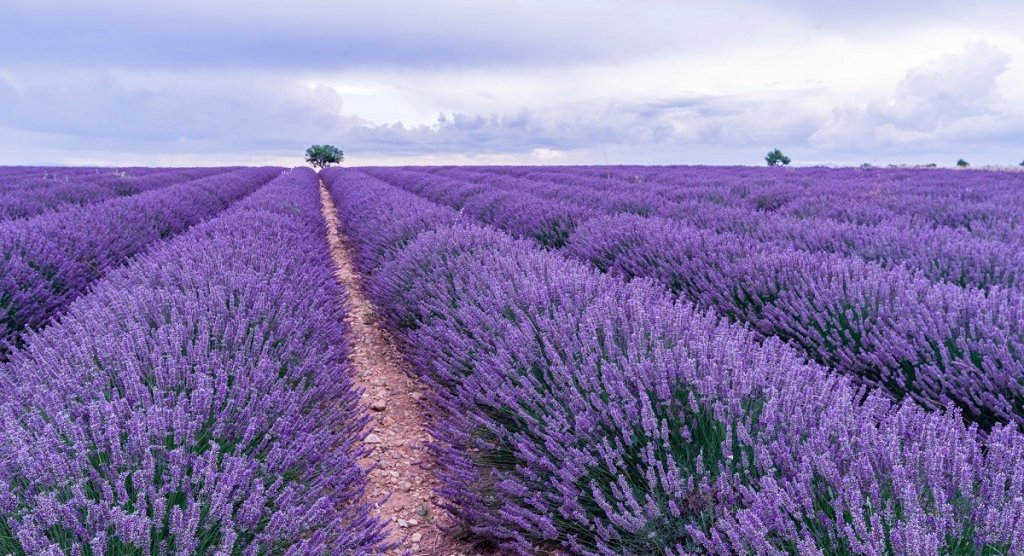
The ancestral cultivation of lavender has shaped the landscapes of Provence for centuries. You will discover how this Mediterranean plant conquered the high plateaus. Lavender growers perpetuate traditional skills from harvesting to distillation. Villages such as Valensole, Sault, and Forcalquier organize traditional festivals to celebrate the little blue flower.
You will also explore the uses of lavender in aromatherapy and cosmetics. Lavender honey, derivative products, and the virtues of this emblematic plant will hold no more secrets for you. The lavender routes will guide you to the most beautiful places to admire this fleeting spectacle and discover the authenticity of the land of lavender.
A lavender farm worth visiting: Terre Ugo
If you’d like to visit a beautiful lavender farm, we recommend an organic lavender farm located near Aix-en-Provence: Terre Ugo. Four hectares of flowers stretching as far as the eye can see, a captivating fragrance, and the buzzing of bees in the warm summer air: here, the Provence you’ve always imagined truly exists. The farm welcomes visitors from June 1 to August 31, with easy access by car or bus, and free on-site parking.

When to see the lavender in bloom?
The lavender flowering season in Provence runs from mid-June to the end of July. You'll enjoy the most impressive spectacle in early July, when the fields are at their peak. Global warming is gradually advancing these dates by a few days each year.

Flowering varies depending on the altitude and location of the fields. In the plains around Grignan or Tricastin in the Drôme Provençale, lavandin blooms from mid-June. Higher altitude areas such as Sault or the Albion plateau offer lavender in bloom until the end of July or even early August.
On the Valensole plateau, you will see lavender in bloom from mid-June to mid-July. Harvesting generally begins around July 20 in this area. In the Luberon, the fields on the high plateau are harvested around July 15. The Forcalquier and Digne areas keep their flowers until early August.
Weather conditions have a significant impact on these dates. A very hot, dry period can bring the lavender harvest forward by several days. Conversely, thunderstorms can delay cutting. Check the exact dates with the tourist offices before your visit.
For the best conditions for photographing lavender, come in early July. You'll avoid the school vacation crowds by visiting during the first week of the month. The morning or late afternoon light enhances the purple fields. Lavender growers begin harvesting in mid-July to preserve the quality of the essential oil.

Tip: if you arrive too late and the lavender has just been cut, Try to find fields at higher altitudes. Harvesting takes place a few weeks later there.
Activities around lavender in Provence
Lavender offers you much more than just fields to photograph. You will enjoy authentic experiences by meeting the producers and discovering their expertise. Here are the must-do activities to make the most of your stay in the land of lavender.
Stroll through the lavender fields:
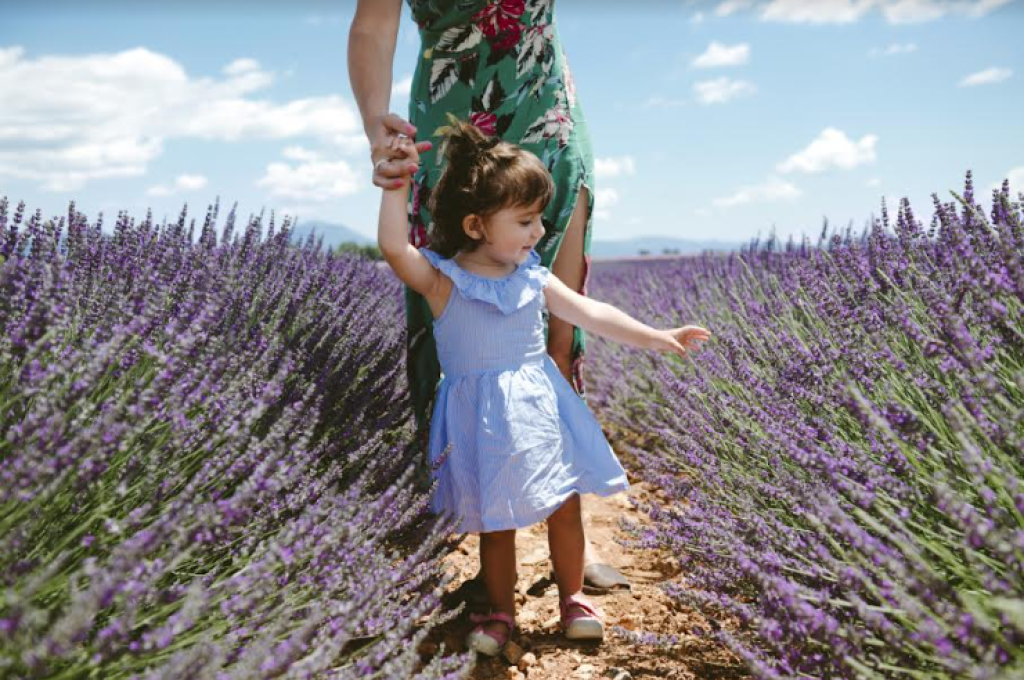
You can wander freely among the rows of flowering lavender. Some estates welcome visitors from June to August to explore their plantations. Educational trails explain the cultivation and benefits of the plant. Some estates offer glasses of champagne to celebrate the event.
Visit traditional distilleries:
You can watch freshly cut lavender being distilled in copper stills. Producers explain how essential oil is extracted and the differences between fine lavender and lavandin. In Sault, Valensole, or Forcalquier, guided tours introduce you to old tools and anecdotes about the Provençal countryside.
Take part in creative workshops:
You will make your own scented soaps or dried lavender sachets. The spindle workshops perpetuate traditional Provençal techniques. These activities are suitable for both children and adults. You will leave with your handmade creations.
Taste local products:
You'll sample lavender honey, artisanal ice cream, and scented cookies. Picnic baskets filled with local products await you in the heart of the fields. You'll enjoy a glass of Provence rosé while watching the sun set over the purple fields.
Enjoy summer evenings:
Enjoy outdoor aperitifs with Provençal tapas, organic wines, and live music in the heart of the fields. Summer banquets under the stars offer country dinners prepared by guest chefs. On Friday evenings, watch the sunset with a gourmet picnic in a magical atmosphere.
Attend the lavender festivals:
You'll discover traditional parades and craft markets. The Valensole festival in early July features live distillations and folk dances. The Digne-les-Bains parade in late July features decorated floats. These events immerse you in authentic Provençal culture.
Cycling through the fields:
You can cycle along the lavender roads across the Valensole plateau, the Luberon, and the Drôme Provençale. Some estates offer electric bike rentals. You can combine sport, nature, and exploring hilltop villages at your own pace.
Take part in a professional photo shoot:
Immortalize your visit with a local photographer at sunrise or sunset. These sessions capture the best light for exceptional visual memories. Couples, families, and groups of friends leave with memorable images of their Provençal experience.
Which villages to visit in Provence?
The villages of Provence offer exceptional views of the lavender fields. You will discover authentic villages perched on their hills. Each village has its own special charm and traditions surrounding the little blue flower.

Here are the main villages for viewing lavender, listed by department. Click on the name of the village for more information (maps, things to visit, accommodation, etc.).
Drôme Provençale:
Grignan - a hilltop village dominated by its Renaissance castle, surrounded by fields of lavandin
Montbrun-les-Bains - a spa resort nestled at the foot of Mont Ventoux with its medieval streets
Vinsobres - a wine-growing village offering panoramic views of the high-altitude lavender fields
Alpes-de-Haute-Provence:
Valensole - the lavender capital in the heart of the plateau, organizer of the lavender festival in July

Forcalquier - medieval town with its Provençal market and traditional distilleries
Digne-les-Bains - spa town hosting the famous Corso de la Lavande parade in early August
Vaucluse

Apt - capital of the Luberon with its lavender market every Saturday
Bouches-du-Rhône:
Aix-en-Provence - city of art with lavender fields just a few minutes from the center
Saint-Rémy-de-Provence - Provençal town at the foot of the Alpilles mountains, surrounded by aromatic crops
Les Baux-de-Provence - spectacular hilltop village overlooking the lavender valleys
Var:
Tourtour - hilltop village nicknamed the village in the sky, with its fine lavender crops
Aups - truffle capital in the heart of the Haut-Var, surrounded by aromatic fields
Cotignac - troglodytic village nestled in a preserved natural setting
Alpes-Maritimes:
Grasse - world capital of perfume, developing lavender cultivation since the 19th century
Gourdon - a vertiginous hilltop village offering exceptional panoramic views
Saint-Vallier-de-Thiey - gateway to the Caussols plateau and its wild lavender fields
Hautes-Alpes
Rosans - village in the Buëch valley in the heart of the Baronnies Provençales
Lagrand - small village surrounded by high-altitude lavender fields
Laragne-Montéglin - southern gateway to the Hautes-Alpes on the lavender routes
These hilltop villages organize markets and traditional festivals during the season. You can meet local producers and discover their expertise. Tourist offices offer tours connecting these different sites so you can enjoy the lavender routes.
The history of lavender in Provence
The history of lavender in Provence dates back to ancient times. The Romans used this aromatic plant to perfume their baths and treat their ailments. They appreciated its medicinal properties and delicate fragrance. Wild lavender grew naturally in the mountains of Provence long before any organized cultivation.

The ancestral cultivation of lavender really took off in the Middle Ages. Monks grew the plant in abbeys to make remedies and perfumes. Sénanque Abbey has been continuing this tradition since the 12th century. Farmers also harvested wild lavender in the hills to sell at markets.
In the 19th century, the boom in perfumery in Grasse transformed this artisanal activity into a veritable industry. Perfumers sought out essential oil from Haute-Provence lavender for its exceptional quality. The first lavender growers planted entire fields on the high plateaus. Fine lavender quickly became the region's blue gold.
Today, lavender cultivation shapes the Provençal landscape in a unique way. The purple expanses of the Valensole plateau and the Sault region attract visitors from all over the world. A project to have these iconic landscapes listed as a UNESCO World Heritage Site is underway. This recognition would highlight the traditional expertise of producers and the cultural identity of Provence.
Types of lavender grown in Provence
There are three main varieties of lavender in Provence. Each type has its own characteristics and specific uses. Distinguishing between these plants will help you better understand the landscapes you discover.

Fine lavender, also known as true lavender, is the most noble variety. Its scientific name is Lavandula angustifolia. It grows naturally at altitudes between 600 and 1,500 meters. This plant produces the highest quality essential oil, which is highly sought after in perfumery and aromatherapy. You can recognize it by its short spikes and delicate fragrance.
Spiked lavender grows at lower altitudes than fine lavender. This variety contains camphor in its essential oil. It is not widely cultivated in Provence. Producers mainly use it for its healing properties.
Lavandin de Provence now dominates Provençal crops. This natural hybrid is the result of a cross between fine lavender and spike lavender. It accounts for around 90% of the area cultivated in the region. Lavandin produces three times more essential oil than true lavender. Its spikes are larger and its more camphorated fragrance is suitable for soap making.
The main varieties of lavandin bear names such as Grosso, Abrial, and Super. Grosso dominates the plantations on the Valensole plateau.
Your questions about lavender in Provence
You have sent us several questions about lavender. Here are our answers to your most frequently asked questions: