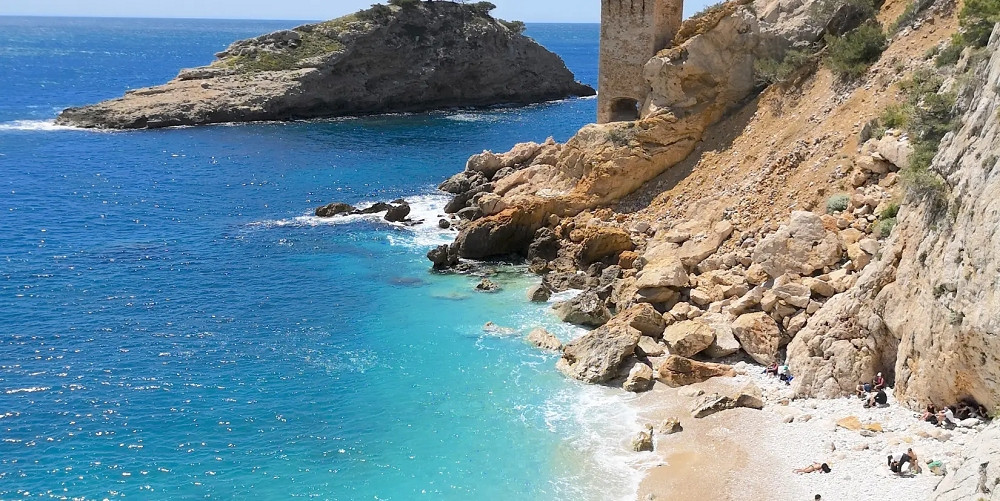

Discover the stunning lakes of the Verdon
The Verdon is home to some of the most beautiful lakes in France: Castillon, Chaudanne, Sainte-Croix, Montpezat, Quinson and Esparron-de-Verdon.

These stretches of turquoise water lie in the heart of the Alpes de Haute-Provence and the Var, nestled between wild gorges and sleepy Provençal villages basking in the sunshine. Lake Sainte-Croix covers 2,200 hectares of unspoilt nature. Each lake has its own character, atmosphere and secrets.
Kayaking, stand-up paddleboarding, electric boats, hiking, swimming in crystal-clear water: the Verdon lakes cater to every kind of holiday.
Whether you’re planning a family holiday, a sporting getaway or an immersion in the heart of nature, this guide gives you everything you need to choose your lake, organise your itinerary and enjoy an unforgettable experience in one of Provence’s most spectacular regions.
Lakes to discover
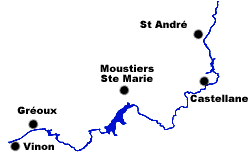
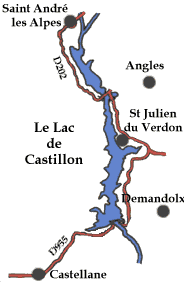
Map of the Verdon Lakes
Our interactive maps of the Verdon Lakes will guide you to the most beautiful villages to visit during your holiday in the Verdon Lakes region. You’ll also find suggestions for hotels, campsites and holiday rentals.
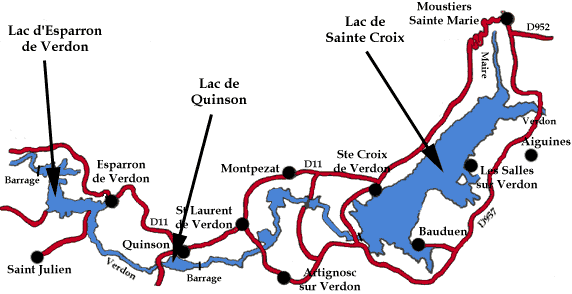
Lake Sainte-Croix: the undisputed star of the Verdon
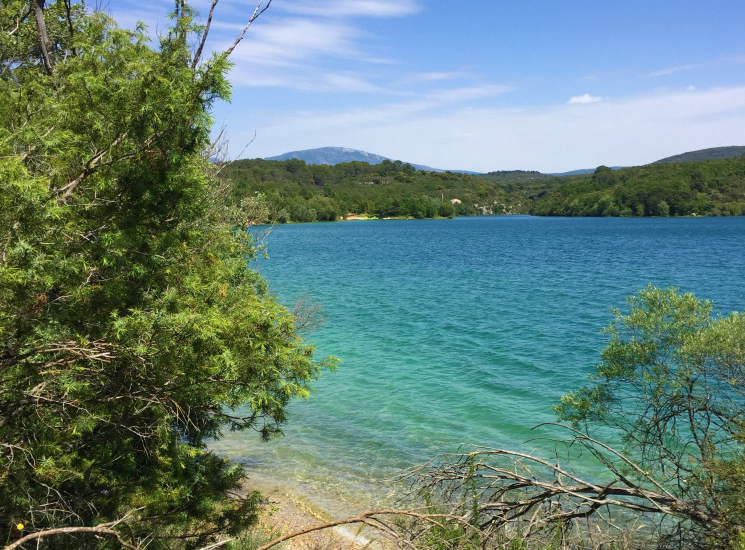
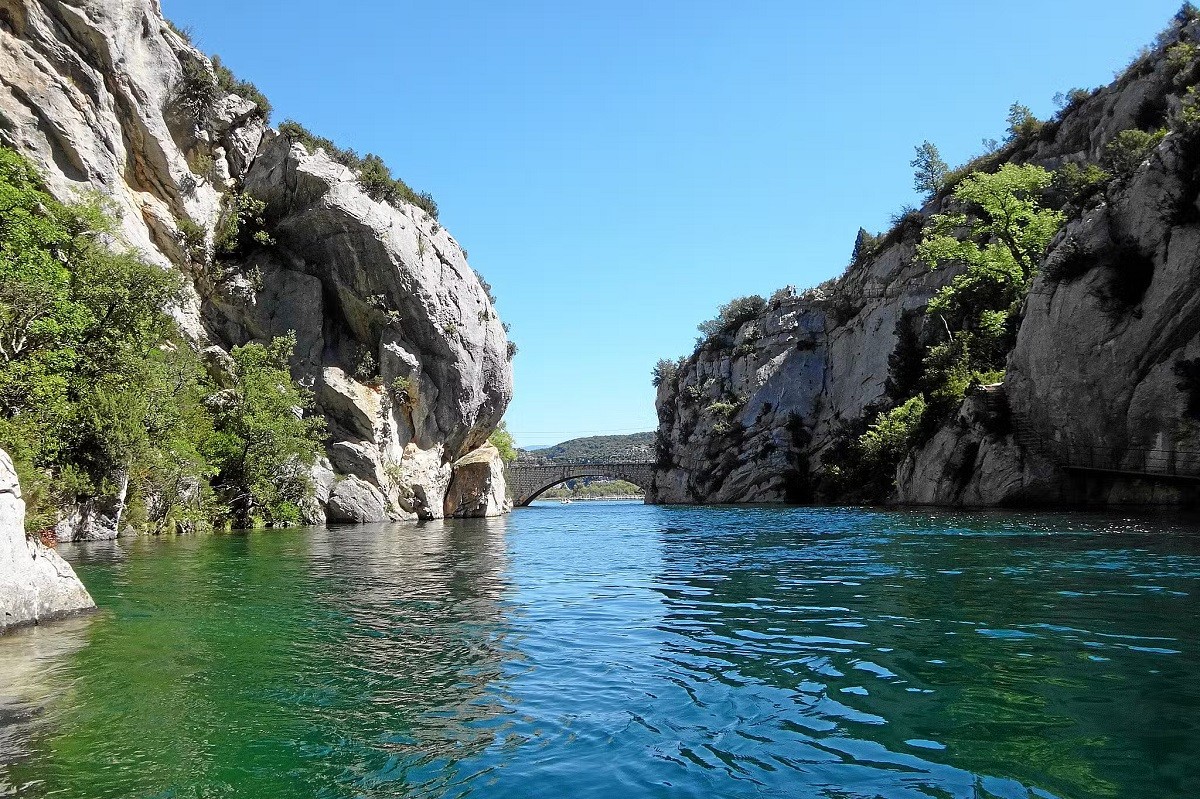
With its 2,200 hectares of turquoise waters, Lake Sainte-Croix is the largest lake in the Verdon Regional Nature Park.

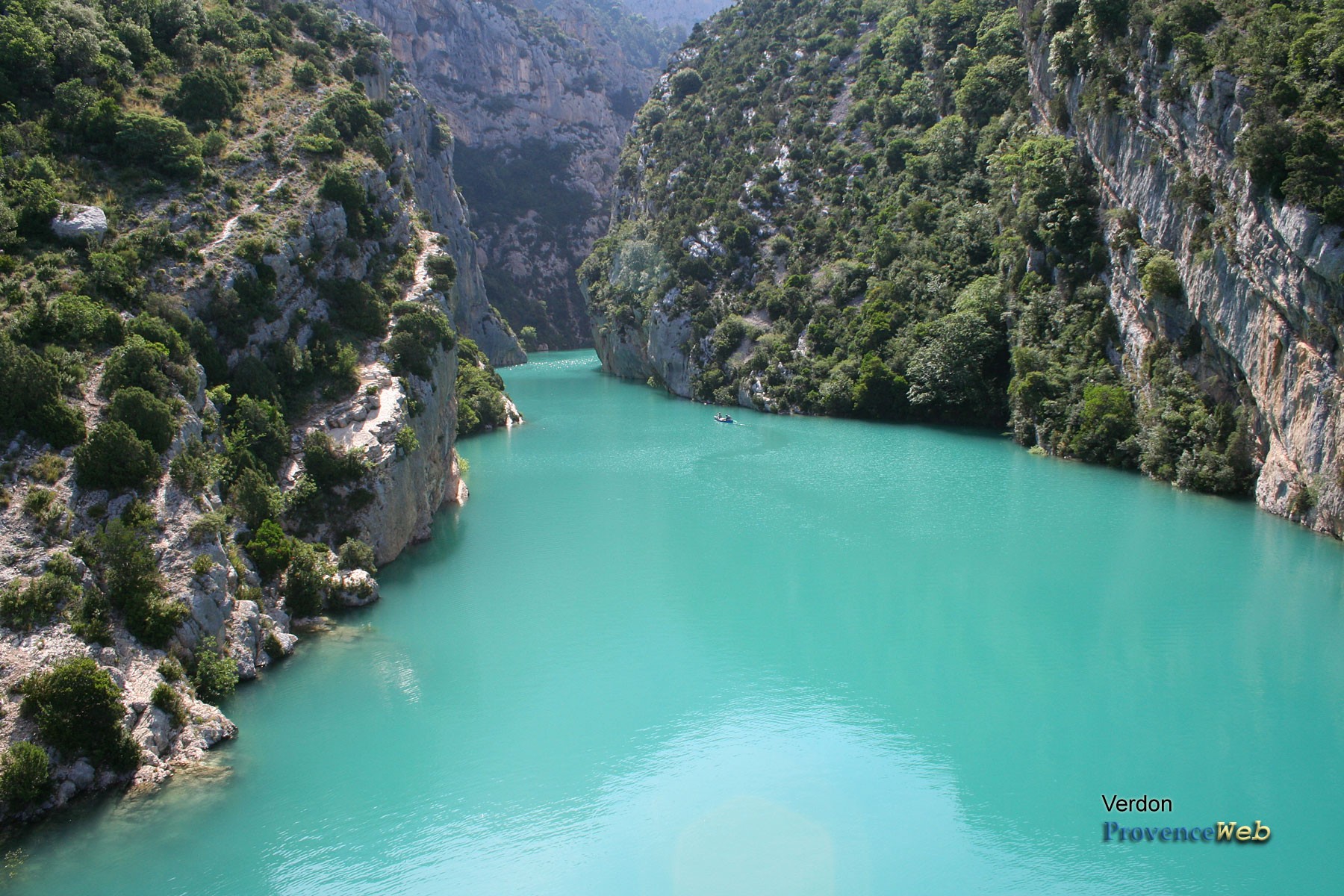
It stretches along the border between the Alpes-de-Haute-Provence and the Var, at the foot of the gorges and a stone’s throw from Moustiers-Sainte-Marie. The must-do: explore the gorges from the Galetas bridge by kayak, pedalo or electric boat. The water reaches 22 to 25 °C in July and August, with no jellyfish or dangerous currents. Perfect for families, but best avoided in the middle of the afternoon during peak season: the beaches get very crowded.
Lake Castillon: the Verdon in the mountains
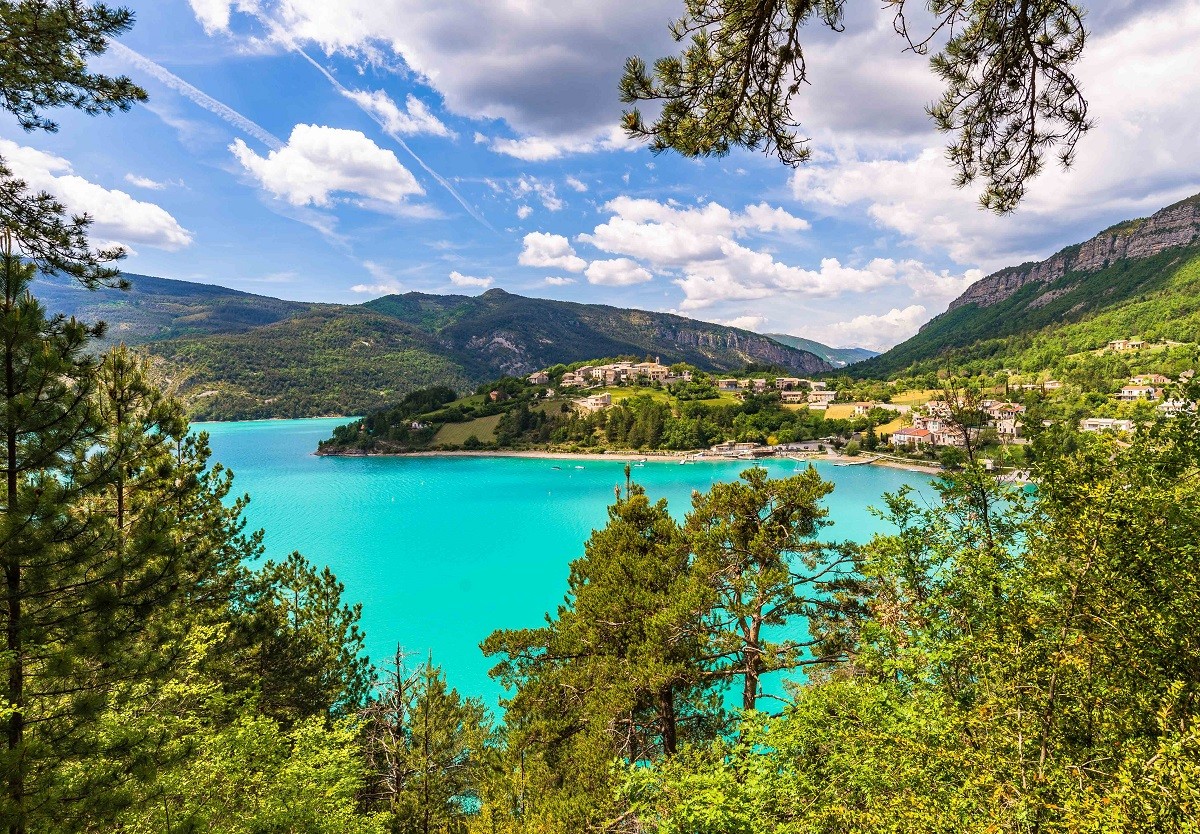
Situated at an altitude of over 880 metres, Lake Castillon covers nearly 500 hectares in an unspoilt mountain setting.

The atmosphere here is cooler and quieter than at Sainte-Croix. Swimming, sailing, water skiing and other water sports are available at three well-equipped and supervised beaches. It is the ideal lake for escaping the crowds whilst enjoying spectacular scenery between the Alps and the Verdon.
Lake Esparron: secret coves and an intimate atmosphere
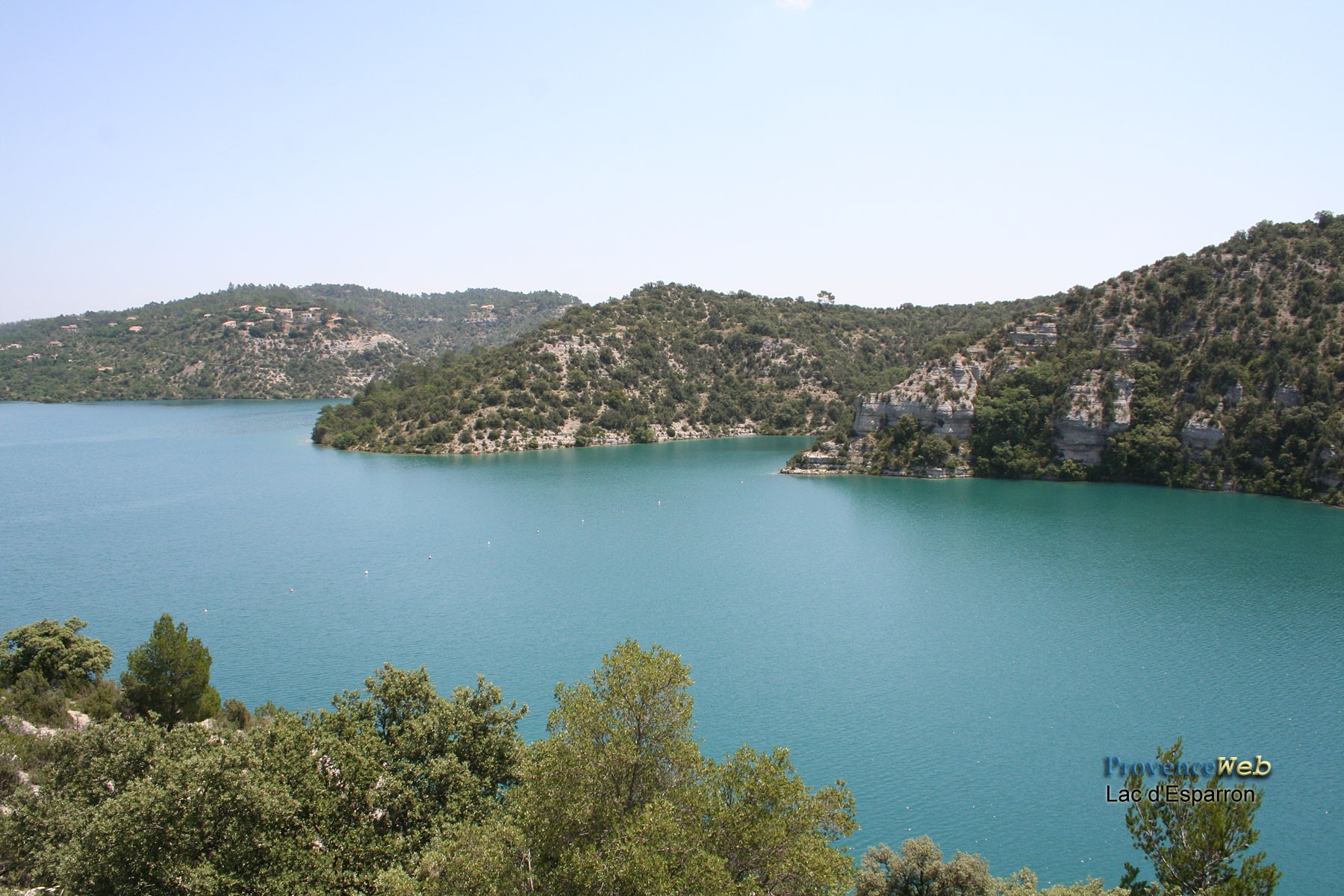
Lake Esparron spans 328 hectares in the Lower Gorges, with secluded coves that are ideal for boat trips or a relaxing day out.

Internal combustion engines are banned here — a decision that preserves the tranquillity and the environment. From the village, you can travel up the Lower Gorges for nearly 10 kilometres by canoe or electric boat, with turquoise waters inviting you to take a dip along the way. A lake for lovers of unspoilt nature.
Lake Quinson: the wildest in the Verdon
Lake Quinson stretches for 11 km between the Baudinard Gorges and the Lower Gorges. It is the least touristy lake in the Verdon, due to its very wild character.
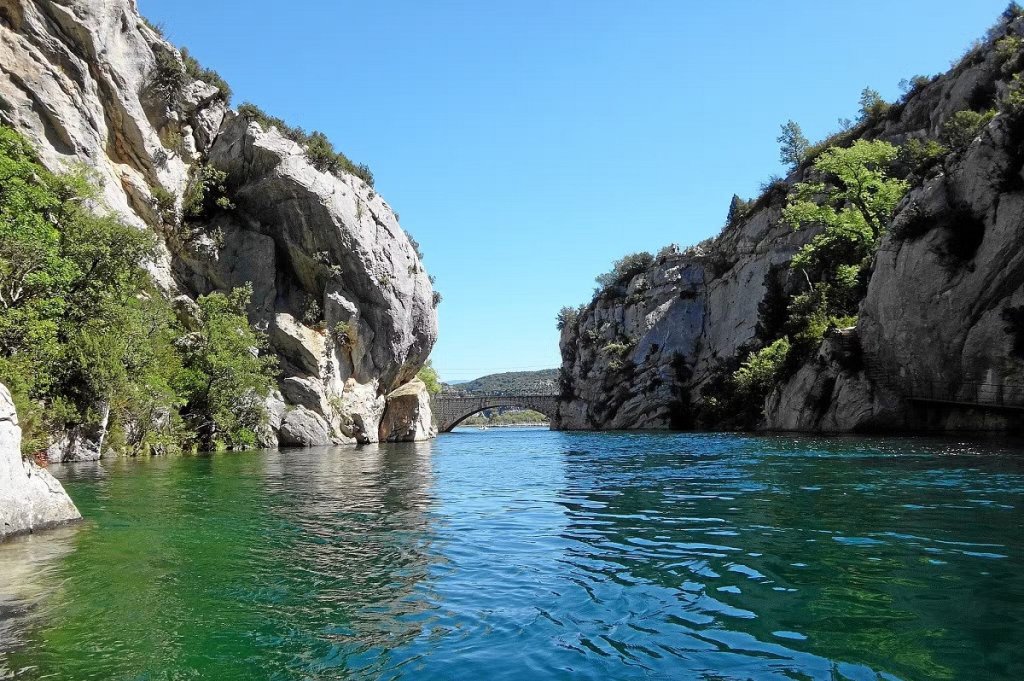
Here, you can paddle a canoe or electric boat amongst limestone cliffs in complete silence. The neighbouring village is home to the Museum of Prehistory, the largest of its kind in Europe. For swimming, head to Artignosc beach just upstream, which is more family-friendly.
Lake Montpezat: the Verdon’s best-kept secret
Tucked away between Sainte-Croix and Quinson, Lake Montpezat is a haven for travellers seeking true seclusion.

Swimming is prohibited here due to strong currents and cold water resurgences. However, canoe trips starting from Montagnac-Montpezat and Saint-Laurent-du-Verdon lead into the Baudinard Gorges, a wild and little-known canyon. It’s the lake you won’t find on postcards — and that’s exactly why it’s worth the trip.
Lake Chaudanne: raw beauty and contemplation
Lake Chaudanne is the most secluded of the Verdon’s lakes. Swimming is prohibited as it feeds a hydroelectric power station, but it is a superb spot for hiking and contemplation. Boating is permitted, but there is no on-site boating centre — you’ll need to bring your own equipment. The power station offers guided tours in July and August, subject to booking. Chaudanne is not your typical holiday lake. It is a lake to be admired, for those who wish to see the Verdon from a perspective known to very few travellers.
Your questions about the lakes
You have sent us several questions following the publication of this article. Here are our answers to your most frequently asked questions.