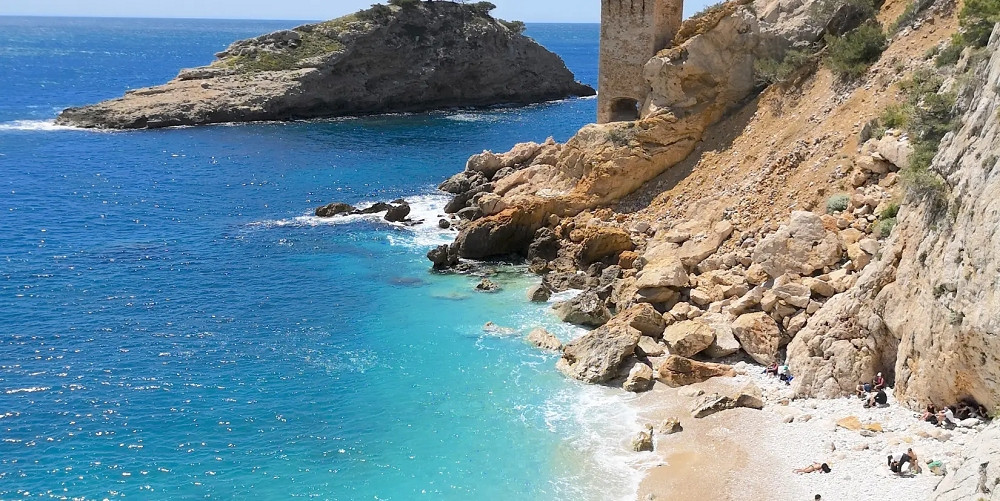

Discover the stunning Quinson Lke in the Verdon
Quinson Lake is the Verdon without the crowds. Less well-known than Lac de Sainte-Croix, this magnificent reservoir—created in 1967—covers 160 hectares on the border between the Var and the Alpes-de-Haute-Provence departements.
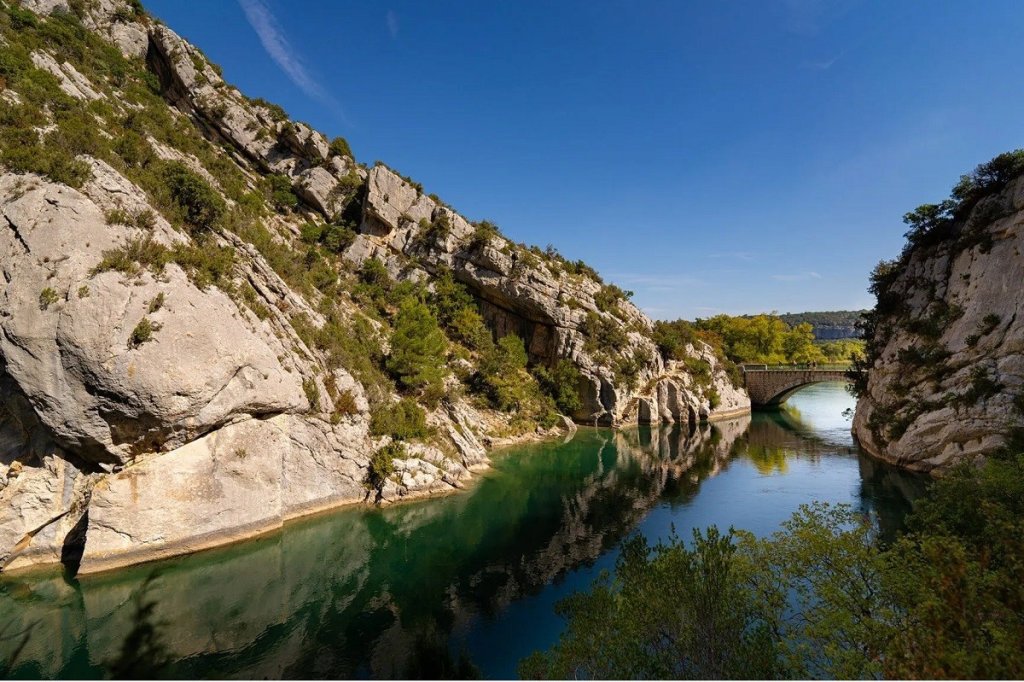
It is part of a series of small, wild lakes that stretch for 11 km, between the Baudinard Gorges upstream and the Lower Verdon Gorges downstream.
Looking to go for a swim? Swimming is prohibited in the lake itself, but it is still possible downstream from the dam, near the Quinson Bridge. Instead, there are other ways to explore the water here: by canoe, kayak, stand-up paddleboard, or aboard an electric boat from the water sports center.
Internal-combustion engines are prohibited on the lake, which has allowed it to retain its rare wild character. Nine kilometers of gorges to explore in silence, with the Verdon cliffs gently closing in above you.
On land, the village of Quinson is home to Europe’s largest prehistory museum, featuring a reconstructed prehistoric village on the riverbank. It is this blend—untamed nature, accessible water activities, and ancient history—that makes this site a truly unique destination in Provence.
Activities at Lake Quinson
Lake Quinson is, above all, a playground for water sports enthusiasts. Gas-powered boats are prohibited on the lake, but there are still plenty of water activities to enjoy: pedal boats, canoeing and kayaking, stand-up paddleboarding, and electric boat rentals.
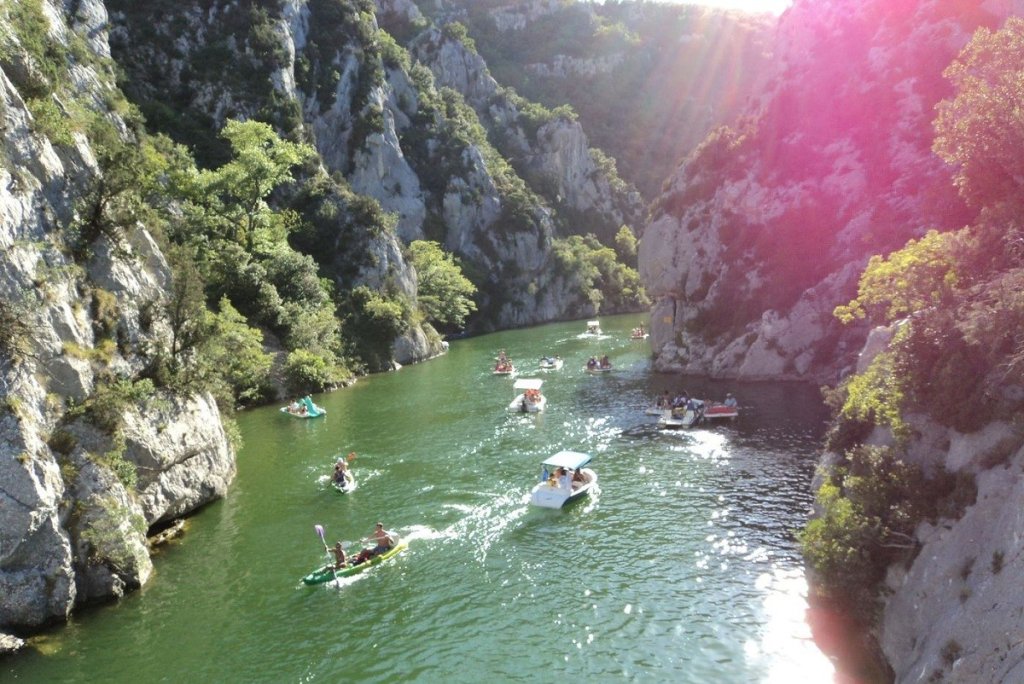
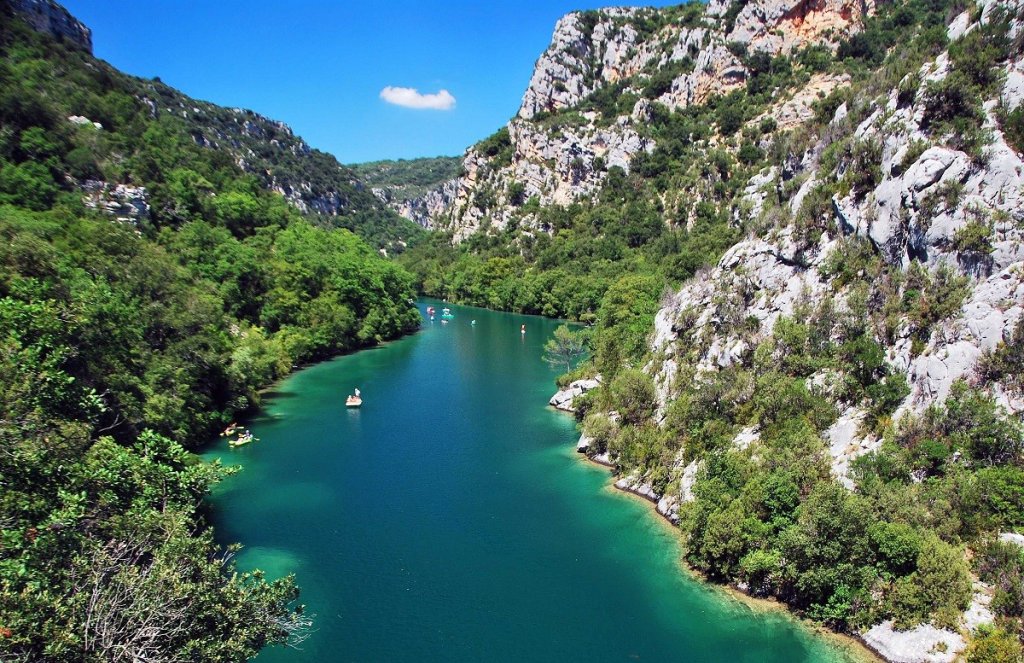
The Quinson water sports center is the starting point for all these adventures. From the lake, you can explore the Lower Verdon Gorges along 9 km of emerald-green waters, surrounded by prehistoric sites and protected natural areas. Several providers offer boats suitable for all skill levels, from families with children to seasoned water sports enthusiasts.
On average, it takes 3 hours for a round trip by electric boat, 4 hours by canoe or kayak, and 5 hours by pedal boat to reach the end of the gorges. Departures from Esparron-de-Verdon also allow you to travel up the gorges in the opposite direction, making the return trip easier with the current.
Prices for 2025 are as follows: canoes between €10 and €55, pedal boats between €20 and €85, electric boats between €40 and €117, and stand-up paddleboards between €10 and €35, depending on the duration. Be sure to book in advance during peak season—boats fill up quickly.
Where can you swim at Lake Quinson?
This question comes up often, so let’s answer it right away. You can’t actually swim in Lake Quinson itself. However, there are picnic areas and hiking trails along its shores.
The water flowing into the reservoir comes from the bottom of Lake Sainte-Croix, where it remains cold—around 8°C—even in summer. There is a real risk of hypothermia. The slippery banks and muddy bottom also make access dangerous. It is not a beach lake in the traditional sense.
However, there are alternatives nearby. Swimming is still possible downstream from the dam, near the Quinson Bridge. On the Montmeyan side, a developed beach welcomes swimmers, with paid parking by the lake at €5 per day, or free parking 250 meters away next to the restaurant Les Berges du Lac.
For a day trip around the lake, this spot on the Montmeyan side is the perfect place for a lunch break or a family picnic. The water is there, and so is the scenery—even without a diving board.
Hiking trails around the lake
Lake Quinson can also be explored on foot. And the route you won’t want to miss is the canal keeper’s trail. It’s an easy hike, accessible to everyone, that runs alongside the turquoise waters of the Lower Verdon Gorges for up to 9 km round trip. You can adjust the duration to suit your preferences, from 30 minutes to 3 hours and 30 minutes. The trail starts at the Prehistory Museum parking lot, and it’s free.
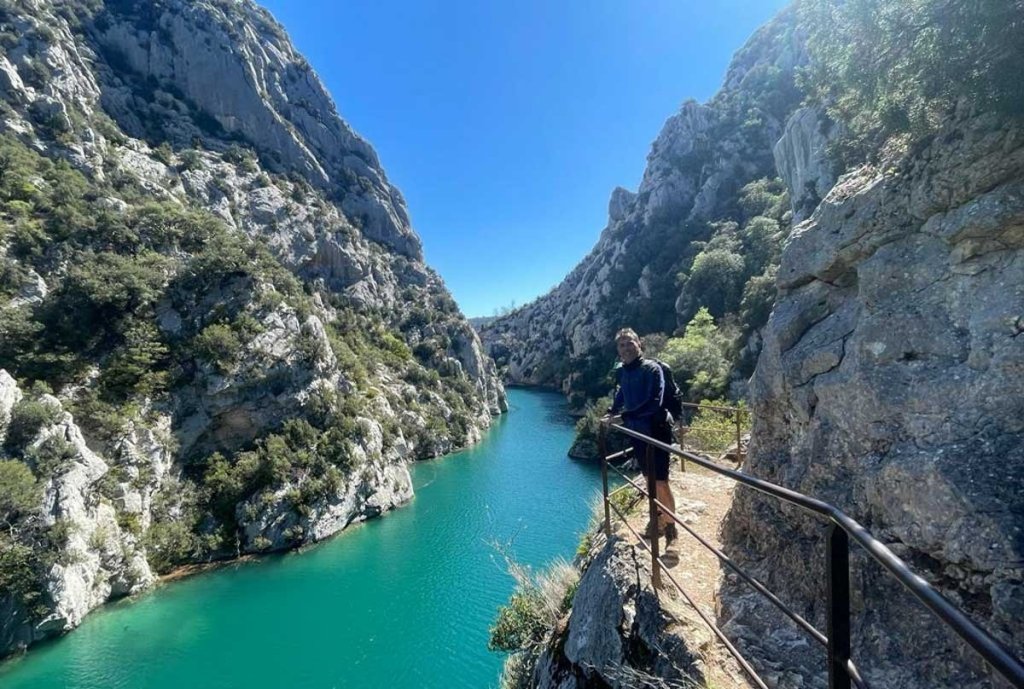
From the parking lot, head toward the water sports center and the banks of the Verdon, then cross the bridge to reach the trailhead, located 50 meters away. The trail climbs to the right, leads to a first lookout point, descends back to the water’s edge, and then follows the Verdon River and the old canal for 1.5 km.
This trail follows the old irrigation canal dug between 1865 and 1875, which carried water from the Verdon to the Aix-en-Provence reservoir. The route is remarkable for its scenery and biodiversity. On a calm summer morning, it’s not uncommon to spot a golden eagle in the sky.
Stunning views of the lake begin right from the very start of the trail. If you plan to walk all the way to the Sainte-Maxime Chapel, be sure to bring a flashlight: the path passes through a damp tunnel that can sometimes be flooded after bad weather. Dogs are not allowed on this trail—even on a leash—to protect the local wildlife.
The History of Lake Quinson
Lake Quinson hasn’t always existed. It was the Gréoux Dam on the Verdon River—which began operating in 1967 more than 13 kilometers downstream—that created this reservoir. Before that, the Verdon flowed freely through the gorges.
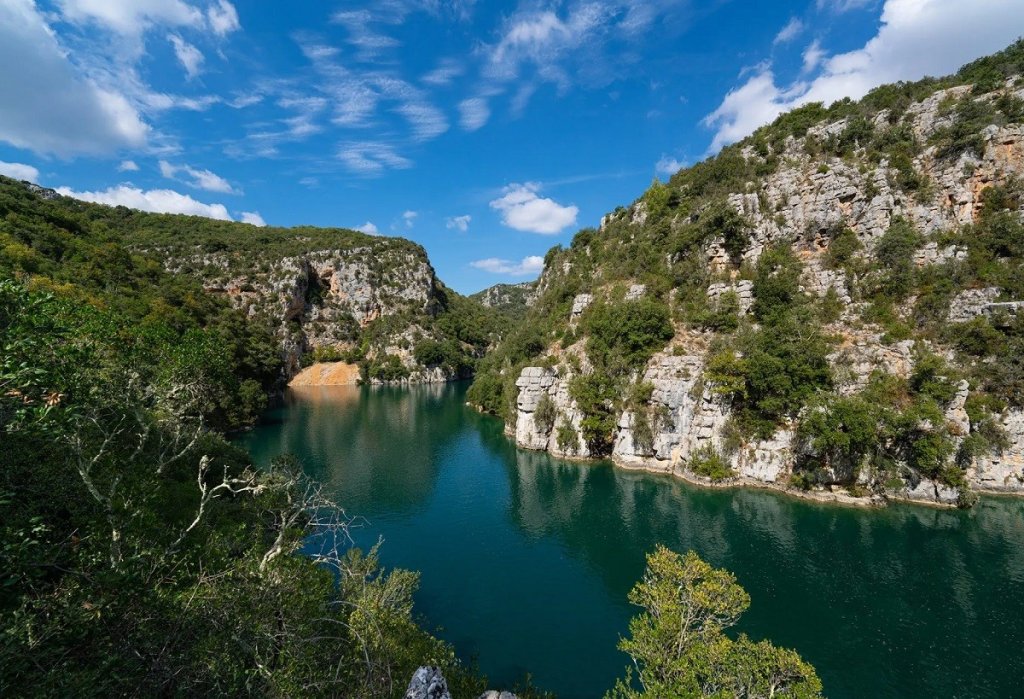
But the site’s history goes back much further. The area has been known and inhabited since prehistoric times. Excavations in the Baume-Bonne cave have uncovered numerous prehistoric artifacts, now preserved at the Quinson Museum.
The village of Quinson itself is rich in history. In Roman times, it was located on the rocky outcrop overlooking the valley and the Verdon River. The present-day village is surrounded by a fortified wall, with five towers still visible today. It was in the 15th century that the inhabitants settled on the plain.
The Quinson Dam is a 44.5-meter-high arch dam operated by EDF. It is 122.6 meters long, and the reservoir’s volume is 19,500 thousands of cubic meters. It is an unassuming yet pivotal structure for the entire region. The creation of the lake in 1967 also directly contributed to the development of outdoor tourism in the Verdon Gorges.
How deep is Lake Quinson?
This is a practical question often asked by swimmers and divers. The answer is clear: Lake Quinson has a maximum depth of 50 meters and covers an area of 160 hectares.
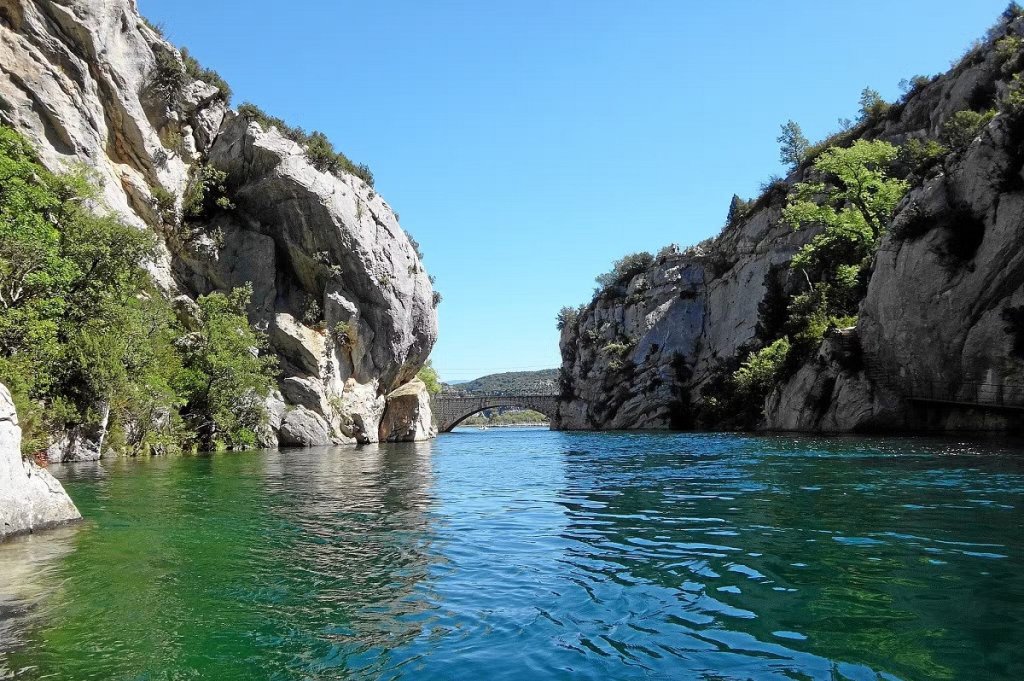
This reservoir stretches 11 km between the lower reaches of the Baudinard Gorges and the Lower Gorges—which are actually a series of small, wild lakes interspersed by the Quinson Dam: Lake Montpezat, Lake Artignosc, and Lake Quinson itself.
These physical characteristics have direct implications for safety. The turbines at the Sainte-Croix and Quinson dams can start up automatically at any time, depending on the management of the power grid, creating currents that can pose a danger to boats and swimmers.
Scuba diving and free diving are prohibited due to the turbidity of the water. The lake is beautiful, deep, and wild—precisely because it hasn’t been developed for public swimming. Keep this in mind before venturing outside the authorized areas.
The best views of the lake
To enjoy the most beautiful panoramic views of Lake Quinson, you’ll need to be willing to walk a bit. From the very first few meters of the canal keeper’s trail, a gentle incline leads to a path carved into the limestone rock, already offering superb views of the lake below.
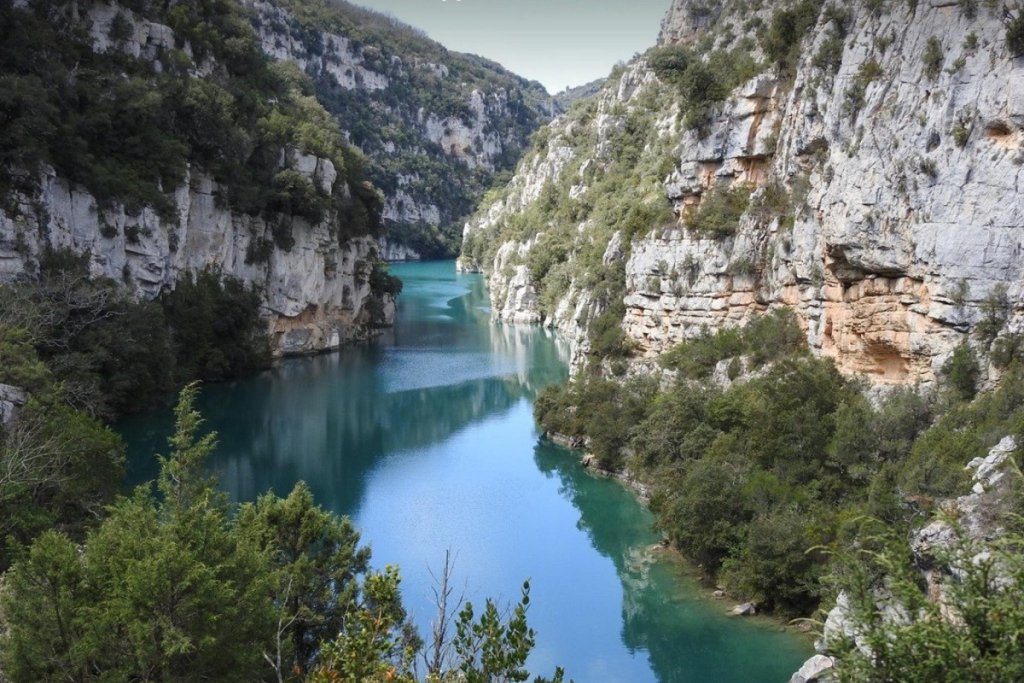
The scenic viewpoints multiply along the route. A first lookout point appears after the initial climb, before the trail descends again to the water’s edge. The contrast between the ochre cliffs and the blue-green waters of the Verdon creates landscapes that, in a more secluded way, evoke images of the Grand Canyon of the Verdon.
Near Montmeyan, the scenic loop around the lake offers a different perspective. This route is perfect for lovers of wide-open spaces where untamed nature reigns supreme: spectacular landscapes, varied trails, and breathtaking views of the lake.
For photography, aim for early morning or late afternoon, when the low-angle light plays across the cliffs and the water’s surface. The Quinson Bridge itself provides a beautiful starting point; the original Romanesque bridge remains intact at the heart of the current structure, one of the few crossing points over the Verdon before the entrance to the Lower Gorges.
How do you get to Lake Quinson?
Lake Quinson is located on the border between two departments and two municipalities. It marks the boundary between the Var and the Alpes-de-Haute-Provence, and between the municipalities of Quinson and Montmeyan. Road access is primarily via the D13 departmental road. Here is a map to help you find your way:
From the Var coast, allow about 1 hour and 30 minutes from Toulon or Fréjus. From Manosque, take the D4, then the D82 to Gréoux-les-Bains, then the D315 to Esparron-de-Verdon, and finally the D15 toward Quinson.
For parking, several options are available depending on your entry point. The Prehistory Museum parking lot, located 360 meters away, is the natural starting point for accessing the water sports center and the trails. A few spaces are also available on the left after crossing the bridge. If this parking lot is full, the village of Quinson is a 10- to 15-minute walk away.
From the Montmeyan side, access is via the D13, 6 km from the village center. The parking lot by the lake requires a fee (€5 per day), with free parking available 250 meters away. For additional information about your stay and activities, the Quinson tourist office also sells a map of the six local hiking trails for €1.