
Provence is not cheap — but it is significantly more affordable than London, New York, or Paris, and the quality of life it offers in return is genuinely hard to match anywhere in Europe.
The Mediterranean climate, the food, the outdoor lifestyle, the healthcare, the sense of space — all of this comes at a cost of living that most expats find lower than they expected, once they understand how the budget actually breaks down.
This guide gives you real numbers — average monthly costs for rent, food, utilities, transport, healthcare, and dining out — across the main areas where expats settle in Provence: Aix-en-Provence, Marseille, Nice and the Côte d'Azur, and the rural villages of the Luberon and the Var. Prices vary significantly depending on your lifestyle, your location, and whether you are renting or have already bought your property.
Housing: the biggest variable in your monthly budget
Rent is the single largest cost for most expats in Provence, and it varies more by location than any other expense.

In Marseille, a one-bedroom apartment in the city centre costs between €700 and €1,100 per month. A two or three-bedroom apartment in a good neighbourhood ranges from €1,100 to €2,000. Marseille offers the best value of all the major cities in the region — and the cost of living here is significantly lower than in Paris or Lyon.
In Aix-en-Provence, expect to pay €900 to €1,400 for a one-bedroom apartment in the city centre, and €1,400 to €2,500 for a two or three-bedroom property. The Cours Mirabeau area and the Mazarin district command a premium, but even at the higher end, Aix is more affordable than equivalent quality in London or New York.
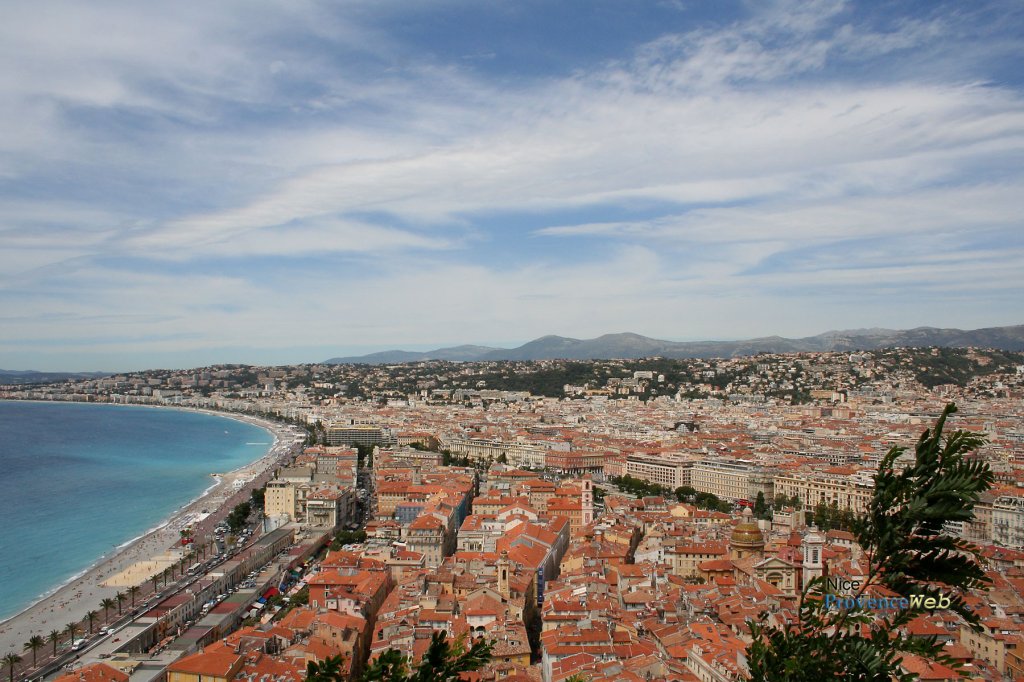
In Nice and along the Côte d'Azur, prices are higher. A one-bedroom apartment in the city centre of Nice costs €1,000 to €1,600 per month. A two or three-bedroom apartment ranges from €1,600 to €3,500 depending on location and quality.
In the rural villages of the Luberon and the Var, long-term rental prices for a house with a garden range from €1,200 to €2,500 per month. Quality and availability vary — the best properties are often not publicly listed.
For those who have already bought their property, housing costs drop significantly — to taxe foncière (property tax), maintenance, and utilities.
Food and groceries: where Provence genuinely delivers
Food is where Provence offers exceptional value — particularly if you shop at the local market and cook seasonally.

Weekly grocery shopping for a single person costs between €150 and €250 per month at a standard supermarket (Carrefour, Monoprix, Lidl). A couple typically spends €250 to €400 per month on groceries. Shopping at the local market — for fresh vegetables, cheese, bread, and seasonal produce — is often comparable in price to the supermarket for staples, and significantly better in quality.
A meal at an inexpensive restaurant costs €12 to €18 per person. A mid-range restaurant meal for two — three courses, a bottle of wine — costs €50 to €90. A bottle of local Côtes de Provence rosé at a supermarket costs €5 to €12. A beer at a café costs €3 to €5. A liter bottle of water costs less than €1.
The honest summary: food and dining in Provence cost less than in London or New York for equivalent or superior quality. This is one area where the cost of living in the south of France genuinely surprises expats — positively.
Utilities: manageable but seasonal
Monthly utilities for a standard apartment — electricity, gas, water, and internet — average €100 to €180 per month in winter and €150 to €250 per month in summer, when air conditioning drives up electricity consumption significantly.
Internet connection is excellent across most of the region and competitively priced — a standard fibre subscription costs €25 to €40 per month with providers like Orange, SFR, Bouygues, or Free. In rural areas, fibre coverage is improving rapidly but is not yet universal.
A mobile phone plan with data costs €15 to €30 per month for a standard contract.
Transport: cars are almost essential outside the cities
In Marseille, Nice, and Aix-en-Provence, public transport — metro, tram, and bus — is functional and affordable. A monthly transport pass in Marseille costs around €50. In Nice, around €55. Taxis and ride-sharing (Uber operates in the major cities) cost €10 to €25 for a typical urban journey. A taxi per mile runs approximately €1.50 to €2.
In rural Provence — the Luberon, the Var, the Alpilles — a car is effectively essential. There is almost no public transport between villages. Petrol costs approximately €1.70 to €1.90 per liter. Annual car insurance for a standard vehicle costs €600 to €1,200 depending on age, vehicle, and driving history.
Healthcare: excellent quality, reasonable cost
France has one of the best healthcare systems in the world — and once you are registered with the French social security system, the cost is very manageable.
The French system reimburses 70% to 80% of most medical costs. A standard GP consultation costs €26.50, of which social security reimburses the majority. Most expats take out a complementary health insurance (mutuelle) to cover the remaining costs — a standard mutuelle costs €50 to €150 per month depending on age and level of coverage.
For British expats holding an S1 form, access to the French healthcare system is available on the same terms as French nationals, with the UK covering the cost. American expats are not covered by French social security until they establish residency and register — international health insurance is essential in the interim, at a cost of €150 to €400 per month depending on age and coverage level.
Education: free public school, fee-paying international schools
French public schools are free and academically rigorous. For expat families with younger children, integrating into the local school system is often the best option — language acquisition is fast and social integration is invaluable.

International schools charge fees ranging from €5,000 to €20,000 per year per child depending on the school and the level. The main international schools in Provence — around Nice, Sophia Antipolis, and Aix-en-Provence — sit at the higher end of this range. Budget for this cost carefully if you have school-age children and are planning on an international curriculum.
Estimated monthly budget: what does it actually cost to live in Provence?
These are realistic monthly budgets for different expat profiles, excluding property purchase costs:
A single professional renting in Marseille — rent €900, groceries €200, utilities €150, transport €80, healthcare €80, dining out €200, miscellaneous €200 — total approximately €1,800 to €2,200 per month.
A couple renting in Aix-en-Provence — rent €1,400, groceries €350, utilities €180, transport €150, healthcare €160, dining out €300, miscellaneous €300 — total approximately €2,800 to €3,500 per month.
A family of four renting in Nice with two children in international school — rent €2,500, groceries €600, utilities €250, transport €200, healthcare €300, school fees €1,500, dining out €400, miscellaneous €400 — total approximately €6,000 to €7,500 per month.
A retired couple who own their property in a Luberon village — property tax and maintenance €300, groceries €400, utilities €200, car €300, healthcare €200, dining out €400, miscellaneous €300 — total approximately €2,100 to €2,500 per month.
Cost of living in Provence vs the UK and the USA
For British expats, Provence is generally 20% to 35% cheaper than London for equivalent quality of life — particularly on housing, food, and healthcare. Compared to other major UK cities, the gap is smaller but still meaningful.
For American expats, the comparison depends heavily on the US city of origin. Provence is significantly cheaper than New York, San Francisco, or Boston. It is roughly comparable to mid-sized American cities like Austin or Denver, with the advantage of significantly better healthcare, public infrastructure, and food quality.
The purchasing power of a UK or US income in Provence — particularly for those working remotely — is genuinely powerful. This is one of the main reasons the region continues to attract international professionals and retirees from both countries.
Planning your move to Provence? Explore our complete expat guide — from finding a property to managing your finances and navigating the French administration.