
In Cap d'Agde, choosing the right neighborhood is just as important as choosing the right place to stay. The Center-Port area is a good choice if you want to do everything on foot.
Richelieu and Île des Loisirs appeal to families during the day and night owls in the evening. Rochelongue, Le Môle, and the pine forest offer a more laid-back atmosphere. The naturist village operates separately, with restricted access. As for accommodations, the resort offers campgrounds and club villages, tourist residences, hotels, and a very large selection of vacation rentals. Campsites with water parks remain the most popular option in the summer, especially for families with children.
Understanding the resort before booking
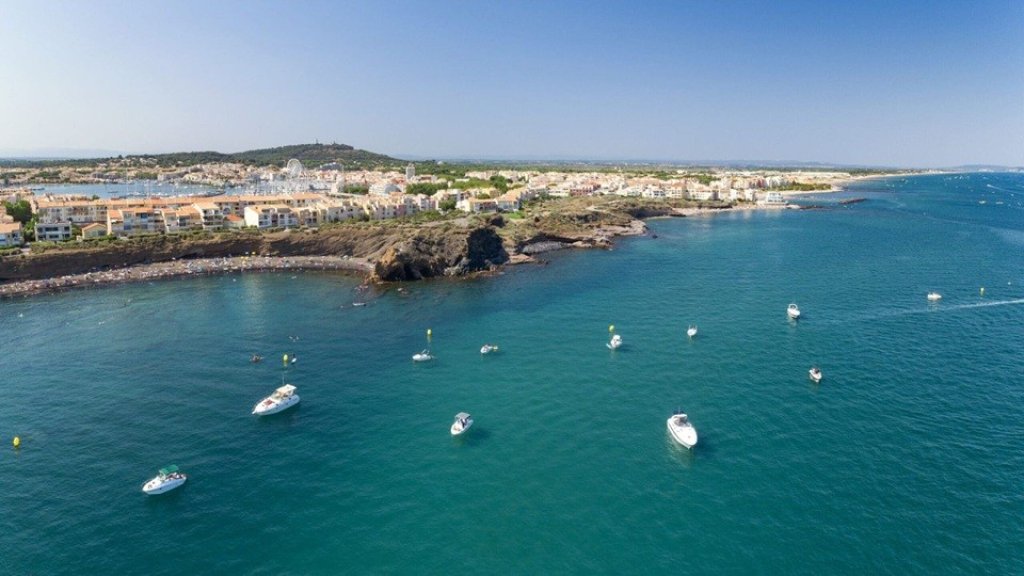
Cap d’Agde isn’t a village; it’s a seaside resort built from scratch. It belongs to the municipality of Agde, in the Hérault department of Occitanie. It was built in the 1970s at the foot of Mont Saint-Loup, an extinct volcano. The result is a sprawling resort divided into neighborhoods that are very different from one another.
In practical terms, your vacation experience will vary depending on which side of the harbor you stay on. The resort boasts 14 kilometers of sandy beaches. It can take up to twenty minutes to walk from one neighborhood to another. That’s why choosing the right neighborhood takes precedence over choosing the type of lodging.
If you’re traveling with your family and looking for an all-inclusive option, a camping village club remains a safe bet. This is the case with this campground in Cap d’Agde, set in a pine forest of poplars and pines, just a few hundred meters from one of the resort’s widest beaches. The campground is part of the Pirates World group, which also manages the Pirates World and Cap Pirate hotels as well as other campgrounds in the resort. Its themed water park, featuring a wave pool, water slides, and a lazy river, covers approximately 9,000 m². You can spend the whole day on-site without getting back in the car, and that’s often what makes all the difference when traveling with children.
Now let’s take a look at the neighborhoods, one by one.
The Port Center: a car-free place to stay
The Port Center is the beating heart of the resort. Everything revolves around the marina, one of the largest in the Mediterranean. Here you’ll find restaurants, outdoor cafes, shops, and evening entertainment. It’s also the most lively area during the off-season, when the rest of the resort slows down.
The main advantage can be summed up in one word: walking. From the harbor center, you can reach the beaches, shops, and entertainment spots without getting in a car. The residences on the Îles des Marinas and Île Saint-Martin look directly out onto the docks. The views of the harbor are genuine—not just a marketing gimmick.
There’s a downside, too. In July and August, the entertainment goes on late, and noise levels rise along the docks. If you’re a light sleeper, ask for a room or apartment facing the courtyard. Book early, as this area fills up fast.
Right next door, another neighborhood offers a very different experience.
Richelieu and Île des Loisirs: beach by day, nightlife by night
Richelieu Beach stretches for about 1,300 meters and is divided into three sections: west, center, and east. It’s the most popular beach in Cap d’Agde. It’s lifeguarded in the summer and lined with pedestrian promenades. Families come here for the sand, the open space, and the convenient amenities.
The neighborhood is also a hub for entertainment. Aqualand, Luna Park, and Île des Loisirs are all located in this area. In the evening, Île des Loisirs becomes the resort’s party hub, with its music bars and major nightclubs like Amnésia and Bora. You can walk there from your accommodation, which helps you avoid traffic jams at the entrance to the island.
This mix has its appeal, but you have to be prepared for it. Staying just two blocks from the nightclubs in the middle of August means putting up with late-night foot traffic. For families, it’s better to aim for the beach side rather than the island side. Just a few hundred meters away, the atmosphere is completely different.
To the west, the resort takes on yet another character.
Rochelongue, Le Môle, and the pine forest: a haven of calm
Rochelongue is Cap d’Agde’s newest neighborhood, built between the 1990s and 2000s. Its pedestrian promenade, inspired by the Ramblas, is lined with shops, restaurants, and ice cream parlors. The beach is wide, protected by seawalls, and a bike path connects it to the center of Agde. There are many apartments in residential complexes here, often with parking.
Le Môle is located east of the harbor center. The neighborhood remains residential, with quick access to the beach and the harbor on foot. It offers a good balance between liveliness and tranquility. The Musée de l’Éphèbe and the aquarium are located in this area.
The Pine Forest, on the other hand, is all about tranquility. The neighborhood is tree-lined, with no particular entertainment, less than a kilometer from La Roquille Beach. You’ll find local shops there: a bakery, a mini-market, and a newsstand. It’s the choice for couples and vacationers who want to sleep with their windows open.
It remains a neighborhood unlike any other.
The naturist Village: A neighborhood to explore before booking
The naturist village is located in the Bagnas neighborhood, north of the resort. It was established in 1974 as part of the development of the Languedoc coastline. Today, it is Europe’s largest naturist site in terms of capacity. Access is regulated, and visitors are charged an entrance fee during peak season.
The range of accommodations is comprehensive and self-contained. You’ll find hotels like the Oz’Inn or the Hôtel Eve, tourist residences such as Natureva Spa, a campground, and many private rentals. Shops, restaurants, and a market are all on-site. You could spend a week there without ever leaving.
One point deserves to be made clear. The village has developed a significant libertine scene, distinct from family-oriented naturism. Some establishments are reserved for couples and make this clear. Be sure to inquire specifically about the resort before booking, especially if you’re traveling with children.
Once you’ve chosen the neighborhood, you’ll need to decide on the type of lodging.
Campground, resort, hotel, or vacation rental: how to decide
Campgrounds and club resorts dominate the options in Cap d’Agde. This option is appealing because it combines lodging, a pool, activities, and kids’ clubs all in one place. Mobile homes range from basic models to premium options with covered patios. Groups like Pirates World add water parks and evening entertainment, including shows, cabarets, and teen clubs.
Vacation apartments are ideal for stays in self-catering units. They often include a pool and parking, offering an affordable option for groups of four to six people. Hotels are less common in the resort, concentrated around the harbor and the naturist village. They’re a good option for a weekend getaway or a two-night stopover.
Vacation rentals between private owners remain the most common option. You’ll find studios, apartments with terraces, and houses. Check three things before booking: the actual distance to the beach, whether private parking is available, and the orientation. In Cap d’Agde, a south-facing unit without air conditioning can be difficult to manage in August.
Finally, there’s the question of timing and access.
When to Book and How to Get There
Cap d’Agde fills up fast. For July and August, the best spots and newer mobile homes are snapped up as early as winter. If you’re planning for peak season, book several months in advance. Many establishments offer free cancellation up to one month before arrival, allowing you to secure your reservation without stress.
June and September are definitely worth a visit. The water is still nice, the beaches are less crowded, and rates go down. During the off-season, opt for the port area, which stays lively year-round. Campgrounds and some of the vacation rentals close in the winter.
For getting there, driving is still the easiest option. The A9 highway serves the destination via the Agde exit, and the A75 runs down from Clermont-Ferrand. By train, the Agde station serves TGV INOUI, OUIGO, and the TER Occitanie network. By plane, the Béziers Cap d’Agde Airport is located in Portiragnes, with shuttle buses to the Agde train station for every flight. Once there, the Cap’Bus network serves the neighborhoods, and seasonal water taxis connect different areas by boat.
Once you’re settled in, you’re not far from another region.
Extend Your Stay Eastward
Cap d’Agde is a great base for exploring the surrounding area. The Canal du Midi runs just a few kilometers away; the Bagnas Nature Reserve offers guided tours; and the underwater trail lets you explore the seabed around the cape with a mask and snorkel. The town of Agde is worth a morning visit for its historic center built of volcanic stone.
If you’re staying more than a week, head east. It’s just a two-hour drive to the Camargue, and from there to Provence and its villages. Many vacationers combine the two: the beach in Occitanie, followed by the Provençal countryside for the second half of their stay. You can plan this leg of your trip with our guide to Provence and the French Riviera.
Cap d’Agde is by no means a hidden gem. But by choosing the right neighborhood and the right type of accommodations, you can turn this bustling resort into a comfortable vacation base. That’s the key to a successful stay.