
Dreaming of a stone house in Provence, nestled at the foot of a hilltop village in the Luberon? Be prepared to pay a premium: real estate appraisers estimate the average price of homes in Gordes at around 5,900 €/m², while neighboring towns remain significantly lower.
The budget depends mainly on three factors: the village, the condition of the property, and the size of the lot. A property in need of renovation can be purchased for much less than a fully restored farmhouse, but requires a renovation budget to be estimated before making an offer. The best approach is to target a few towns, visit many properties, and work with a local real estate agency.
What gives a Provençal stone house its value
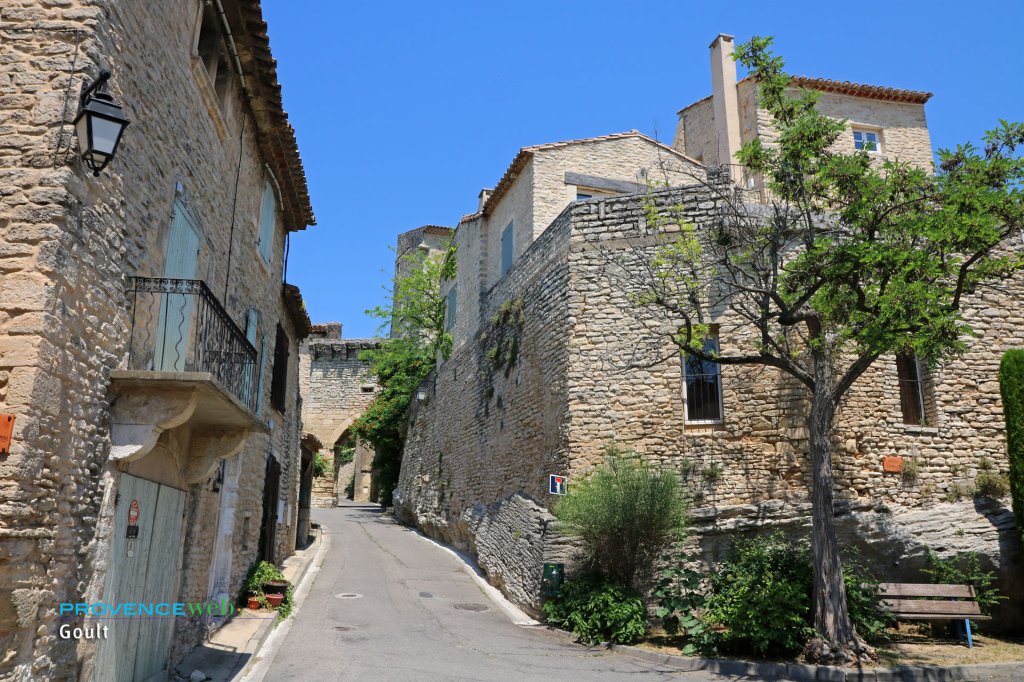
The local limestone, often hand-hewn, gives the facades that golden hue that catches the light from morning to night. The dry-stone walls, carved lintels, weathered shutters, and roof overhangs reflect craftsmanship passed down from generation to generation. These details cannot be replicated. They account for a significant portion of the price difference compared to a recently built home.
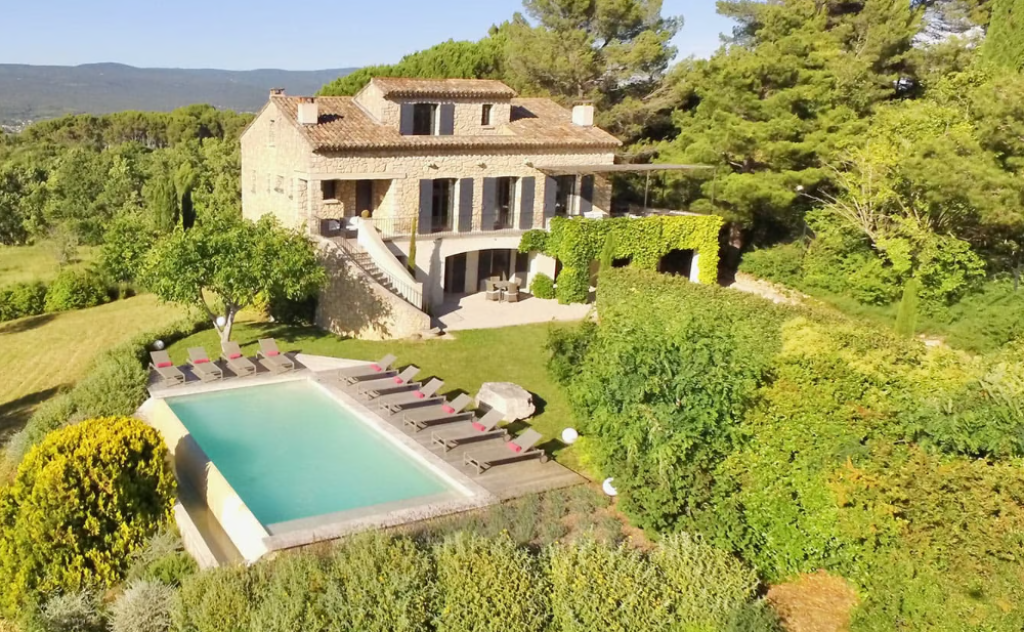
These homes come in several forms. The “mas” stands amid olive groves, set apart from the village. The “bastide,” more imposing, is often surrounded by vineyards and terraces. The village house, meanwhile, nestles close to its neighbors and overlooks the rooftops.
Each dictates its own lifestyle. The mas offers space and tranquility, but requires a car for daily use. The village house puts you just five minutes from the market, though parking can sometimes be a challenge. The bastide appeals to large families, provided they’re willing to take on the upkeep of a large property.
Many of these properties have been carefully renovated in recent years: open-concept kitchens, swimming pools, and outbuildings converted into studios or guest quarters. This balance between authenticity and modern comfort explains the unwavering demand. Traditional mas, bastides, and charming villas remain the most sought-after properties in the Luberon’s high-end market, driven by sustained international demand.
Where to focus your search in the Luberon
The choice of village determines both the lifestyle and the budget. Gordes and Ménerbes are among the most sought-after towns, driven by their reputation and their views of the valley. Prices there remain high, especially for properties with unobstructed views. You need to be prepared when looking in these areas, as the best properties sell quickly.
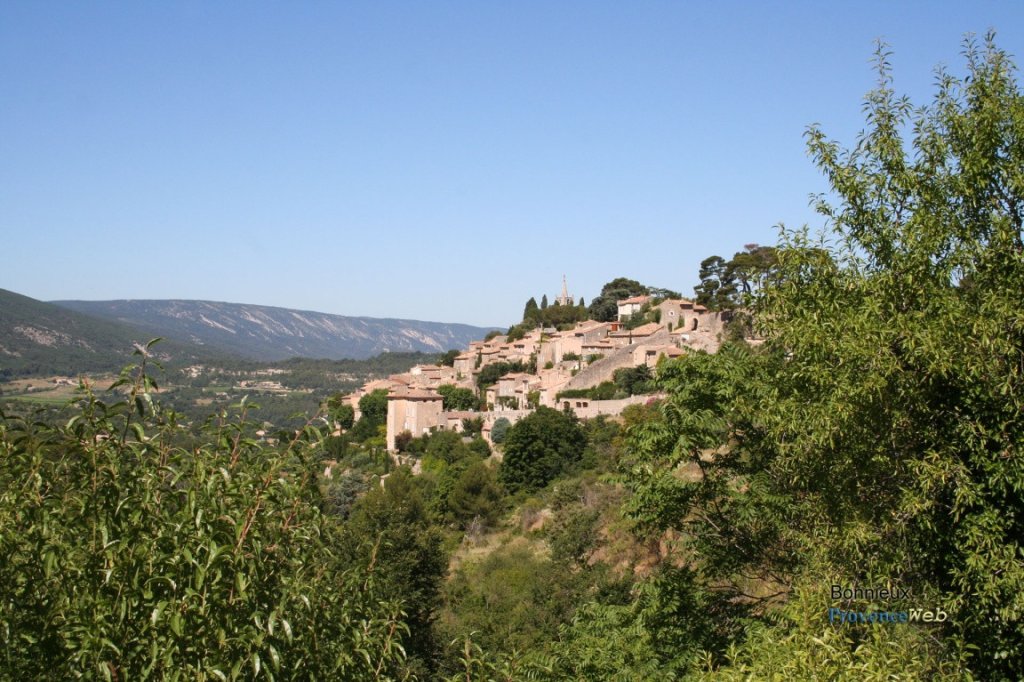
Bonnieux, Lacoste, and Goult offer a different balance. They have charm, the village homes are full of character, and the market remains more affordable than in Gordes. Bonnieux also boasts several Michelin-starred restaurants, which speaks volumes about the village’s vibrancy.
In the areas around Maubec, Robion, and Cabrières-d’Avignon, you’ll find more single-story homes with gardens and swimming pools. These towns are well-suited for a second home or a family project. They offer quick access to Cavaillon, L’Isle-sur-la-Sorgue, and the Avignon TGV station. This is often where you’ll find the best value for your money in terms of square footage.
Oppède is also worth a visit, nestled between the old village nestled against the Petit Luberon and the agricultural plain below. A quick look at the listings for homes for sale in the Luberon quickly reveals the price differences between these areas.
What budget to plan for
Let’s talk numbers, with one useful caveat: online price estimators vary widely from one platform to another for these small towns. In January 2026, SeLoger estimated the average price of homes in Gordes at €5,965/m², ranging from €2,386 to €11,930. MeilleursAgents, for its part, reported €5,947 per square meter for houses as of March 1, 2026, with a comparable range depending on the street and the property’s charm. The gap between the low and high ends of the range says it all: the price per square meter doesn’t mean much in this market.

For luxury properties, the price ranges are even higher. High-end real estate professionals estimate that Provençal farmhouses in the Gordes and Luberon areas range from €5,000 to €10,000 per square meter, depending on condition and location. A renovated property with a view and a pool can easily cost millions.
Neighboring towns are a bit more affordable. For Ménerbes, public data shows an average price of around 4,161 €/m², ranging from 2,497 € to 5,825 €. For Bonnieux, available estimates hover around €2,979 per square meter, but these actually cover the entire Pays d’Apt-Luberon community of municipalities and are therefore not very precise at the village level. Consider these figures as guidelines, not a fixed price list.
Four factors really drive the price: the overall condition, the presence of a pool, the lot size, and the view. A house in need of renovation costs significantly less to purchase. However, it requires a renovation budget that must be factored into your financial plan from the start.
What to check before signing
Older buildings can hold surprises, and this is where the success of a purchase hinges. The seller must provide you with a complete technical inspection report, including the Energy Performance Certificate (EPC), asbestos assessment, lead assessment, pest inspection, and sewer system inspection. Read it line by line. Every issue is a quantifiable bargaining chip.
The EPC deserves a nuanced reading for this type of property. Stone walls react differently to modern insulation standards, which often results in a lower energy efficiency rating. However, these thick walls provide thermal inertia that offers far greater comfort in the summer than a newer building. You should also be aware that the sale of a single-family home rated F or G requires an energy audit, which details cost-estimated renovation scenarios.
Sewage systems are another sensitive issue in rural areas. Outside of towns connected to the public sewer system, individual septic systems are the norm, and a compliance certificate from the SPANC must be included with the sale. A non-compliant report could result in several thousand euros in repairs after the purchase.
Then there’s zoning, which is often underestimated. Check the municipality’s local zoning plan before making any offer. In a protected area or near a historic monument, approval from the architect at Bâtiments de France may be required for exterior renovation projects. This affects your shutters, your roof, and sometimes even the color of your exterior plaster.
Plan for renovations
Buying an older stone home almost always requires a budget for renovations. Hiring a construction professional before signing the contract remains the most cost-effective step in the process: an architect or project manager charges a few hundred euros for a preliminary technical assessment. Viewing an older home without a professional’s input almost always leads to underestimating the scope of the work. Warped hardwood floors can sometimes indicate a structural moisture problem. A crack in the facade may signal ground movement.
Moisture is the main enemy of these buildings. Check for rising damp at the base of walls, the condition of the plaster, and ventilation in basement rooms. Also inspect the electrical panel, grounding connections, and metal pipes, which may be corroded. These items can quickly add up in cost.
Organize the renovation project by priorities. First, secure the structure, address moisture issues, and modernize the utility systems; then finish with the interior layout and finishing touches. This phased approach makes financing easier and sometimes allows you to continue living in part of the house during the work.
Finally, consider available financial assistance programs. MaPrimeRénov’, energy-saving certificates, and grants from Anah can reduce the cost of energy-efficiency renovations, and France Rénov’ advisory centers can guide you based on your project. Get multiple quotes from contractors specializing in historic buildings before finalizing the purchase. A mason experienced with dry stone works differently than a contractor trained in concrete blocks.
Get on-site support
All of this points to the value of local support—and not just for the property tour. An agency based in the area knows the hamlets, easements, neighborhood dynamics, and the reputations of local tradespeople. It also knows what’s selling without ever appearing in a public listing. That’s often where the best opportunities are found.
Based in Oppède, in the heart of the Luberon, Provence Home has been active in this market for over ten years. The agency was founded in 2013 and completes about fifty sales of charming properties per year, with a team of about ten people. The office is located right in the heart of the village, at 349 Rue des Poulivets, across from City Hall. The portfolio includes country estates, village houses, properties with pools, and land in the villages of the Luberon.
Working with a local real estate agency makes a tangible difference in three key ways. You gain access to properties that are sometimes not listed online. You receive a reliable assessment of a building’s actual condition. You receive advice on a home’s value based on its precise location, street by street.
Take action
The Luberon market remains strong, with French and international buyers consistently interested in properties with character. Sustained demand is driving prices up, although the market varies depending on the town and property type. In other words, there’s room for well-prepared buyers.
First, determine how you’ll use the property. Whether it’s a second home, a year-round residence, or a rental property, the criteria differ. A village house works very well for regular stays. A secluded country house requires regular visits for maintenance.
Next, plan to spend some time on-site. Visit several villages at different times of day and, if possible, outside of the summer. The Luberon in August is nothing like the Luberon in February, and it’s precisely this contrast that you need to experience before signing a contract.