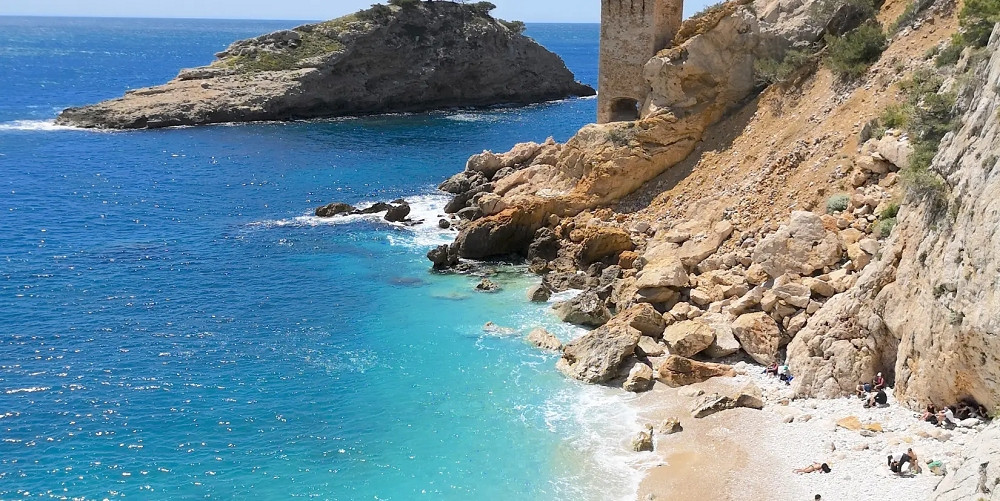

The best way to experience Provence is from a terrace. Whether facing the Gulf of Saint-Tropez or the Luberon ridges, a villa’s value lies in more than just its setting. It depends on five concrete criteria: location, ocean view, orientation, lot size, and access to the shore. A sixth factor determines them all: what the local zoning plan allows—or prohibits.
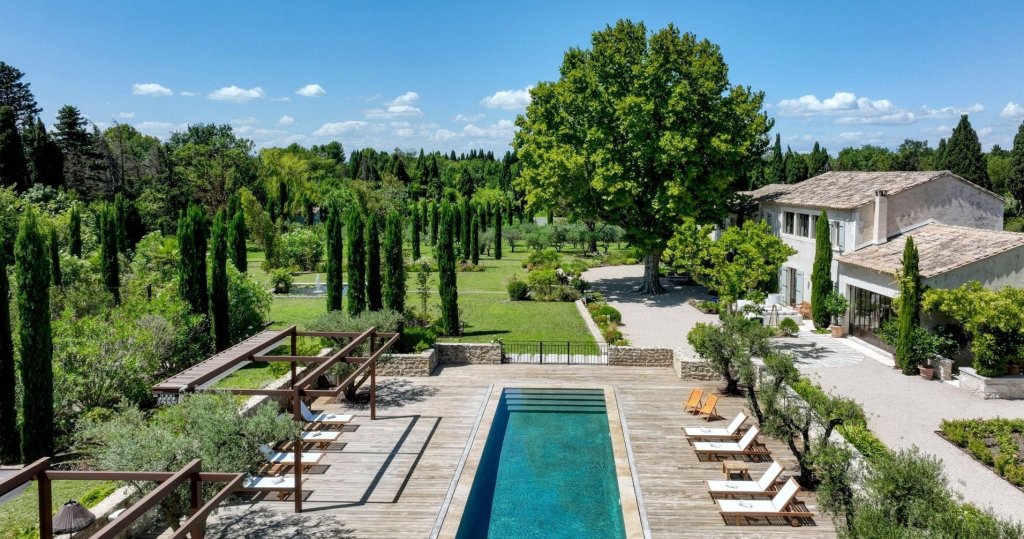
Two similar homes can therefore have very different prices. Before signing, you need to evaluate a property as a notary and an urban planner would. Here’s how.
The Var voast or the hinterland: 2 distinct markets
Your first decision concerns the location. The Var coast and the Provençal hinterland do not follow the same pricing logic. The differences are measured in thousands of euros per square meter.
On the Saint-Tropez peninsula, prices remain very high. The average price of homes there reached approximately 22,000 €/m² in early 2026. The town is primarily a vacation destination: second homes account for two-thirds of the housing stock. In Ramatuelle, the average price for all property types exceeds 16,000 €/m².
In the Luberon, the scale changes. In Gordes, the median price of a house is around 957,000 €, and the vast majority of sales fall between 555,000 € and 2.3 million €. The price per square meter there remains significantly lower than in the Gulf region. On the other hand, built-up areas and lot sizes are often more generous.
These averages don’t tell the whole story. They mix very different properties, ranging from a farmhouse in need of renovation to a contemporary villa. To get a sense of actual prices, nothing beats comparing specific listings in the areas that interest you. Browsing a selection of villas for sale allows you to spot differences related to the view, the lot, or the orientation.
Above all, keep in mind that the same budget won’t buy you the same thing from one area to another. On the coast, you’re paying for proximity to the sea; in the hinterland, you’re paying for space and tranquility.
Once you’ve chosen an area, one factor carries more weight than all others along the coast: the view.
The ocean view: a real premium, but highly variable
You pay for an ocean view—and you pay dearly for it. But you still need to know exactly what kind of view you’re talking about. Not all views hold the same resale value.
A recent study analyzed 18 months of transactions and listings along the French coast to measure this premium. In the Toulon area, the premium generally ranges from 30% to 55%. In the most sought-after locations on the French Riviera, it can even double a property’s price. This phenomenon affects all tight coastal markets.
More broadly, a ocean view generates, on average, a 10% to 30% premium compared to an equivalent property without a view. This difference depends on the actual quality of the view. A view can be partial, side-on, unobstructed, or direct, and the more open it is from the main rooms, the more it counts. A view from the living room is worth more than a glimpse seen from a guest bedroom.
Also check whether the view is likely to last. Review the zoning regulations for lots located below yours. An authorized neighboring construction project could obstruct the view within a few months. A lasting view is one protected by the terrain or by zoning regulations.
A view is never evaluated in isolation. It depends directly on the house’s orientation, which brings us to exposure.
Exposure: light as a criterion of value
In Provence, exposure determines how you use the house on a daily basis. It dictates the light, warmth, and comfort of outdoor spaces. It’s the first thing experienced buyers check.
Orientation, brightness, and sunlight strongly influence how a home is perceived. A north-facing ocean view loses some of its appeal. Conversely, a south- or southwest-facing terrace extends summer evenings. On the Var coast, a west-facing property also offers sunsets over the ocean.
In the hinterland, another factor comes into play: the mistral. This northerly wind blows strongly and sometimes for several days in a row. A house nestled against a hillside or sheltered by a cypress hedge remains pleasant to live in. A house perched on a ridge, even a stunning one, is much less so.
So be sure to visit the property at different times of day. Notice where the shadow falls on the pool in the late afternoon. Ask the seller how the house holds up in the height of summer.
Light enhances the home’s appeal. The land surrounding it, however, can be either an asset or a burden.
Land area: an asset that comes with obligations
A large plot of land guarantees privacy and tranquility. It allows for a pool, a garden, and sometimes an olive grove. But in forested areas, it also imposes specific obligations.
The Var and Vaucluse departments are at risk of wildfires. Brush must be cleared within a 50-meter radius around homes, a distance that the mayor or prefect may extend to 100 meters. This requirement does not stop at your property line: you may be required to clear brush on a neighbor’s property. Private roads must also be cleared of brush for 10 meters on either side.
In urban areas, the rule is even stricter. Any lot classified as “U” and located within 200 meters of a forest or scrubland must be cleared entirely. This maintenance represents an annual cost that must be factored into your budget. It also entails legal liability: delegating this work to a tenant does not exempt the owner from criminal liability.
Good news for buyers: disclosure is now mandatory. As of January 1, 2025, sellers must include this information in the listing and incorporate it into the risk and pollution report. Read this document carefully; it tells you what it will actually cost to maintain the property.
On the coast, the issue of the land is linked to the even rarer issue of direct access to the sea.
Access to the sea: a rarity governed by law
A “waterfront” villa represents the pinnacle of the Var real estate market. Front-row properties with direct access to the sea remain the rarest and form a category of their own. Their price reflects this rarity. Their legal status, however, warrants careful consideration.
The shoreline does not belong to the owners of waterfront properties. Private properties bordering the public maritime domain are subject to a three-meter-wide right of way reserved for pedestrian access. In other words, the coastal trail may run alongside your yard. The owner may not alter the property in a way that obstructs passage, unless authorized by the prefect for a period limited to six months.
Exceptions exist for older homes. Unless necessary to maintain the continuity of the path, the easement does not apply within 15 meters of dwellings built before January 1, 1976, nor on land enclosed by walls as of that date. This prior status can therefore affect a property’s value. Furthermore, the easement entitles the owner to compensation only if it causes direct, material, and certain damage.
Ask the notary if a route has been approved by the prefect. Find out how busy the trail is in the summer. Private access to the sea does not always offer the privacy you might expect.
These easements are only one aspect of urban planning law. The core of the matter remains the Local Urban Planning Plan (PLU) and the Coastal Act.
PLU and the Coastal Act: what is permitted determines value
A villa’s value also depends on what you can do with it. Expanding the property, building a pool house, or installing a swimming pool—it all depends on urban planning regulations. This is often where unpleasant surprises lurk.
Along the coast, the Coastal Law supplements the PLU. Enacted in 1986, it applies to more than 1,200 French municipalities. The 100-meter strip from the shoreline is off-limits to construction outside urbanized areas, and the ban also applies to extensions of existing structures. Outside this zone, development must be carried out in a manner that is consistent with existing villages and urban areas.
In the inland areas, many farmhouses are located in agricultural or natural zones. The Urban Planning Code permits the expansion of existing dwellings and the addition of structures such as a swimming pool, provided that neither agricultural activity nor the landscape is compromised. However, the Local Urban Planning Plan (PLU) must expressly provide for these possibilities; otherwise, the extension is prohibited. In practice, permitted expansions remain modest, typically ranging from 30% to 50% of the existing area, with a maximum limit in square meters.
Compliance of the existing structure is just as important as future rights. A swimming pool or extension built without authorization weakens the property’s legal standing. For example, the notary must verify that an older swimming pool complies with the rules of the Coastal Act. Request to see the permits and declarations for each construction project before signing the preliminary sales agreement.
Once these legal checks are complete, you must then assess the actual cost of ownership.
Verify and anticipate ownership costs
Buying a high-end villa requires a systematic approach. The most sought-after properties rarely come on the market and sell quickly. Therefore, prepare your due diligence before the first viewings.
For each property you’re considering, consult the Local Urban Planning Plan (PLU) at city hall or on the Urban Planning Geoportal. Request a planning certificate if you’re planning renovations. Have your notary review the risk assessment report.
Finally, factor local taxes into your calculations. In high-demand areas, the municipality may impose a surcharge of 5% to 60% on the residential tax for second homes. Since the decree of August 2023, the number of municipalities affected has risen from approximately 1,100 to 3,690. This annual cost is in addition to property tax, land maintenance, and brush clearing.
A villa in the South of France is therefore a long-term investment. Its value depends on its location, but also on the rights and obligations that come with it. By verifying these before signing, you’re buying a place to live—not a burden.
If you need a local real estate agent who is experienced in working with international buyers, check out this page.