
Map of Martigues
Map and points of interest in Martigues
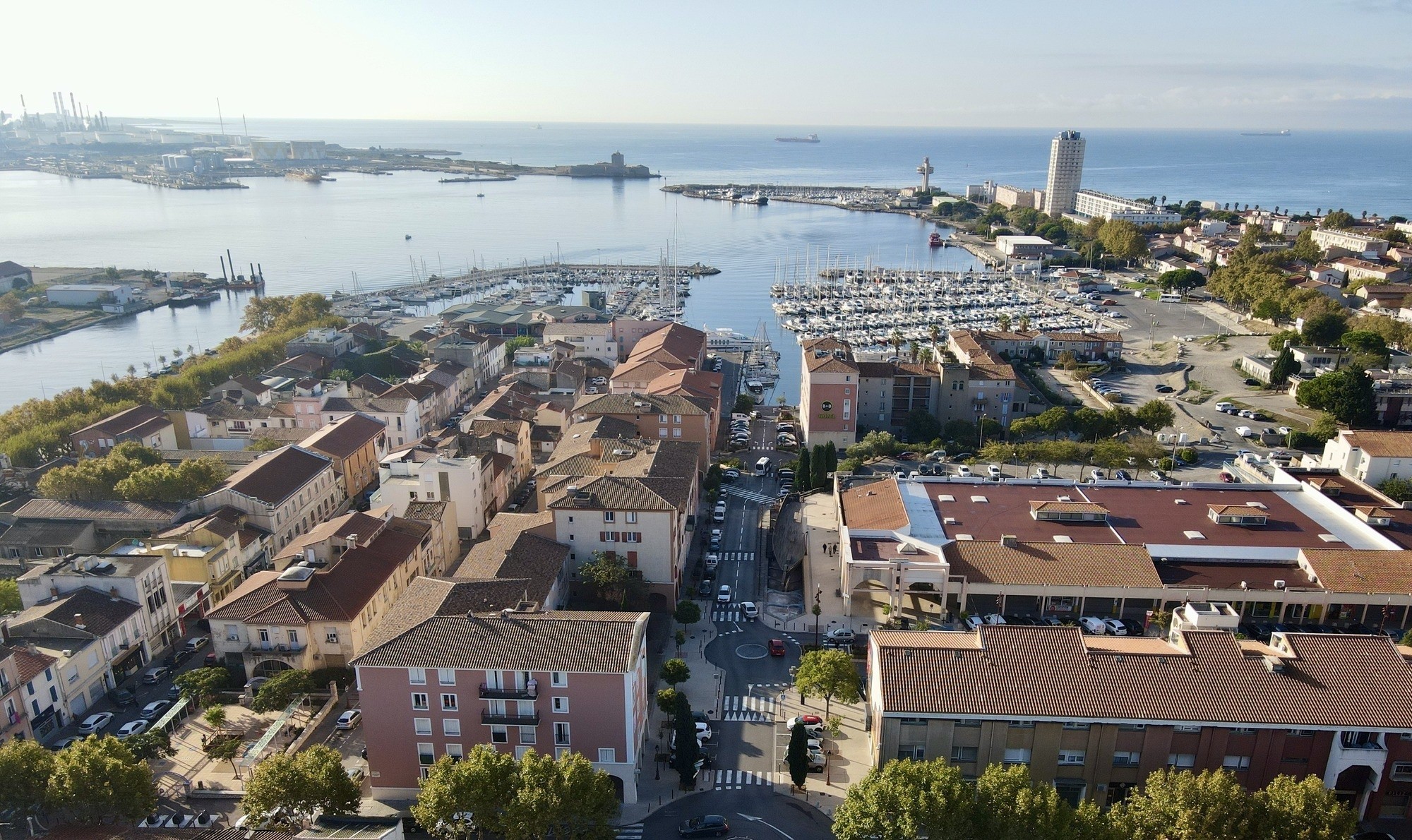
Are you looking for a map of the charming town of Martigues? Nicknamed the “Venice of Provence,” it consists of three neighborhoods separated by canals and bridges: Jonquières, l’Île, and Ferrières. On our interactive map, you can see the historic center, parking lots, and must-see sites at a glance.
How long does it take to visit Martigues?
The answer depends on what you want to see on the map. The historic center is easy to explore on foot. The three neighborhoods are close to one another and connected by bridges.
Allow half a day for the city center. That’s enough time to stroll along the canals, see the Miroir aux Oiseaux, and visit the Church of La Madeleine. You can add an hour for the Ziem Museum.
If you have a full day, expand your exploration. A boat ride on the canals is a great way to round out your walking tour. Some groups even spend a full day in the city, with a guided tour of the island in the morning followed by a boat trip.
For two days or more, head toward the sea. The Côte Bleue offers 22 kilometers of coastline, including Saint-Julien-les-Martigues, the port of Carro, and the La Couronne quarries. In the summer, be sure to set aside time for the beach.
Where can you download a map of Martigues in PDF format?
Would you prefer to have the map on your phone or on paper? You can download it directly from this page. Click the “Download Map” button located above, below our interactive map.
The PDF file includes useful information for your visit. You’ll find the main sights and parking lots listed there. It helps you find your way around the three downtown neighborhoods.
This format is handy once you’re there. You can view it even without an internet connection. You can also print it out before you leave.
Be sure to download it the day before you leave. You’ll save time once you arrive in Martigues. And for an official paper map, the tourist office is still a great place to go.
Where is the tourist office located?
The tourist office is located right in the heart of the historic center, making it an easy first stop. It’s in the Île neighborhood, just a stone’s throw from the Miroir aux Oiseaux. Its address: Hôtel Colla de Pradines, quai des Anglais, 13500 Martigues.
You can reach them by phone or email. The phone number is 04 42 42 31 10 and the email address is info@martigues-tourisme.com. Feel free to call before your visit to check their hours.
The staff can provide information on guided tours and boat trips. The office offers, in particular, boat rides along the canals and guided tours of the Ziem Museum. It also organizes tours of Fort de Bouc, including a guided boat ride.
Spending the summer on the Côte Bleue? The team also maintains an office in the heart of the village of La Couronne during the summer season. On site, you’ll also find a gift shop offering souvenirs, local crafts, and a bookstore.
Where to park in Martigues?
When it comes to parking, let’s be honest: during peak season, finding a spot in Martigues can be difficult. The areas around the canals and beaches fill up quickly in the summer. Arrive early in the morning to find a spot without having to circle the block.
Good news: all of Martigues’ parking lots are marked on our map on this page. This way, you can choose the one closest to your destination. Each neighborhood has its own parking zones.
The Île neighborhood has about 630 parking spaces, including on-street parking, of which nearly 70 are paid and 550 are free. Jonquières offers nearly 1,600 spaces, including both parking lots and on-street parking. Ferrières also has several parking lots.
In Ferrières, you’ll find parking lots such as La Halle, the Gymnasium, Pierre de Coubertin, the town entrance, and City Hall-Stadium. The La Halle parking lot is convenient if you’re visiting Fort de Bouc. It’s located near the main entrance of City Hall, the starting point for tours.
What are the must-see attractions?
Once you’ve parked, it’s time to explore. Most of the sites in the center are within walking distance of one another, from one neighborhood to the next. Here are the ones to look for on the map first.
The Miroir aux Oiseaux. Quai Brescon has attracted painters since the late 19th century. The “pointus,” traditional Provençal boats, are moored at the foot of ochre- and pink-colored facades.
The Church of La Madeleine. Completed in 1680, it is built in the Provençal Baroque style. It has been designated a Historic Monument since 1947.
The Ziem Museum. The painter Félix Ziem discovered Martigues in 1840 and set up a studio there in 1860. The top floor showcases the archaeological excavations conducted in Martigues.
The Notre-Dame-des-Marins Chapel. It offers a panoramic view of the city and its canals.
Fort de Bouc. It has been listed as a Historic Monument since 1930 and has been open to the public since 2007.
The port of Carro and La Couronne. La Couronne has three beaches, including Sainte-Croix Beach, lined with pine trees and rocks.
Start your stroll in L’Île, the most photogenic neighborhood. The Miroir aux Oiseaux is particularly beautiful in the early morning, when the light plays on the water. The Madeleine Church is located right across from it.
To see the canals from a different perspective, hop on a boat. Canal tours are available during the season. On your way to Fort de Bouc, you’ll pass under the Caronte Bridge, which is 943 meters long and opened in 1915.
How to get to Martigues?
To get to Martigues, driving is still the easiest option. The A55 highway connects Les Pennes-Mirabeau to Martigues and has no tolls. From Marseille, the drive is about 45 kilometers and takes 43 minutes.
Coming from Aix-en-Provence? Take the A51, then the A7, before merging onto the A55 to exits 13a/13b for Martigues. The trip is easy outside of rush hour.
The train is a good alternative. Line 7 connects Miramas to Marseille and runs along the entire Côte Bleue from Martigues to L’Estaque. The Martigues train station is on the outskirts, but the Ulysse L23 bus reaches downtown in 19 minutes.
The town also has the Croix-Sainte and La Couronne train stations, which are convenient for the beach. By plane, you’ll land at Marseille Provence Airport. A bus route connects Marignane to Martigues via Gignac-la-Nerthe and Châteauneuf-les-Martigues, with 20 round trips per day on weekdays and 11 on weekends.
See also to help you plan your stay in Martigues: