

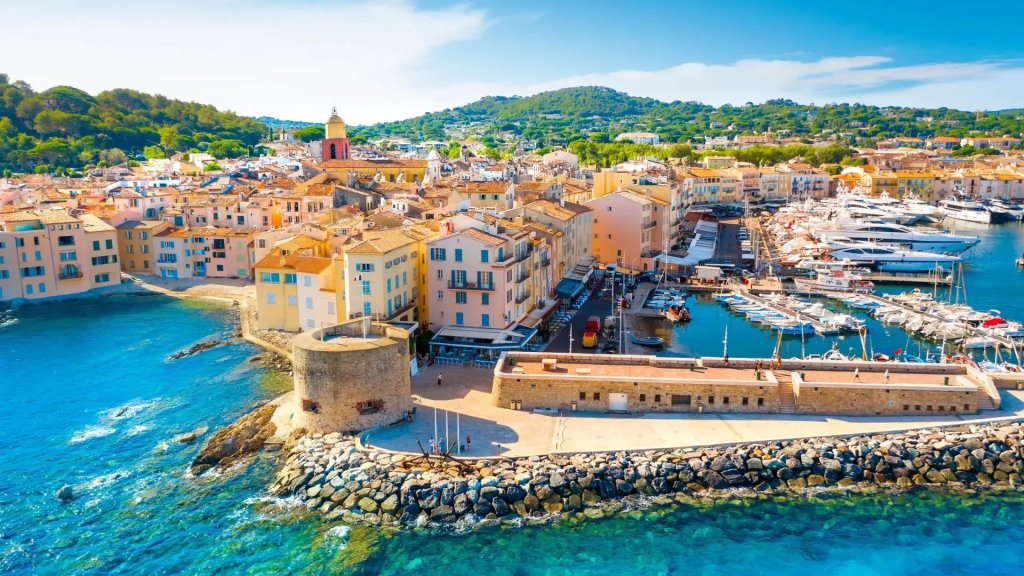
Provence and the French Riviera rank consistently among the best places in the world to retire — and it is easy to understand why. The Mediterranean climate delivers over 300 days of sunshine a year, the stunning scenery ranges from the lavender fields of Valensole to the picturesque hilltop villages of the Luberon and the glamour of the French Riviera.

The cost of living is significantly lower than in New York or London, yet the quality of healthcare, cuisine, cultural richness, and outdoor activities rivals anywhere in Europe. Affordable housing — from charming village houses in the Var to beautiful bastides in the Alpilles — combined with a relaxed lifestyle and a strong expat community make retiring in Provence one of the most compelling choices for retirees from the UK, the US, and beyond.

But retiring in France requires more than falling in love with the lavender fields and the local markets. Living in Provence as a retiree means navigating French residency requirements, understanding how your pension and retirement income are taxed in France, arranging health insurance, managing currency risk, and planning your estate across two legal systems. This financial planning guide covers everything you need to know before making your move to southern France.
Am I allowed to retire in Provence?
Yes — but the process differs significantly depending on your nationality.
British nationals post-Brexit require a long-stay visa (visa de long séjour) before entering France as a resident. This must be applied for at the French consulate in the UK before you move. Once in France, you apply for a carte de séjour. You will need to demonstrate sufficient income to support yourself — typically around €1,200 per month for a single person — and proof of comprehensive health insurance until you are enrolled in the French system.
American nationals follow a similar process, applying for a long-stay visa at the French consulate in the US. France offers a specific "visiteur" visa category for retirees who do not intend to work in France. Proof of income and health insurance are required.
How much income do you need to retire in Provence?
The cost of living in Provence varies significantly by location and lifestyle. A couple living comfortably in a village in the Luberon or Alpilles — with a modest property, a car, regular dining out, and travel — can expect to spend between €2,500 and €4,000 per month. Aix-en-Provence and the Côte d'Azur are more expensive. Rural villages in the Var or Vaucluse can be significantly cheaper.
This means a retirement income of €30,000 to €50,000 per year covers a comfortable lifestyle for most retirees, though those buying luxury property or living on the French Riviera will need considerably more.
Your UK pension when retiring in Provence
For British retirees, the pension situation requires careful attention.
Your UK state pension can be received in France. As France is covered by a reciprocal agreement, your state pension is uprated annually — you will receive the full triple lock increase each year, unlike British retirees in some other countries such as Australia or Canada where the pension is frozen. You should apply for your state pension before leaving the UK and ensure the DWP has your French bank account details.
Your private or workplace pension is generally taxable in France once you become a French tax resident. You should apply for an NT (no tax) code from HMRC to stop UK tax being deducted at source, and declare your pension income on your French tax return. The UK-France double taxation treaty prevents you from being taxed twice, but the administrative steps must be followed correctly.
If you have a defined benefit (final salary) pension, consider whether it makes sense to keep it as is — the guaranteed income for life is a significant asset — or whether transferring to a SIPP or QROPS might offer advantages in terms of flexibility, currency management, or inheritance planning. This decision is complex and irreversible, and must be made with the advice of a regulated financial adviser.
Your US retirement accounts in Provence
American retirees face additional complexity. Your 401(k), IRA, or Roth IRA remains in the US, but withdrawals are subject to both US federal income tax and potentially French income tax, depending on the France-US tax treaty provisions. Required Minimum Distributions (RMDs) still apply from age 73 regardless of where you live.
US Social Security payments can be received in France without restriction. Up to 85% of your benefit may be taxable in the US depending on your total income. France may also tax Social Security income under treaty rules — specialist advice is essential to structure your withdrawals efficiently across both systems.
Currency risk: protecting your retirement income
If your pension or retirement income is paid in pounds sterling or US dollars and your expenses are in euros, currency fluctuations can significantly affect your purchasing power. A 10% movement in the GBP/EUR exchange rate can add or remove thousands from your annual budget. Most financial advisers recommend maintaining a currency strategy — whether through a multi-currency account, regular currency transfers at fixed rates, or structuring some assets in euros — to stabilise your retirement income in Provence.
Healthcare in retirement
Once you are legally resident in France and receiving a French pension or have been resident for a sufficient period, you become eligible for the French public healthcare system (Sécurité Sociale). France has one of the best healthcare systems in the world — coverage is comprehensive and costs are low compared to the US or UK private sector.
In the early months of residency, before you are enrolled in the French system, you will need private international health insurance. British retirees who hold an S1 form from the UK can access French healthcare on the same basis as French nationals, with the cost reimbursed to France by the UK government — this is one of the most valuable benefits available to British retirees in France and is worth applying for before you leave.

Wealth tax and inheritance planning
France's wealth tax (IFI — Impôt sur la Fortune Immobilière) applies to real estate assets above €1.3 million in net value. If you are buying a property in Provence at the higher end of the market, this is a relevant consideration. Rates range from 0.5% to 1.5% depending on the value of your real estate holdings.
French inheritance law operates differently from UK or US law. France applies forced heirship rules that automatically allocate a share of your estate to your children, regardless of your wishes. Under EU Regulation 650/2012, British and American nationals can elect for their home country's succession law to apply to their estate in France — but this must be explicitly stated in a valid will. Estate planning before you move is essential, and you may need both a UK or US will and a French will to cover your assets correctly.
Tax planning before you move
The period immediately before your move to Provence is the most valuable for tax planning. Key steps include reviewing your pension arrangements and deciding whether to transfer, converting some assets to reduce future tax liability, reviewing your investment portfolio for French tax efficiency, severing unnecessary tax ties to your home country, and obtaining cross-border financial advice from a specialist familiar with both your home country's tax system and French tax law.
Retiring in Provence from the US: key differences
American retirees face the additional burden of lifetime US tax filing obligations. Unlike British retirees, Americans cannot escape their IRS obligations by moving abroad. FBAR and FATCA reporting requirements apply from year one. The PFIC rules mean most French investment products are off-limits. And Roth IRA withdrawals, while tax-free in the US, may be taxable in France. Working with a CPA specialising in US expat taxation alongside a French-qualified financial adviser is strongly recommended.
Finding the right financial adviser
Retiring to Provence successfully requires advisers who understand both sides of the equation — your home country's pension, tax, and estate planning rules, and the French system you are moving into. A generalist UK or US financial adviser is unlikely to have the cross-border expertise required. Look for an adviser regulated in both jurisdictions, with a proven track record of working with expats in France specifically.
This article is for informational purposes only and does not constitute financial or tax advice. Always consult a qualified independent advisor before making any decision.
Read also : Finance & tax in France: the essential guide for expats