
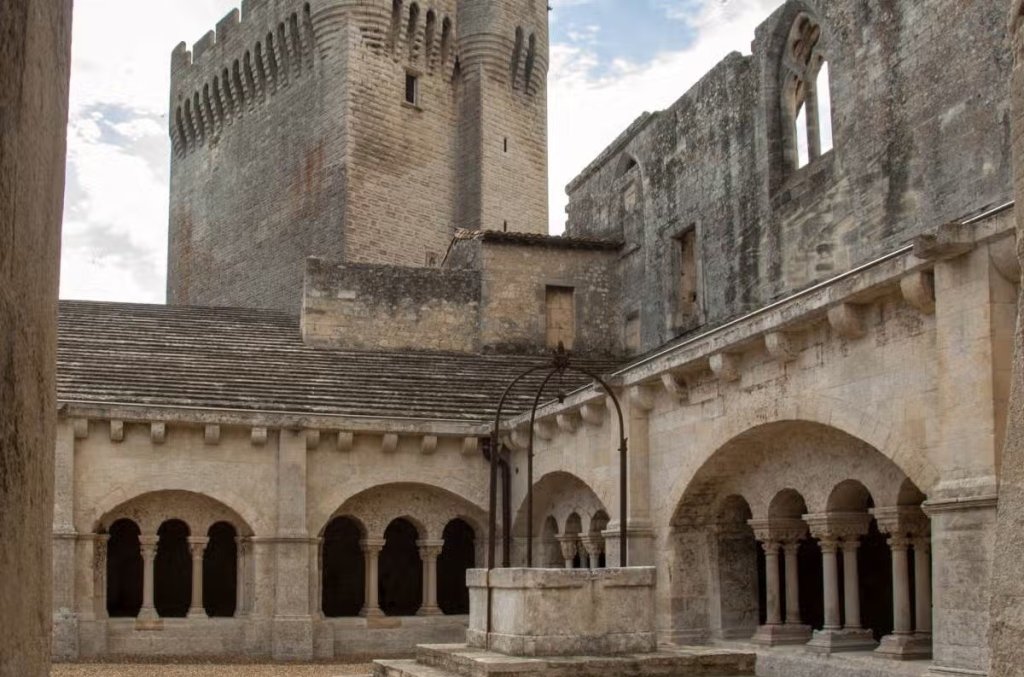
In the heart of the Arles region, Montmajour Abbey was founded in 948 by Benedictine monks. This historic monument stands on a rock overlooking the Crau plain, just a few kilometers from downtown.
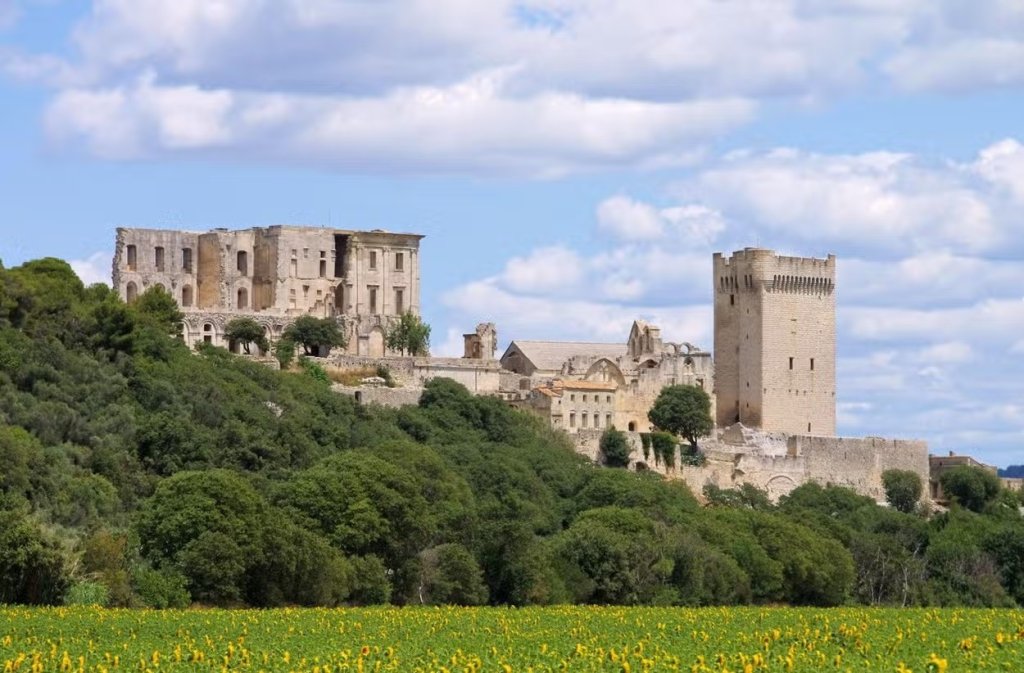
It bears witness to eight centuries of history and architecture in Provence, from 11th-century Romanesque to 18th-century classical buildings. If you’re planning a trip to Provence, Montmajour is definitely worth a full day’s visit. Vincent van Gogh drew inspiration here between 1888 and 1889 to create numerous drawings, making it a pilgrimage site for modern art enthusiasts as well. Romanesque cloister, Saint-Pierre hermitage, medieval tower, temporary exhibitions: there is much more to discover here than one might imagine from the road to Fontvieille.
The site is managed by the Centre des monuments nationaux. The admission ticket grants access to the entire monument, with a price of €7.
Please note, you must book in advance on this website:
Hours and Admission, How to Visit the Abbey
Montmajour Abbey is open year-round, with hours that vary by season. From April to May, the site welcomes visitors from 10 a.m. to 5 p.m., with last admission at 4 p.m. From June to September, hours extend until 6:00 PM, with last admission at 5:00 PM. From October to March, the site is open from 10:00 AM to 5:00 PM, but is closed on Mondays, and last admission is at 4:00 PM.
The site will be closed on January 1, May 1, November 11, and December 25. Always check the official abbey website for the latest information before planning your visit, as opening hours may change from time to time.
The admission ticket grants access to the entire site. The price is €7, and reservations can be made on the website below.
For the tour itself, several visitor services are available. Free tour guides are available at the reception desk in six languages, including French, English, Spanish, and Italian. A free web app in French is also available on mobile devices; it is recommended that you download it before arriving, as cell service is difficult to get at the monument’s entrance.
Guided tours are offered several times a day by monument staff and are included in the admission price at no extra charge. Duration: 45 minutes to one hour. Registration takes place directly at the reception desk upon your arrival, subject to staff availability. During the off-season, guided tours are organized every Sunday.
For groups of 20 or more, a special rate applies. If you would like an external tour guide who speaks multiple languages, reservations must be made one day in advance through the Arles Tourist Office. The abbey has on-site parking, including accessible spaces for people with reduced mobility.
The site is partially accessible to people with limited mobility: the terrace and cloister are accessible, but the terrain is uneven and features numerous steps. There are 125 steps to reach the tower and 40 to the Saint-Pierre hermitage. Be sure to bring water and a hat in hot weather; a water fountain is available along the route.
The monument’s address is Route de Fontvieille, 13200 Arles.
The History of Montmajour Abbey
The Benedictine Abbey of Montmajour was founded in 948 on a rock surrounded by marshes, a few kilometers northeast of Arles in the Bouches-du-Rhône department. At the time, it was an isolated, island-like site chosen by Benedictine monks to establish a community. As early as 963, Pope Leo VIII placed the monastery under his direct authority, a sign that the monastery was already well established.
The abbey experienced rapid growth beginning in the 11th century. Donations poured in, and priories multiplied: by around 1100, no fewer than 112 churches and priories in Provence were under its jurisdiction. At the heart of this power was the pilgrimage known as the “Pardon de Montmajour,” established on May 3, likely in 1019, during the consecration of the first Church of Our Lady.
This pilgrimage attracted immense crowds every year throughout the Middle Ages. Medieval sources mention up to 150,000 pilgrims coming to venerate a relic of the True Cross preserved in the crypt. In 1426, some 12,000 to 15,000 people still made the journey to Arles from the banks of the Rhône.
The abbey also became the burial ground of the Counts of Provence, who were interred in the crypt in the 11th century and later transferred to the cloister in the 12th century. This spiritual power gave rise to an architectural renaissance: the 12th and 13th centuries saw the construction of the Provençal Romanesque complex, comprising the Abbey Church of Notre-Dame, the cloister, and the convent buildings.
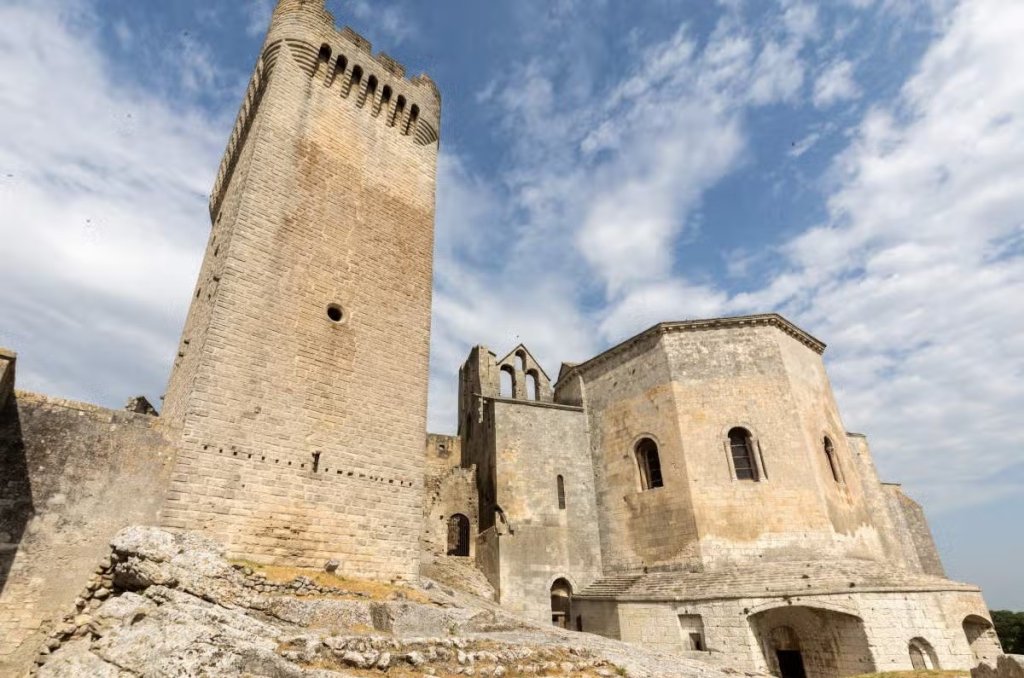
The 14th century marked the beginning of difficulties. Large companies of mercenary soldiers ravaged the Arles countryside. In response, the abbey had the defensive tower known as Pons de l'Orme built, which is still visible today. Internal conflicts compounded the external threats, particularly regarding the relics of Saint Anthony, which were disputed with other priories.
Decline gradually set in. The abbot was no longer elected by the Benedictine monks but appointed by the pope or the king. The monastic community lost its cohesion. The last abbot of Montmajour was Cardinal de Rohan, infamous for the Affair of the Queen’s Necklace. The abbey was secularized in 1786.
During the French Revolution, the complex was sold as national property. The Saint-Maur monastery, though recently completed, was stripped of its contents and reduced to ruins within a few years. The stones were sold to build houses in Arles. Of this grandiose building, barely one-sixth remains today.
The city of Arles purchased the ruins in 1838. Thanks to the efforts of Prosper Mérimée, the abbey was designated a historic monument in 1840. Architect Henri Révoil undertook a lengthy restoration campaign, particularly of the cloister, beginning in the 1860s. Since 1945, the abbey has been owned by the French government. In 1981, it was inscribed on the UNESCO World Heritage List along with the Roman and Romanesque monuments of Arles.
This long history and architectural legacy make it a key site in the Provence-Alpes-Côte d'Azur region for understanding the evolution of the monastic world from the early Middle Ages to the modern era. Every stone on the site tells a story of this remarkable journey.
Why is Montmajour famous?
Montmajour is today one of the most visited historic monuments in Provence, and this reputation is based on several distinct reasons. The first is its history: over a thousand years of human occupation on a single rock, an exceptional accumulation of styles and functions, from the primitive monastery to the medieval fortress. The second reason is a name: Vincent van Gogh.
Between 1888 and 1889, Van Gogh made numerous trips back and forth between Arles and the rock of Montmajour. He found it a tremendous source of inspiration. The site captivated the painter with its ruins, its light, its austere forms, and the surrounding landscape. In a letter to his brother Theo, he described the abbey at sunset as a place of charming nobility bathed in a shower of gold.
Among his works related to this site, “Sunset at Montmajour” is one of the best known. This painting, long mistakenly attributed to another artist, was authenticated by the Van Gogh Museum in Amsterdam only in 2013. It is one of the few large-scale canvases that Van Gogh dedicated to a natural site rather than an interior or a cityscape. His inspiration for Montmajour today contributes to the cultural heritage of the entire region.
The abbey continues to attract contemporary artists. The work “Ascension” by sculptor Alain Kirili was created specifically for the abbey’s choir. Modern art thus engages directly with the Romanesque architecture, giving the site an added dimension. It is not a static museum; it is a living space where creation continues.
Montmajour is also famous for its panoramic view. From the top of the Pons de l'Orme tower, the view takes in Arles, Tarascon, the Alpilles, and the Crau plain all the way to the Camargue. This viewpoint, accessible via 125 steps, remains one of the most impressive in Provence. It is this combination of history and cultural heritage that makes it a unique landmark in the Provençal landscape.
What are the architectural features of the abbey?
Montmajour Abbey brings together several centuries of monastic architecture on a single site, spanning from the 11th to the 18th century. The major stages of medieval construction are clearly visible here, from the early Romanesque period to the classical style of the Saint-Maur monastery. It is this coherent blend on a single rock that makes it a rare example in Provence.
The oldest complex is the Saint-Pierre Hermitage, partially carved into the rock between 1030 and 1050. It is a semi-troglodyte chapel whose Corinthian capitals reflect a Carolingian influence that was still very much alive at the time. This hermitage is considered the most complete example of pre-Romanesque architecture in Western Europe in terms of its state of preservation.
The Notre-Dame Abbey Church is the masterpiece of the complex. Built in the 12th century, this single-nave church is nearly 14 meters wide. The original plan called for five bays, but the crisis of the 12th century limited construction to two. Its massive walls, barrel vaults, and semicircular windows are representative of Provençal Romanesque architecture at its peak.
The north facade is entirely blind, designed to withstand the mistral wind and avoid weakening the load-bearing walls of the crypt below. Three windows illuminate the choir, arranged asymmetrically on either side of the central axis. This layout is not a flaw: it is a response to the constraints of the terrain and the climate.
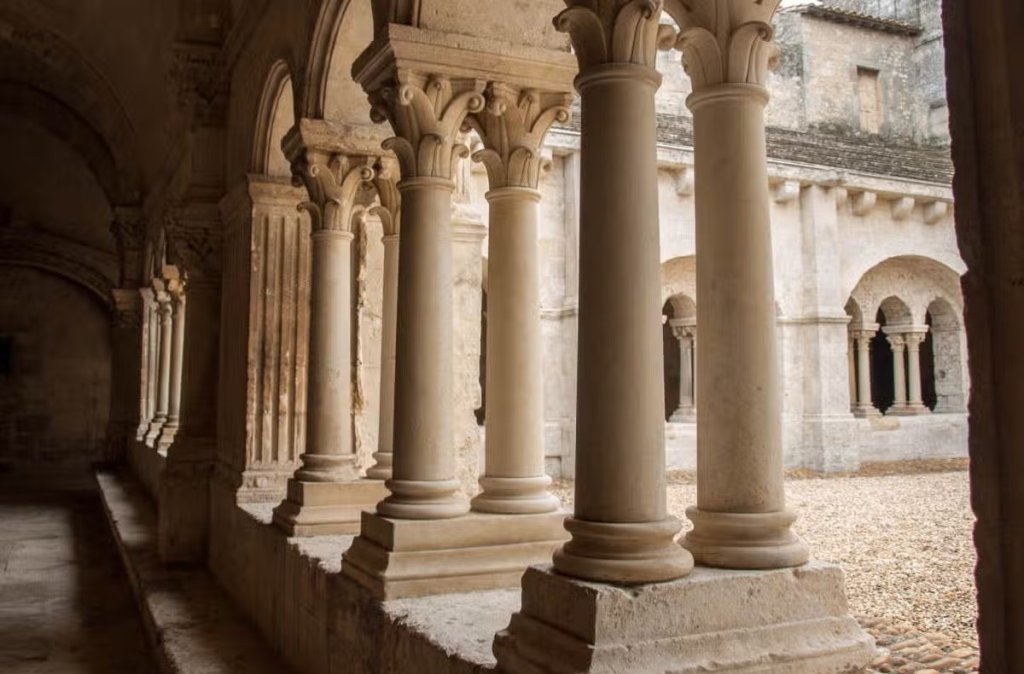
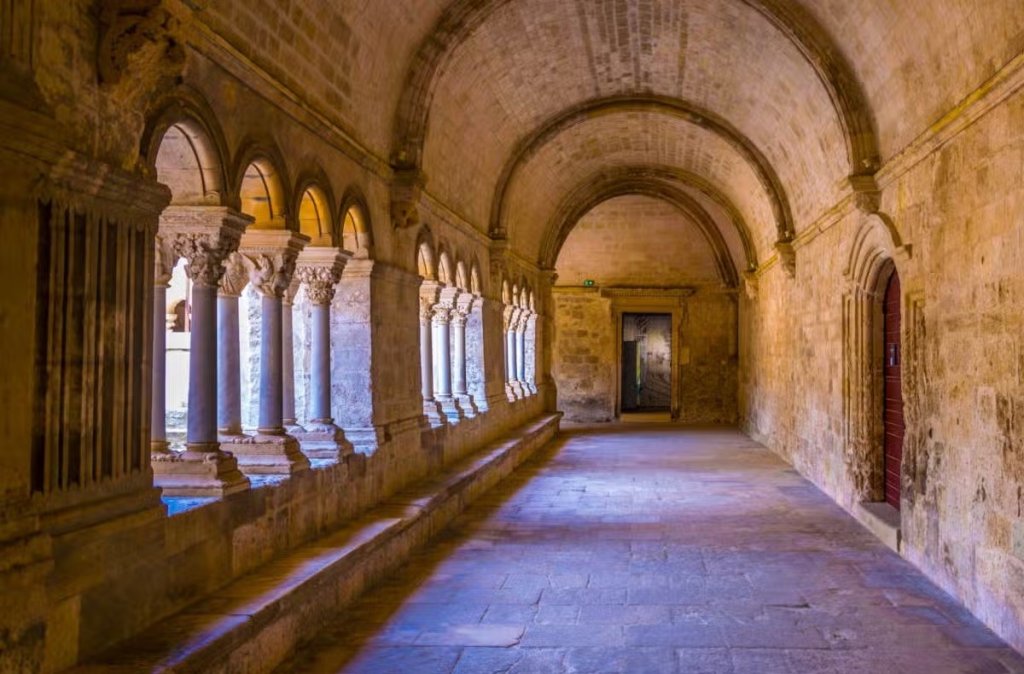
The cloister is the site’s central monastic space. This 27-by-24-meter rectangle organizes monastic life and connects the various spaces: the chapter house, the refectory, and the dormitory, accessible via a spiral staircase. The north gallery, the oldest, dates from 1153. It features an antique-style decoration very similar to that of the Saint-Trophime cloister in Arles.
The south gallery is later, from the 13th century, and is distinguished by a different iconographic program. The capitals there depict biblical scenes—the Annunciation, Pentecost, the Coronation of the Virgin—intermingled with a rich Christian bestiary: donkeys, monkeys, camels, eagles, and fantastical creatures. Some even recognize the Provençal Tarasque in one of the corbels of the west gallery.
The Saint-Benoît crypt is also a major architectural feature. Its layout includes a rotunda, an ambulatory, and radiating chapels: a configuration unique in Provence. The entire abbey church rests on this crypt, which explains the remarkable solidity of the walls and the elegance of the vaults.
The Saint-Maur monastery, built in the 18th century based on plans by architect Pierre Mignard, constitutes the second complex. This classical-style building was imposing: five stories, with a sober yet grand architectural style. Sold during the Revolution, only about one-sixth of it remains today, but the first floor has recently been reopened to the public for the first time.
What events are held at the abbey?
Montmajour Abbey is more than just a monument to visit: throughout the year, it hosts events that enliven the site and breathe new life into it. Temporary exhibitions are at the heart of this program, with renowned photographers and artists taking over the abbey’s spaces each season.
The most anticipated event is the Abbey’s participation in the Rencontres de la Photographie d’Arles every summer. The refectory and chapter house are then transformed into exhibition spaces. These medieval venues host internationally renowned contemporary photographers in a striking visual dialogue with the built heritage.
European Heritage Days, held on the third weekend of September, offer free admission to the site. The abbey opens its doors and offers guided tours throughout the weekend. This is often an opportunity to explore the current exhibitions without paying a single penny.
The Montmajour Pardon, which dates back to the Middle Ages and has been held every May 3 since the 11th century to commemorate the relic of the Holy Cross, is one of the oldest pilgrimages in Provence. This historic tradition is an integral part of the area’s identity, even though it no longer draws the 150,000 pilgrims it did in the Middle Ages.
For families, workshops are offered during school breaks, including a herbarium workshop and a special Easter scavenger hunt. These activities are for children ages 6 to 12, accompanied by their parents or grandparents. Duration: approximately one and a half hours. Reservations are required.
Occasional themed tours are added to the regular schedule. These guided tours, which require reservations, explore specific aspects of the monument’s history and architecture. The schedule is available on the abbey’s official website, which provides all dates and admission details.
To stay informed, the abbey is active on social media, including Instagram and Facebook, where the schedule is regularly updated. These pages also allow you to follow news about current exhibitions and special closures.
What monuments are near Montmajour?
Montmajour Abbey is located on the road to Fontvieille, about 4 kilometers northeast of Arles. This location makes it a natural stop on a route connecting the city to the Alpilles plain. You can easily visit several sites in a single day without traveling very far.
Fontvieille, the first village accessible from the abbey, is home to Alphonse Daudet’s mill. This historic monument owes its fame to “Letters from My Mill,” even though the writer likely never stayed there. The Mill Trail is a pleasant walking route connecting the village to the abbey through a landscape typical of the Bouches-du-Rhône region.
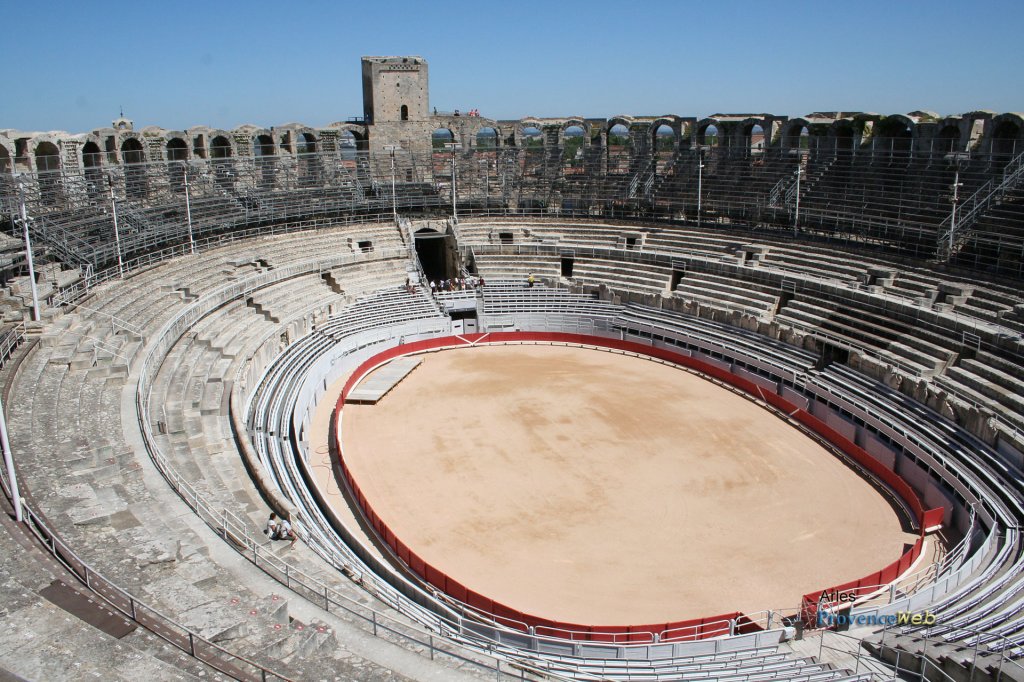
Arles itself boasts an exceptional collection of monuments listed as UNESCO World Heritage Sites. The Roman amphitheater, the ancient theater, the Alyscamps, the Saint-Trophime cloister, and the Van Gogh Museum are all sites worth including in your itinerary. A combined “Pass en Pays d’Arles” ticket provides access to several of these monuments at a reduced rate, including Montmajour.
The archaeological site of Glanum, in Saint-Rémy-de-Provence, is less than thirty minutes away from Montmajour. Glanum is one of the best-preserved Gallo-Roman sites in the Provence-Alpes-Côte d'Azur region.
The Château des Baux-de-Provence is located about fifteen kilometers to the north, in the Alpilles. This historic monument, perched on a rocky outcrop, offers a panoramic view and a museum dedicated to the region’s medieval history. It is also part of the Pass en Pays d’Arles.
For lovers of natural heritage, the Crau plain and the outer reaches of the Camargue are just a few minutes’ drive from the abbey. This landscape of scrubland, olive groves, and marshes, visible from the Montmajour tower, is reason enough to take the time to stop by.
Montmajour Abbey is open Monday through Sunday in the summer, and Tuesday through Sunday during the off-season. For any practical questions, you can contact the site directly via its website or by phone. Be sure to book your ticket online in advance on the website below: