

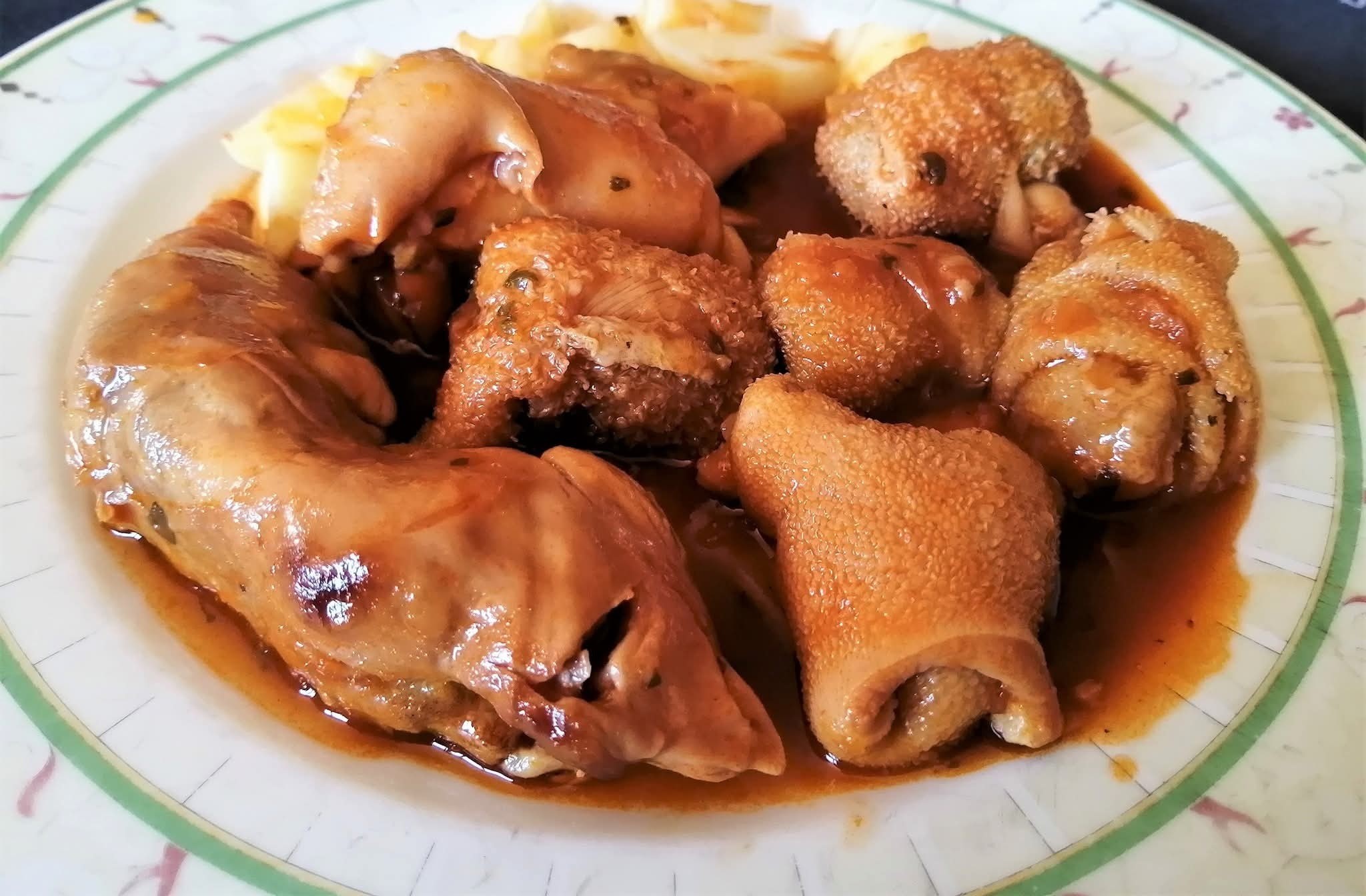
Pieds paquets is the Marseille specialty that every lover of Provençal cuisine should know. “Pieds paquets” means “feet and package” in French.
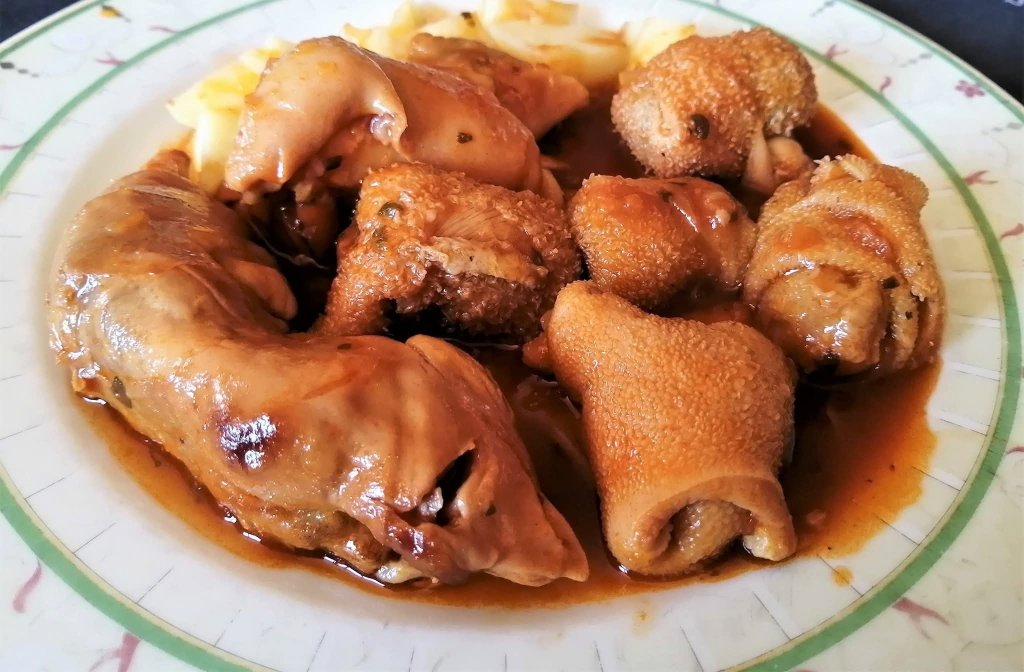
Lamb tripe stuffed with garlic, chopped parsley, and pork belly, rolled into a parcel and tied with string, then simmered for hours with lamb shanks in a tomato sauce with white wine. The result is a hearty dish, deeply rooted in Provençal tradition, that families have passed down from generation to generation since the 19th century.
What makes this dish famous is its cooking time: a minimum of 7 hours over low heat in a cast-iron pot, sometimes two full days. There’s no rushing this. But this slowness is precisely the secret to a rich, caramelized sauce, melt-in-your-mouth meat, and a meal you’ll remember for a long time. In this article, you’ll find the complete recipe, ingredients, tips for rolling the buttonhole-style parcels, and how to cook it perfectly—even if you’re making this dish for the first time.
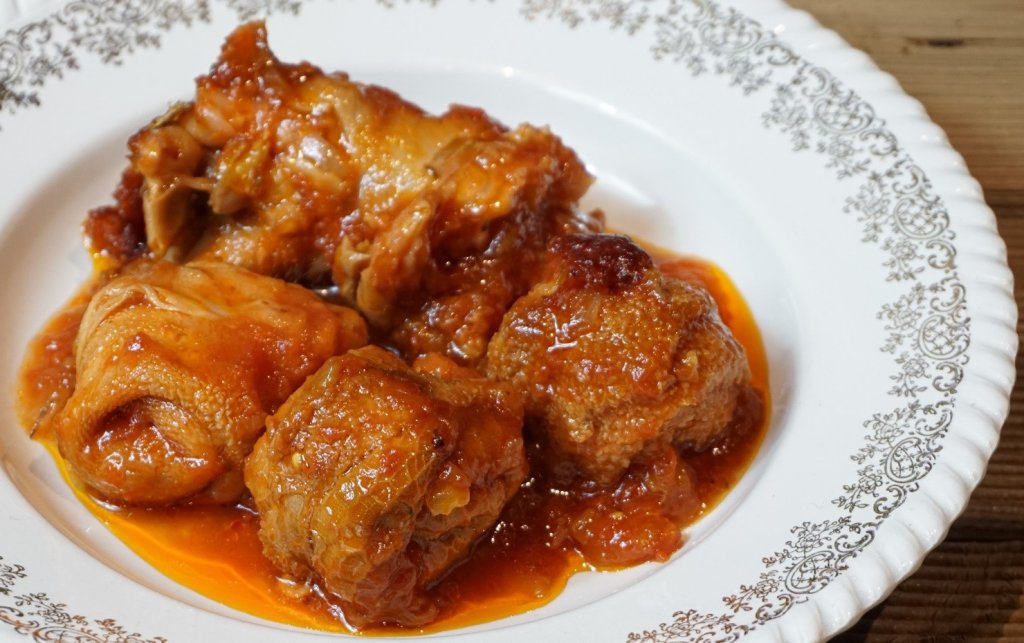
Traditional recipe for Marseille-style feet packets
Here’s everything you need to know to make perfect feet packets at home.
Ingredients
To make successful Marseille-style feet packets, the quality of the ingredients makes all the difference. Start by shopping at a good butcher—some already offer the packets rolled and stuffed, which greatly simplifies preparation. Here’s what you need for 4 people:
8 lamb tripe parcels (about 800 g)
4 very white, dehaired lamb shanks
150 g pork belly, cut into lardons or thin slices
4 garlic cloves
1 bunch chopped parsley
1 bouquet garni (thyme, bay leaf)
400 g peeled tomatoes (fresh or canned)
1 glass of dry white wine
2 carrots, 1 onion, a drizzle of olive oil, salt, and pepper
For the stuffing, mix the chopped pork belly with the crushed garlic cloves and the parsley. It’s simple, but this mixture infuses the entire sauce with flavor during cooking. The peeled tomatoes and dry white wine form the base of the broth in which the pieds paquets will simmer together for hours.
The step-by-step recipe for pieds paquets
The recipe for Marseille-style pieds paquets requires patience, but each step is straightforward. Preparing pieds paquets is, above all, about following a precise order—from preparing the lamb tripe to the long cooking time in a casserole. Here is the complete process for this traditional recipe, one that Provençal cuisine has passed down for generations.
Step 1 — Prepare the lamb feet
Singe the lamb feet over an open flame to remove any remaining hairs
Remove the small pouch located between the hooves
Plunge them into a pot of boiling water for 5 minutes to blanch them
Drain and set aside
Step 2 — Prepare the lamb tripe
Rinse the lamb tripe several times in hot water
Cut them into squares about 8 cm on each side
Make a small buttonhole-style incision in one of the corners
Step 3 — Prepare the stuffing
Finely chop the garlic and parsley
Mix with the pork belly, cut into small pieces
Season generously with salt and pepper
Step 4 — Roll the parcels
Place each square of tripe with the inner side facing up
Place a tablespoon of stuffing in the center
Roll tightly and tuck a corner into the slit to seal
Step 5 — Assemble the casserole
Sauté the minced onion and bacon in a drizzle of olive oil
Add the peeled tomatoes, sliced carrots, and crushed garlic cloves
Arrange the lamb shanks at the bottom of the pot, with the parcels on top
Moisten with dry white wine and add the bouquet garni
Season with salt and pepper, then cover tightly
Step 6 — Cooking
Bring to a simmer, then reduce to low heat
Let simmer for at least 7 hours, checking occasionally
The dish is even better reheated the next day — plan to cook it the day before
Serve the wrapped lamb shanks piping hot with steamed potatoes and a sprinkle of chopped parsley on top. Allow 4 to 5 parcels per person and one shank. A red wine from Provence or a dry white wine from Cassis will pair perfectly with this classic Provençal dish.
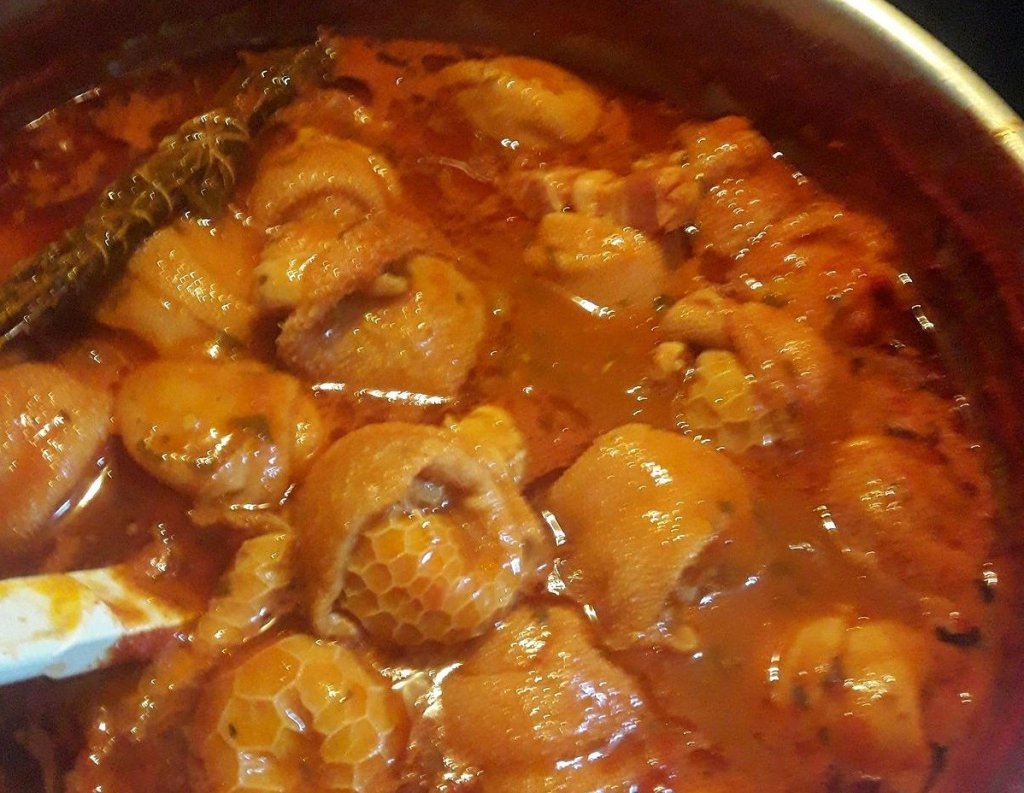
The secret: cooking time
Cooking time is what scares people the most—and yet it’s the heart of the recipe. A long, slow cook over low heat in a cast-iron pot for at least 7 hours. Some families let it simmer for two full days, in several batches. Preparing the pieds paquets themselves takes a good hour, but it’s the slow cooking that does all the work. There are no shortcuts: the longer it cooks, the better it is.
Is there a quick version of pieds paquets?
There is a quick version of pieds paquets made in a Cookeo or pressure cooker. This simplified method reduces cooking time to about 1 hour and 30 minutes under pressure. The easy Cookeo recipe yields a decent result, but the sauce lacks the depth of flavor achieved through slow cooking. For a quick weeknight meal, it’s a decent alternative—but for a special occasion, nothing beats the traditional version.
How to serve pieds paquets?
Serving pieds paquets is simple: allow 4 to 5 parcels per person, each with a foot, and serve with steamed potatoes on the side. Sprinkle a little chopped parsley on top, and it’s ready. Pieds paquets can also be served with gnocchi, following the Italian tradition of Marseille. This traditional dish is the ultimate comfort food, often the centerpiece of the big Provençal dinner on December 24.
What is the origin of pieds paquets?
The origin of pieds paquets officially dates back to 1880, in the Pomme district of Marseille. A cook named Louis Ginouvès is credited with this ancestral recipe, which appeared in cookbooks in 1888. This Marseille specialty then spread throughout Provence, particularly to Sisteron. Provençal tradition holds that the legend is even older — Princess Gyptis is said to have offered stuffed tripe to the Phocaean captain Protis at the founding of Marseille. Whether culinary history or a beautiful legend, both versions are part of the dish’s charm.
What are the secrets of the recipe?
The secrets to a successful recipe can be summed up in a few words: cleanliness, generous stuffing, and patience. The traditional preparation requires rinsing the tripe several times in hot water before stuffing it. Family know-how also involves tying the opening tightly—if the package opens during cooking, everything falls apart. Another tip: prepare the dish the day before; it will be much better when reheated. An authentic recipe shouldn’t be rushed.
Discover all our Provençal recipes:


not to mention our famous Provençal desserts: