

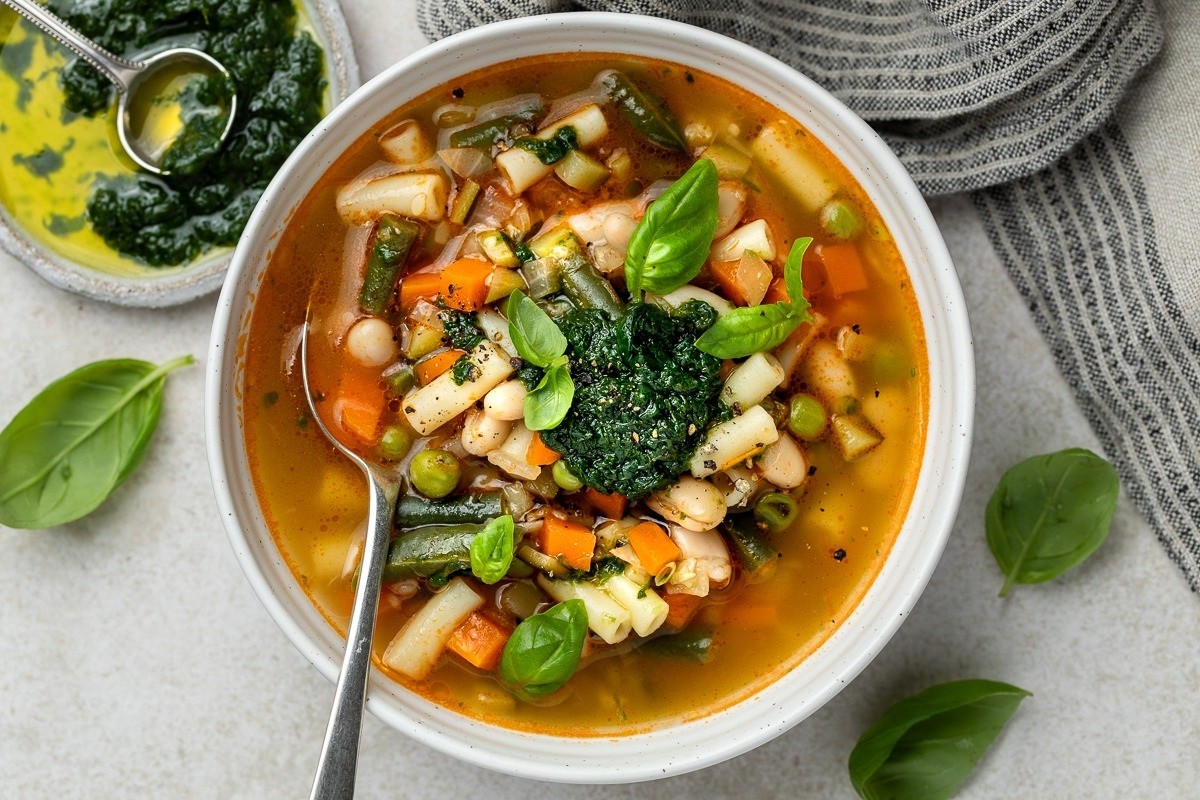
Pistou soup is undoubtedly the most iconic dish of Provençal cuisine.
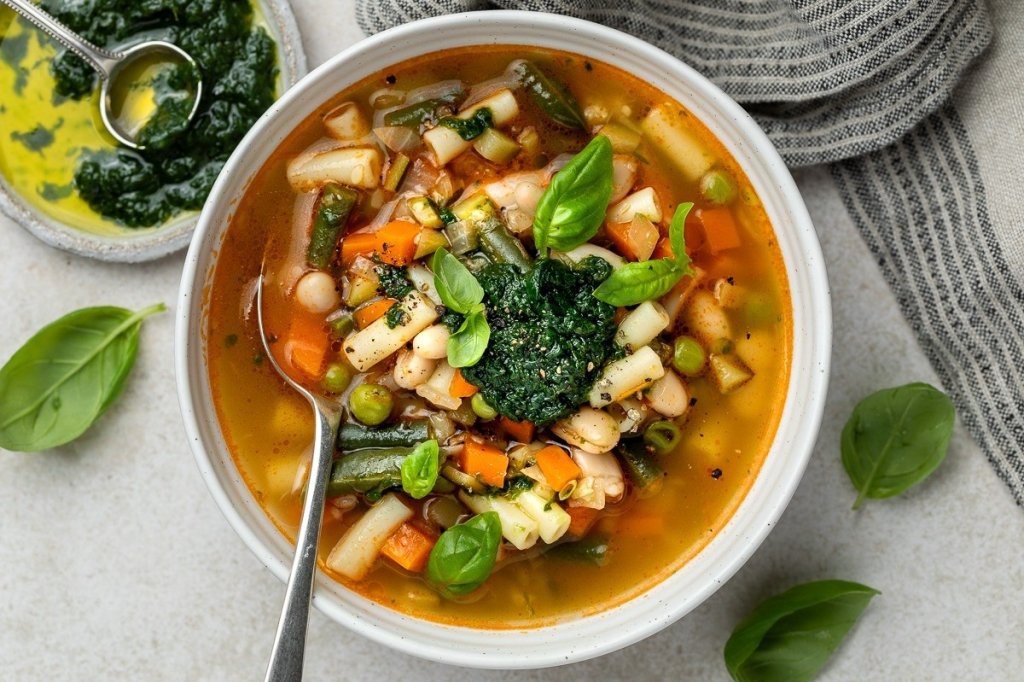
It’s a hearty dish made with fresh vegetables—green beans, zucchini, carrots, potatoes, and tomatoes—simmered for a long time in a large pot, before being finished with a paste of fresh basil, garlic, and olive oil.
This pistou, added after removing the pot from the heat to preserve its full flavor, transforms a simple vegetable soup into something truly unique.
This soup holds a special place in your exploration of Provençal cuisine. It can be enjoyed hot or warm, as a starter or a main course. And it’s meant to be shared—that’s the tradition. Below, we share the authentic traditional recipe for this Provençal specialty!
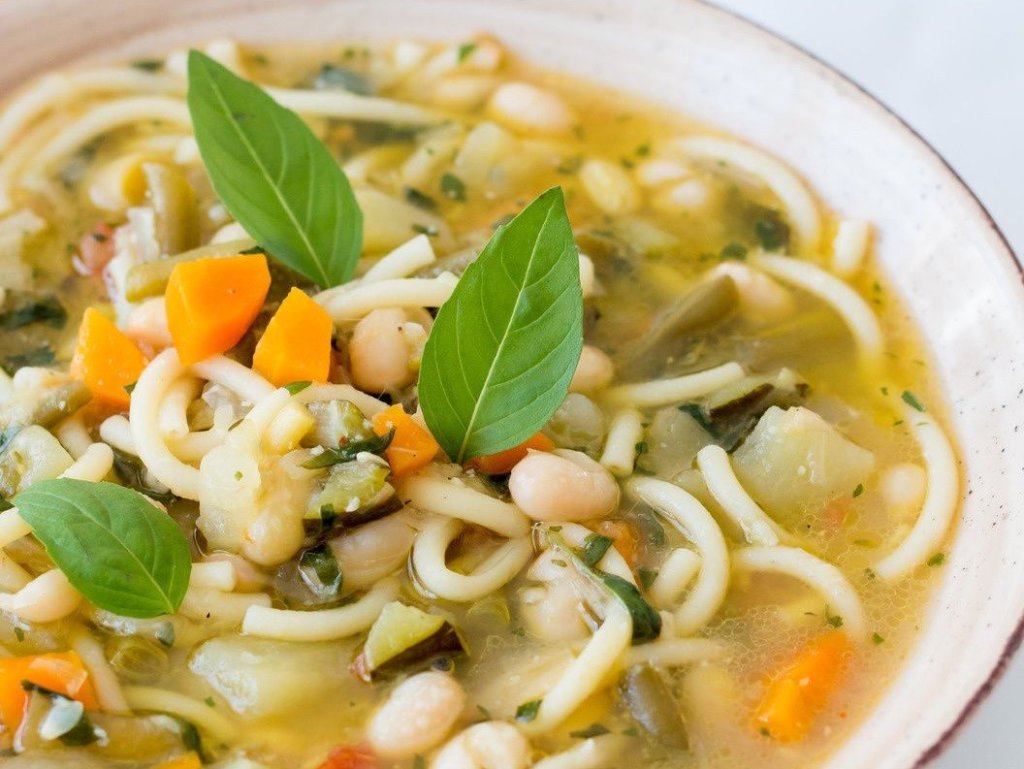
Traditional recipe for pistou soup
Here are the ingredients you’ll need to make pistou soup the traditional way:
Soup ingredients
Fresh white coconut beans (shelled)
Fresh red coconut beans (shelled)
Flat green beans
Zucchini
Ripe tomatoes
Potatoes
Carrots
Onion
Leek
Coquillettes (or small pasta)
Coarse salt, pepper
Water (3 to 5 liters depending on proportions)
Ingredients for the pistou
Bunch of fresh basil
Garlic cloves
Extra virgin olive oil
Salt
How to easily make pistou soup?
Pistou soup often seems intimidating due to its long list of ingredients. However, it’s easy for anyone to make, even without much cooking experience. All you need is a little time, a good selection of fresh vegetables, and a large pot. The method is simple: chop, cook, and let the soup do its thing.
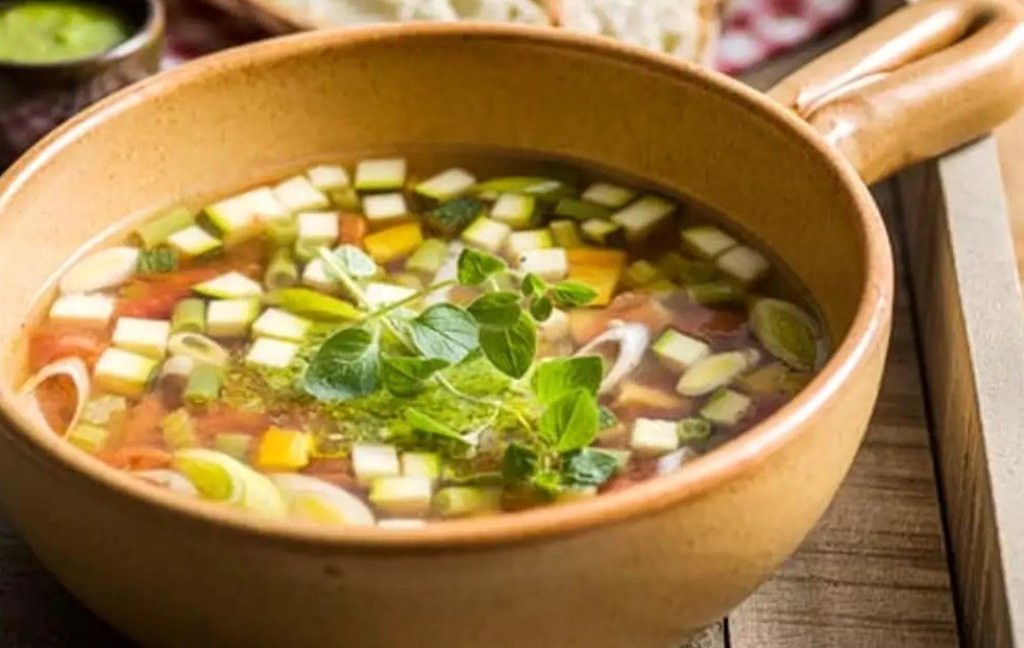
Start by peeling and washing all your vegetables.
Cut the zucchini, carrots, and potatoes into small, evenly sized pieces—this is important for even cooking.
Shell the white and red coconut beans if using them fresh
Finely chop the onion.
Set aside the fresh basil for the pistou; it will be added at the very end.
Fill your large pot with about 3 liters of cold water.
Season with coarse salt, then add all the vegetables except the pasta.
Bring to a boil, then reduce the heat and simmer for about 1 hour and 30 minutes, stirring occasionally. The soup will gradually thicken and take on color—that’s a good sign.
Once the vegetables are tender, add the coquillettes or small pasta directly to the pot. Cook for an additional 10 to 15 minutes. Taste and adjust with salt and pepper to your liking.
Meanwhile, prepare the pistou
Preparing the pistou
Every Provençal family has its own little secrets, but here is the classic recipe for pistou.
In a mortar, crush the garlic cloves with the fresh basil leaves until you obtain a paste.
Drizzle in the olive oil while stirring, until you get a smooth, bright green paste. You can also use a blender—the result is excellent and much faster.
Pistou is never cooked. That is the essential rule of this recipe. The aroma of basil is delicate: heat ruins it immediately. So add the paste directly to the hot soup, off the heat, just before serving.
Recipe Video
Here’s a helpful short video in English that might assist you:
Cooking time
Prep time is about 30 minutes. Cooking time ranges from 1½ to 2 hours, depending on the vegetables used. The longer the soup simmers over low heat, the better it will be—let it cook, that’s the secret every self-respecting Provençal grandmother repeats.
How to serve pistou soup?
Serve in large soup bowls. Place an extra jar of pistou on the table, grated cheese (Parmesan or Gruyère)—each guest can help themselves as they please. This dish stands on its own as a main course, served with a few slices of toasted bread.
Why is pistou soup so popular?
Pistou soup owes its popularity to a rare combination: it’s hearty, easy to prepare, and deeply rooted in Provençal tradition. It’s a dish meant for sharing. It’s prepared in large quantities, family and friends gather around the table, and the pot empties in good spirits.
Its popularity also stems from its flexibility. Each family adapts the recipe to their tastes, the vegetables in season, and the time of year. There is no official version—and that is precisely what has allowed it to endure across generations without losing its appeal.
Finally, pistou soup checks all the boxes for modern cuisine: vegetarian in its original form, rich in fresh vegetables, and free of complicated ingredients. It appeals equally to locals and visitors looking to taste authentic Provençal cuisine, far from tourist clichés. It’s a simple delight, and that may be its greatest quality.
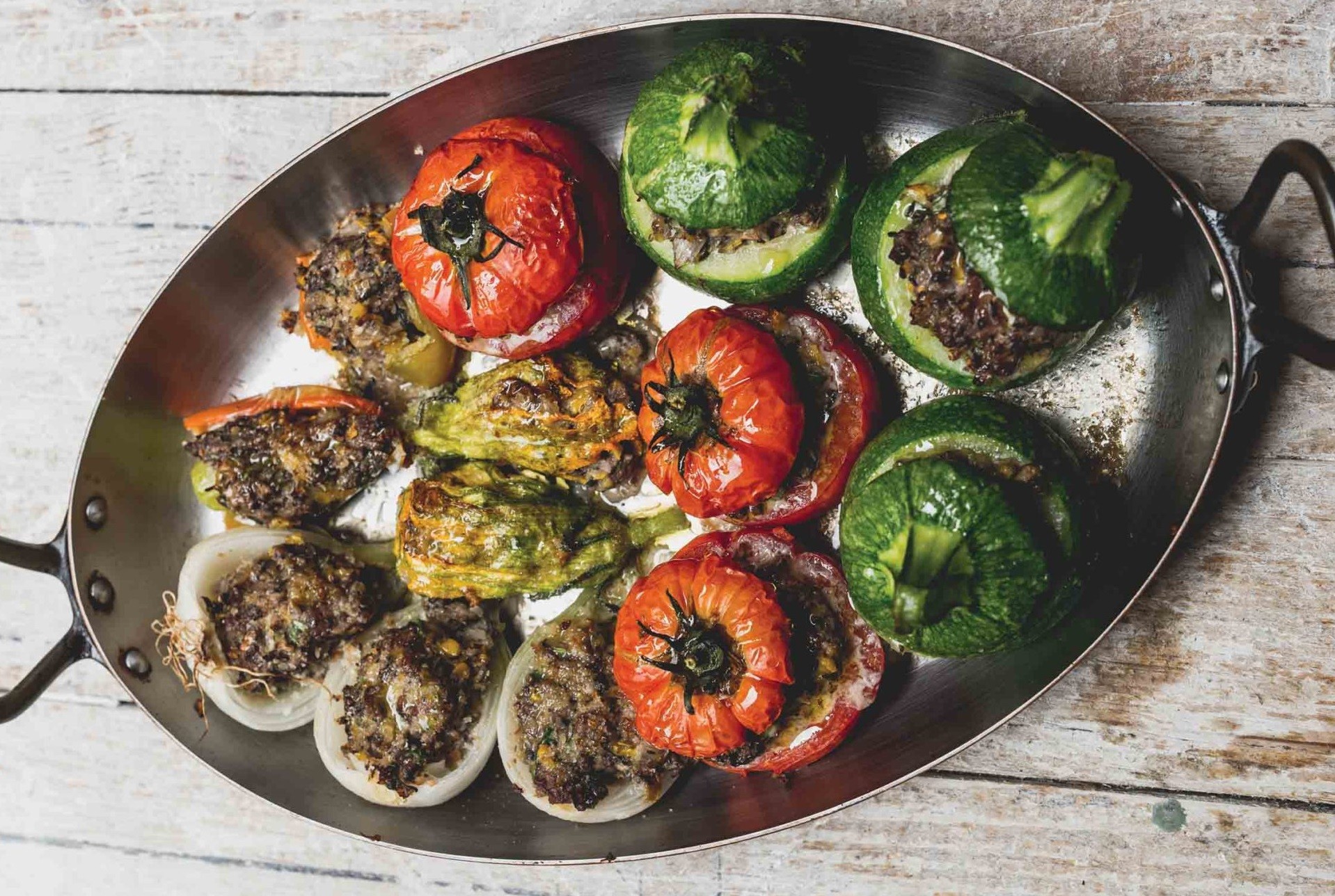
Find all our Provençal recipes:


not forgetting our Provençal dessert recipes :