
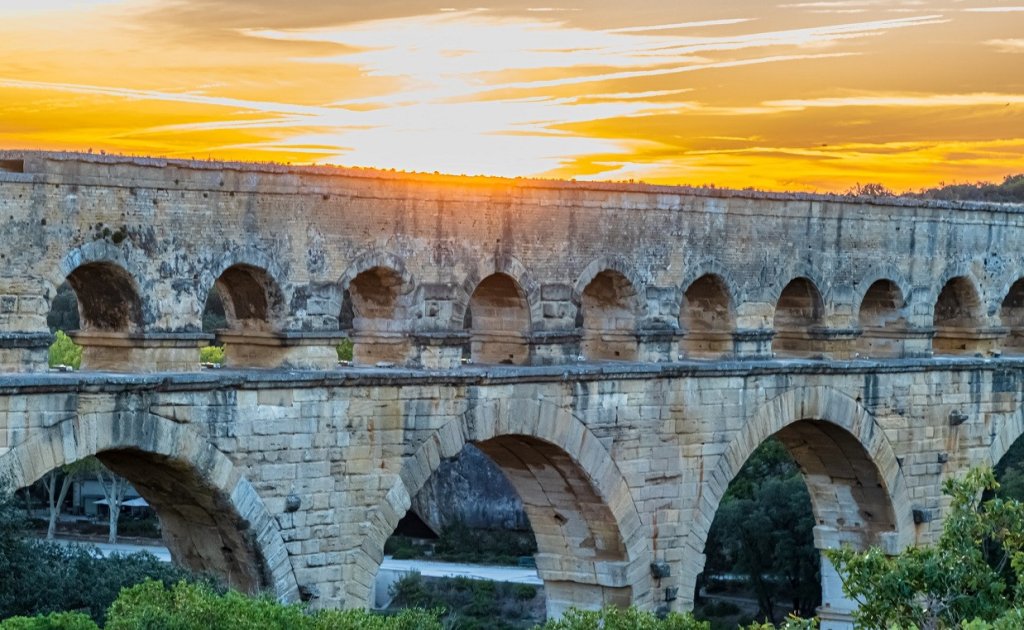
You're on vacation and want to discover the Pont du Gard. This Roman monument is a must-see in the South of France, impressing visitors with its three levels of arches overlooking the Gardon River.
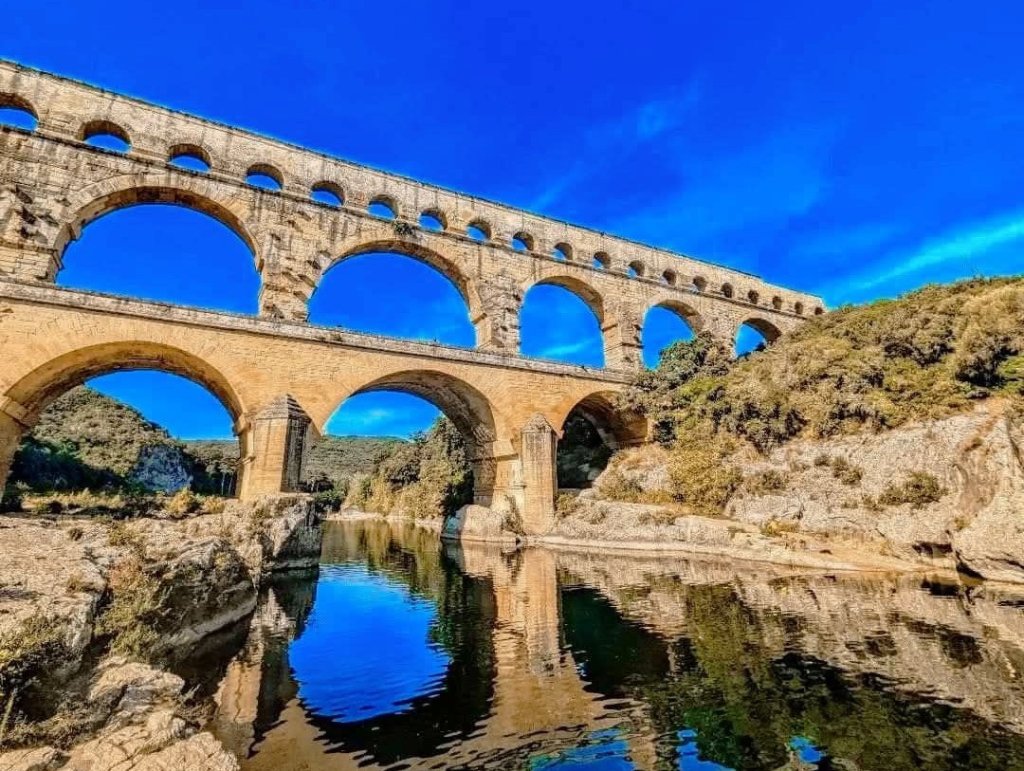
The aqueduct was built in the first century AD to carry water from Uzès to Nîmes over a distance of 50 kilometers. At 49 meters high, it is the tallest Roman aqueduct bridge in the world still standing. The structure has been listed as a UNESCO World Heritage Site since 1985. It bears witness to the ingenuity of the builders of the time.
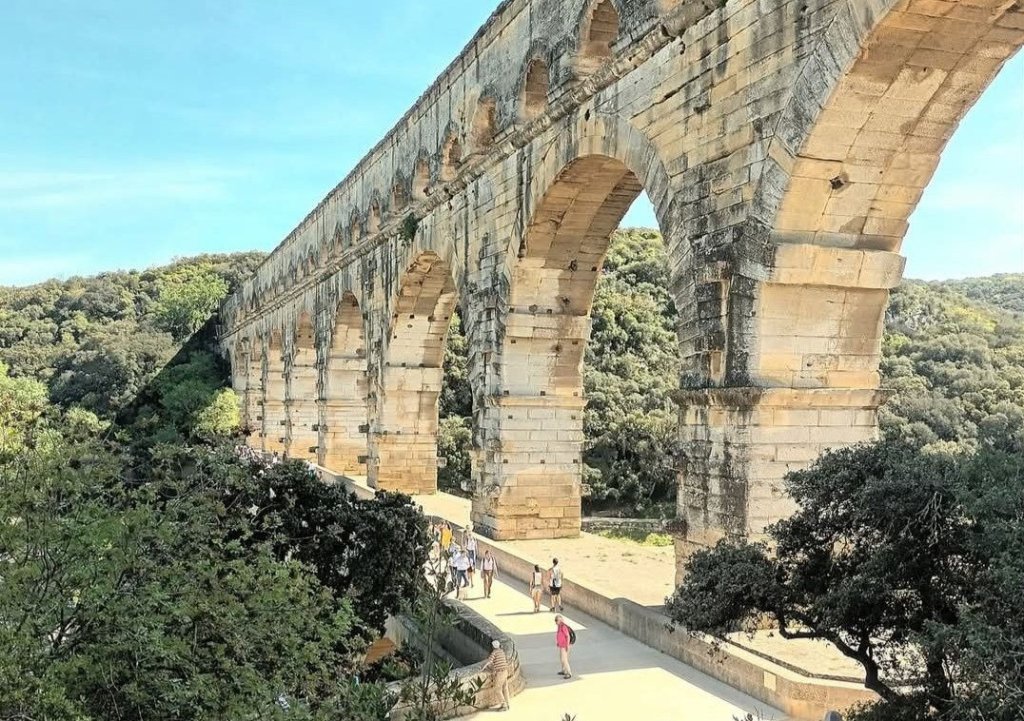
On site, you will find a museum that traces the history of the construction. The Ludo area offers educational activities for children aged 5 to 12. The Mémoires de Garrigue trail introduces you to Mediterranean vegetation. In summer, you can even swim in the Gardon River at the foot of the monument.
Here is all the information you need about the Pont du Gard to plan your visit.
Why is the Pont du Gard famous?
The bridge is a masterpiece of ancient Roman architecture. Its exceptional height and remarkable state of preservation make it a marvel of world heritage. It is the only example of an ancient three-level bridge still intact today.
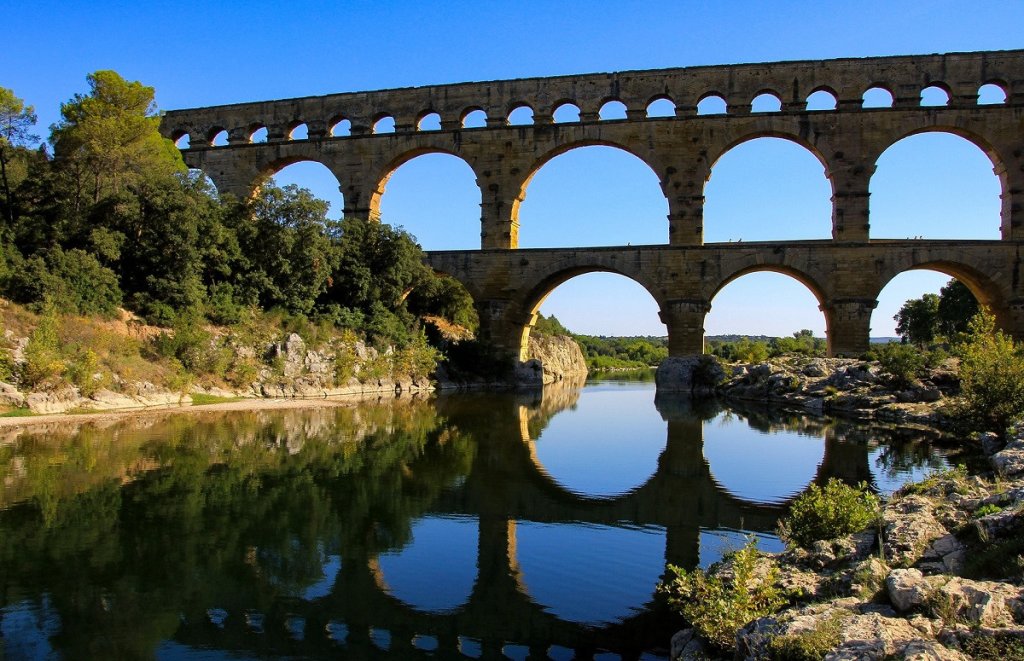
The monument has been listed as a UNESCO World Heritage Site since 1985. This distinction recognizes its universal cultural value and its testimony to Roman history. The site welcomes more than a million visitors each year.
The Pont du Gard symbolizes Roman scientific genius and their mastery of hydraulics. It bears witness to the prestigious history of Roman civilization in Gaul. The French even voted it their favorite monument in 2015 during a television program.
What are the characteristics of the Pont du Gard?
The bridge is 49 meters high and 275 meters long at the third level. It is the tallest Roman aqueduct bridge still standing in the world. The three levels of superimposed arches total 52 arches across the entire structure.

The first level has 6 arches, the second has 11, and the third has 35. The structure was built without mortar using limestone blocks extracted from a local quarry. The stones on the third level weigh up to 6 tons each.
Roman engineering is impressive for its exceptional precision. The slope of the aqueduct was only 25 centimeters per kilometer over 50 km. This technical feat allowed water to flow by gravity from Uzès to Nîmes.
What is the history of the Pont du Gard?
The Roman aqueduct was built in the first century AD, probably during the reign of Emperor Claudius. The Romans wanted to supply Nîmes with water from the springs of Uzès. The monument functioned for about five centuries before being abandoned at the beginning of the sixth century.
In the Middle Ages, the inhabitants transformed the bridge into a road crossing. They dug out the piers on the second level to allow carts to pass through. The monument was then listed on the first list of historic monuments in 1840.
UNESCO inscribed the Pont du Gard as a World Heritage Site in 1985. This recognition honors the creative genius and technical prowess of the Roman builders. Today, the ancient site is the most visited in France in its category.
Where is the Pont du Gard located?
The monument is located in Vers-Pont-du-Gard, between Uzès and Nîmes in the Gard department. You will find it in the Occitanie region, in the south of France. The site is 27 km from Nîmes and 21 km from Avignon.
To get there by car, take the A9 motorway, exit 23 at Remoulins. Then follow the signs for Uzès and then the signs for the right bank or left bank. There are two car parks on either side of the Gardon, as you can see on this map of the Pont du Gard:
The bridge spans the Gardon River in the middle of a Mediterranean scrub landscape. The unspoiled natural environment highlights the monument's architecture. Limestone hills and typical Provençal vegetation surround the site.
How to visit the Pont du Gard?
The site is open every day of the year. In January, November, and December, it is open from 9 a.m. to 6 p.m. In summer (July-August), you can visit until 11 p.m. Hours vary depending on the season to take advantage of the long summer days.
The entrance fee is €9 per vehicle for parking. This ticket includes admission to the cultural areas, museum, and exhibitions. Access to the first level of the bridge is free for all visitors.
Allow at least half a day for a complete visit of the site. You can stroll along the trails, explore the museum, and enjoy the banks of the Gardon River. Educational activities and guided tours are available all year round.
What are the opening hours of the Pont du Gard?
The site opens at 9 a.m. every day of the year. In winter (January, November, December), it closes at 6 p.m. In spring and autumn, you can stay until 8 p.m. or 9 p.m., depending on the month.
The cultural areas close one hour before the site itself. The ticket office closes 30 minutes before the areas close. Plan to arrive at least 50 minutes before closing time to fully enjoy your visit.
The average duration of a complete visit is 3 to 4 hours. You will have time to see the museum, the bridge, and stroll through the garrigue. For visitors in a hurry, allow at least 1.5 hours to see the main features of the site.
We hope you enjoy discovering the magnificent Pont du Gard!