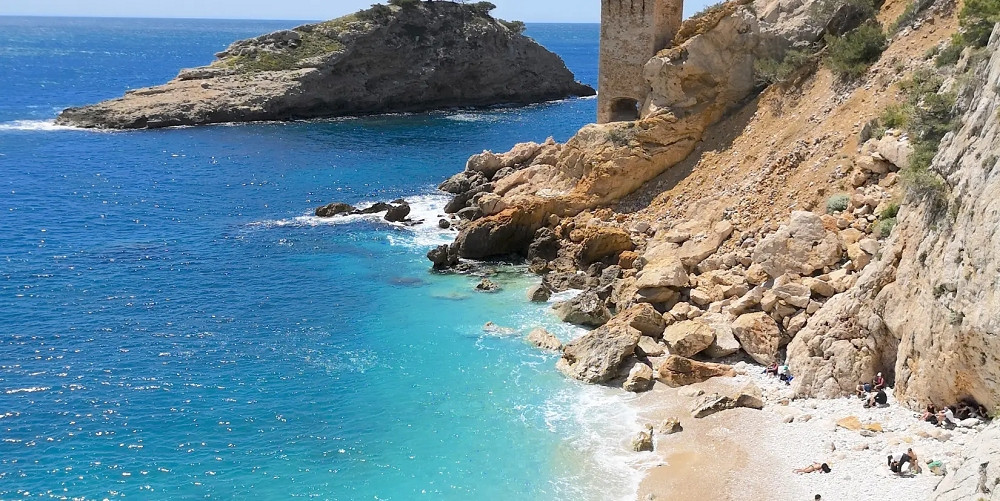

Between Cannes and Saint-Tropez, the Estérel range rises with its red cliffs above the Mediterranean, with two Roman towns at its base and 30 kilometers of calanques below.
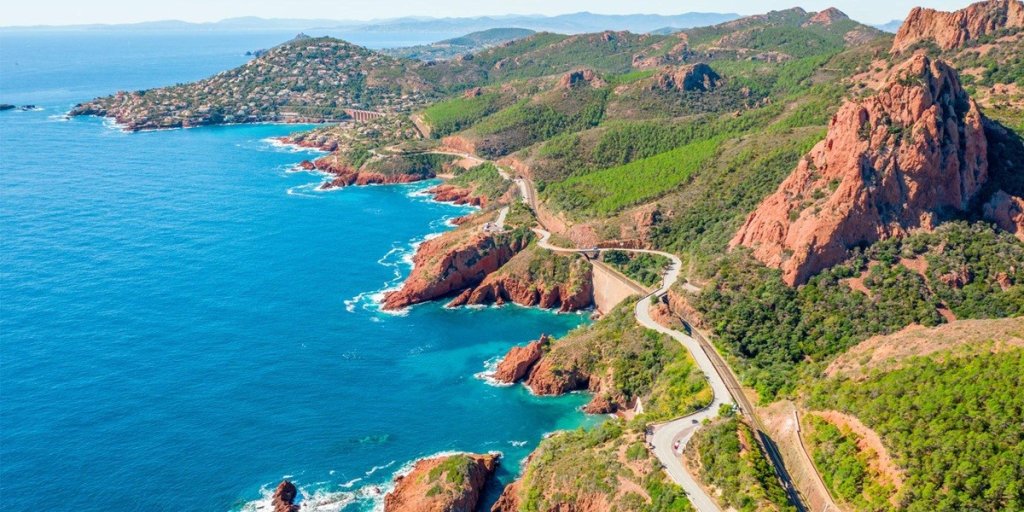
Discover the Estérel region between Fréjus and Saint-Raphaël
The Estérel is a volcanic massif that plunges into the sea between Saint-Raphaël and Mandelieu. Its rhyolite gives it a dark red color that stands out against the blue of the water. This contrast is unique along the entire French coastline.
The region comprises five municipalities: Fréjus, Saint-Raphaël, Roquebrune-sur-Argens, Puget-sur-Argens, and Les Adrets-de-l’Estérel. Here you’ll find everything you need for a perfect vacation: sandy beaches, red-rock coves, two thousand years of ancient heritage, and 130 km² of national forest for hiking.
It’s also a conveniently located destination. Cannes is thirty minutes away, Saint-Tropez forty, and the Verdon Gorge an hour and a half.
We’ll point out the villages worth visiting, the sights to see, and offer helpful tips for planning your vacation.
The Estérel Massif
The massif covers 320 km² and rises to its highest point at Mont Vinaigre, at 614 meters. It takes just two hours to hike to the summit—mostly in the shade—and the view stretches 360 degrees, from the Gulf of Saint-Tropez to the Bay of Cannes.
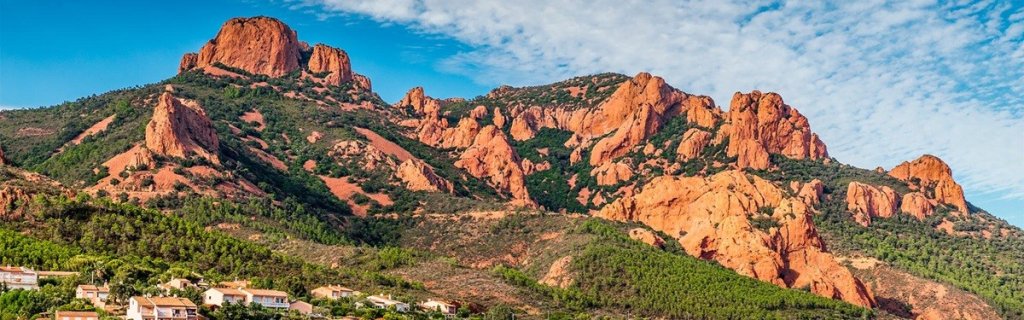
The other peaks are also worth the effort: Pic du Cap Roux with its orientation table, Pic de l’Ours, and Rocher Saint-Barthélemy, which is accessible even to people with limited mobility. The trails are marked by the National Forest Service.
On the seaside, the Corniche d’Or runs along the coast from Agay to Cannes. This road was inaugurated in 1903, on the initiative of the Touring Club de France. It remains one of the most scenic drives along the Mediterranean, with stops every 500 meters.
A practical tip to keep in mind: access to the mountain range is restricted from June 21 to September 30, depending on the fire risk. The map is updated every evening by the Var Prefecture for the following day. Be sure to check before you go.
The Charming Towns of the Estérel
Each town has its own unique charm. Here are the five you should know about before booking.
Roquebrune-sur-Argens
The Roquebrune rock rises to 373 meters and is visible from all over the plain. The medieval village of Roquebrune-sur-Argens developed at its base, around the castrum of Roca Bruna, founded in the 10th century.
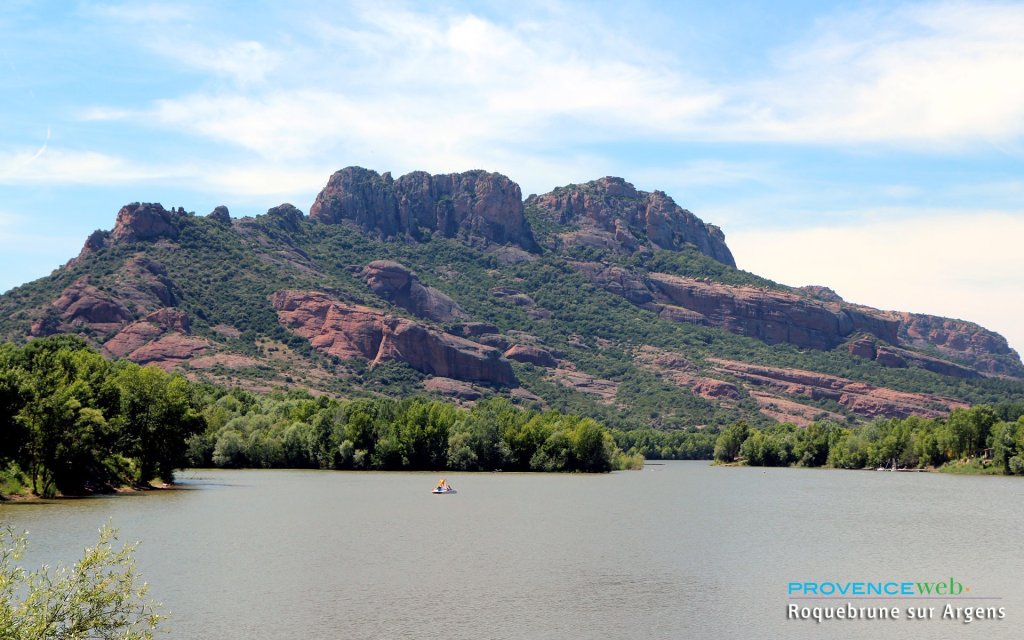
Remaining from that period are the 11th-century Portalet, the 16th-century clock tower, and the arcaded houses of Les Portiques. The Maison du Patrimoine is housed in a former 17th-century icehouse. More intriguingly, the Maison du Chocolat et du Cacao displays over a thousand objects related to the history of cocoa in a former chapel.
The seaside district of Roquebrune deserves a special mention. Eight kilometers of coves and rocky inlets face the Gulf of Saint-Tropez.
The coastal trail runs the entire length of them on foot, with access to the water all along the way. The Romans already frequented the area: the Gallo-Roman fishpond, classified as a Historic Monument, can be visited from the shore. It’s a family-friendly resort, less expensive than the opposite shore.
Les Adrets-de-l’Estérel
A change of scenery. The village of Les Adrets-de-l’Estérel is nestled in the forest, deep within the mountain range, on the edge of the Alpes-Maritimes department. People come here for the cool climate and the views.
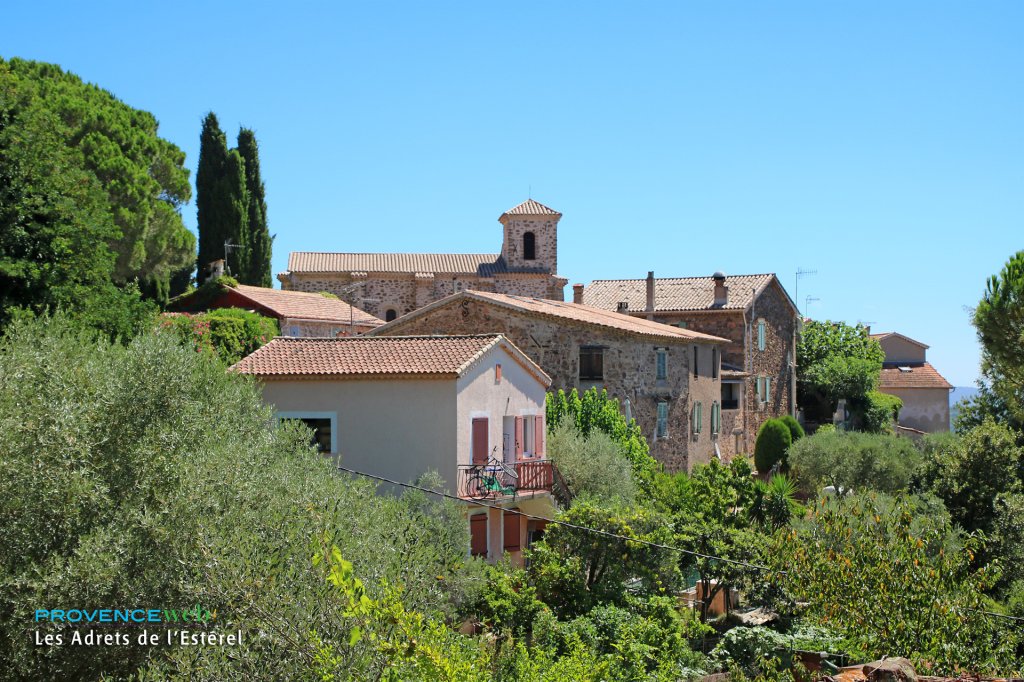
From up there, the view takes in the Bay of Cannes and the Lérins Islands. Lake Avellan, covering six hectares, offers an easy walking loop in the shade of cork oak trees. The former Auberge des Adrets, on National Route 7, was supposedly the hideout of the bandit Gaspard de Besse in the 18th century.
Puget-sur-Argens
The most unassuming of the five, and the most agricultural. Puget-sur-Argens is a winegrowing village, surrounded by vineyards bearing the Côtes de Provence appellation.
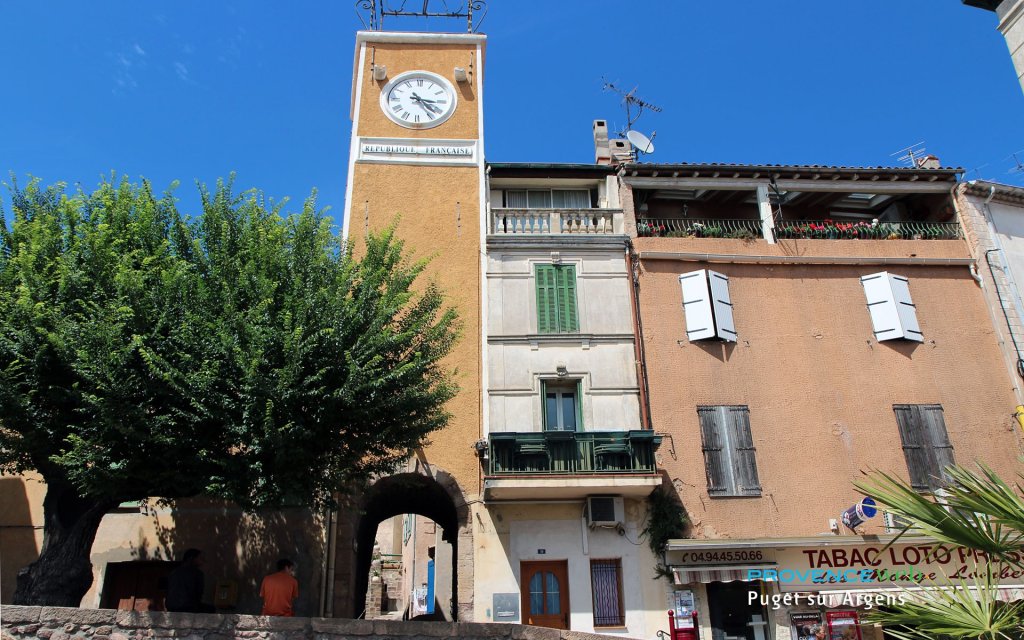
The Défens Woods, north of the village, can be explored in a few hours’ walk. The town serves primarily as a base: ten minutes from Fréjus, twenty from the coast, with accommodations significantly cheaper than those by the sea. The Blavet Gorges, in Bagnols-en-Forêt, are a quarter of an hour away.
Fréjus
Fréjus was founded in 49 BCE under the name Forum Julii, “Julius’s Market.” Under Augustus, it became one of the Empire’s major military ports.
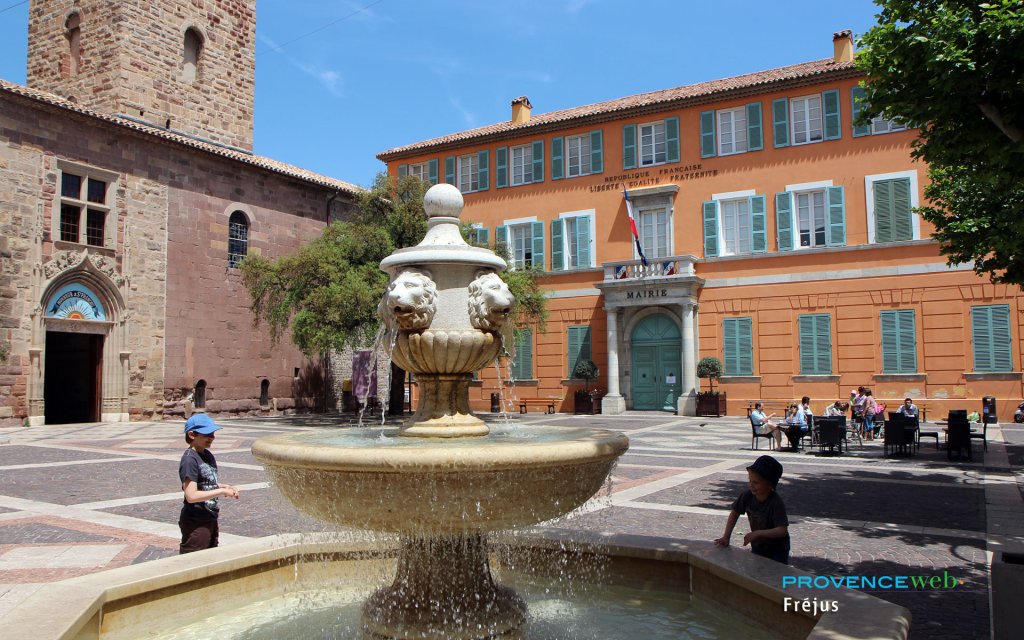
The amphitheater, built in the 1st century, measured 113 meters by 85 and could accommodate 10,000 to 12,000 spectators. Also of note are the ancient theater and the remains of the aqueduct that carried water from Mons, forty kilometers away.
The rarest feature, however, lies elsewhere. The episcopal city comprises the cathedral, the cloister, and a 5th-century baptistery—one of the oldest preserved in France—built using eight reused ancient columns. The 13th-century cloister features a larch ceiling painted in the 14th century: about three hundred panels remain of the original 1,200, depicting a bestiary of hybrid creatures that no one has truly explained.
One detail that illustrates the passage of time: the coastline has advanced by more than one kilometer since ancient times. The Roman port is now located inland.
Saint-Raphaël
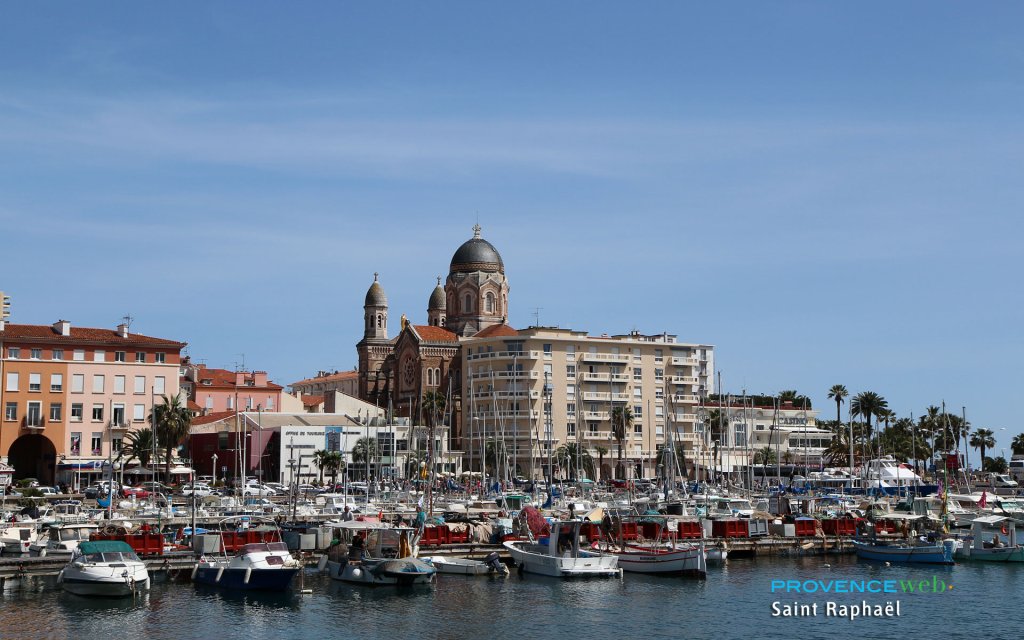
Saint-Raphaël is the other side of the region: a seaside resort with a downtown right on the water and thirty-six kilometers of coastline.

The town is divided into very distinct neighborhoods: Valescure with its pine forests, Boulouris with its villas, Le Dramont, and Agay with its nearly circular bay, sheltered from the wind. Each has its own beach and atmosphere.
Cap Dramont holds a special place in history. It was here that an American division landed on August 15, 1944, during Operation Dragoon. The coastal trail winds around it, facing the Île d’Or and its red tower. It is also from Saint-Raphaël that the Corniche d’Or leads to Cannes. A half-day’s drive—not counting stops—and you’ll have seen the best the Estérel has to offer.
Between the red rock and the clear water, the Estérel brings together, over thirty kilometers, the rarest treasures of the French Riviera: Roman ruins, coves accessible on foot, and a wild mountain range where you can hike alone just minutes from the beaches.