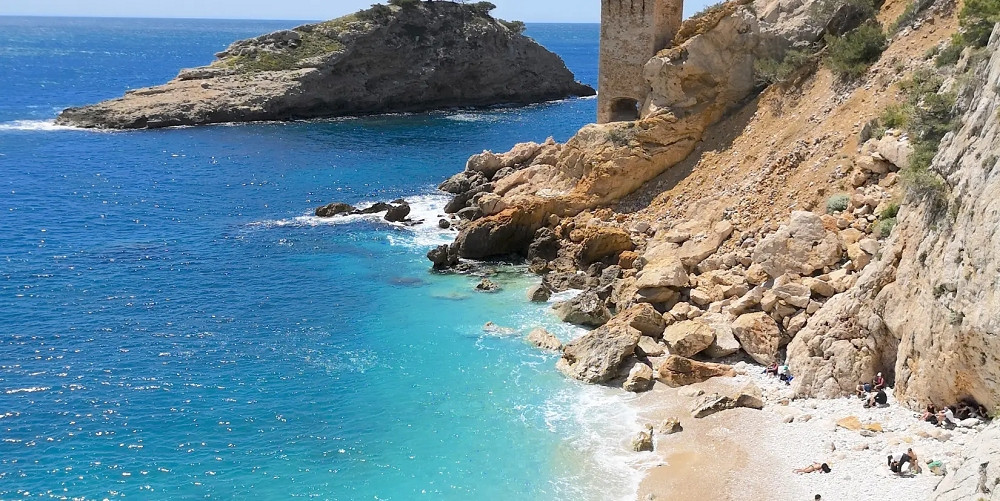

Nestled between the vineyards of the Argens and the foothills of the Pre-Alps, the Dracénie and the Fayence region are home to nine hilltop villages, the most austere of Cistercian abbeys, and a panorama that stretches all the way to Corsica.
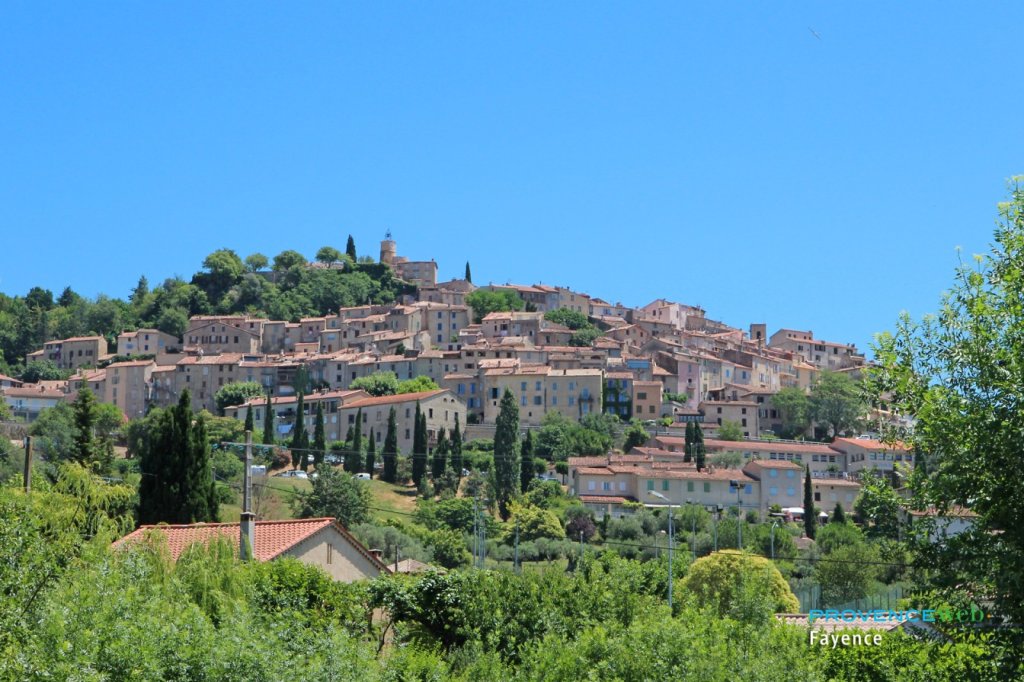
The Dracénie and the Fayence Region
This is the Var hinterland, thirty minutes from the sea yet a world away from its atmosphere. Two neighboring regions, each with its own character. The Dracénie’s vineyards stretch out around Draguignan in the Argens Valley. The Fayence region’s villages cling to the foothills, facing south.

People come here for three things: hilltop villages that are still inhabited, with their narrow streets, fountains, and markets; a rich cultural heritage, from the Abbey of Thoronet to the Roman aqueducts; and a countryside dotted with vineyards and olive groves where you can get around without ever having to wait in line.
It’s also the best base for exploring the French Riviera. Cannes is 45 minutes away, Saint-Tropez an hour, and the Verdon Gorge an hour. And the prices here are a world apart from those on the coast.
We’ll tell you which villages to stop in, the sites to see, and offer helpful tips for planning your vacation.
The villages of the Fayence Region
Nine villages stretch along a single south-facing ridge. Here are three villages we consider must-sees:
Seillans
Seillans is listed among the most beautiful villages in France, and it’s the area’s main attraction. The village is built in terraces, featuring a Saracen gate, a feudal castle, and the Placette du Thouron.
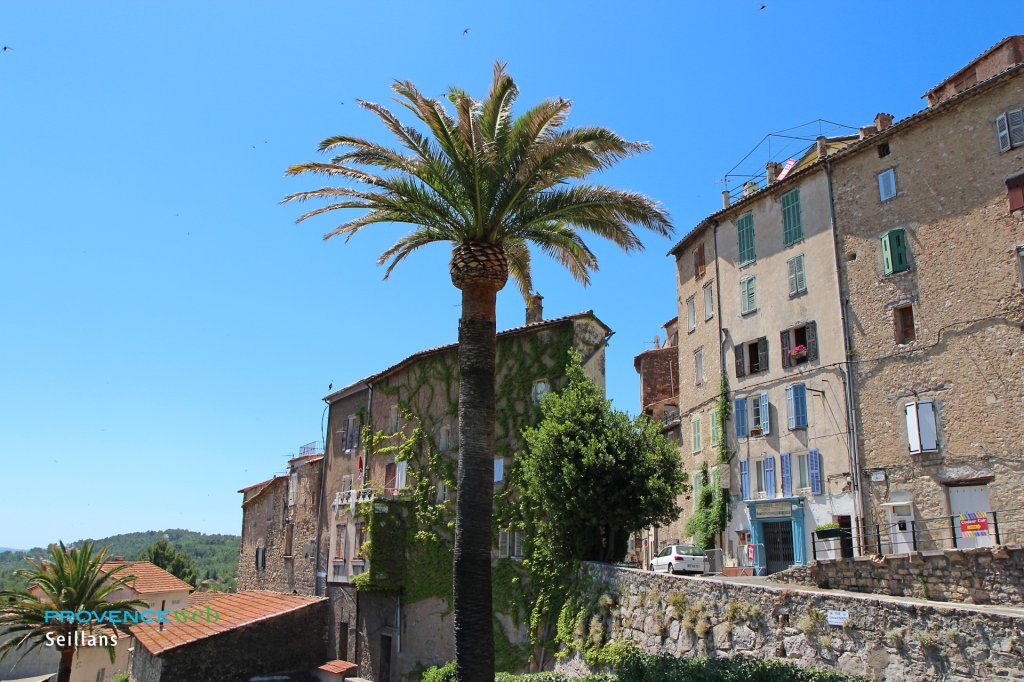
Max Ernst spent his final years here with Dorothea Tanning. The collection he left to the town is open to visitors. A short distance away, the Notre-Dame-de-l’Ormeau Chapel houses a remarkable carved altarpiece. The village is inhabited year-round, which makes all the difference during the off-season.
Mons
Mons is perched at an elevation of 814 meters on a rocky spur and is the highest village in the Fayence region. From Place Saint-Sébastien, the view stretches across the Estérel, the Maures, and the entire coastline. On a clear day, Corsica is sometimes visible.
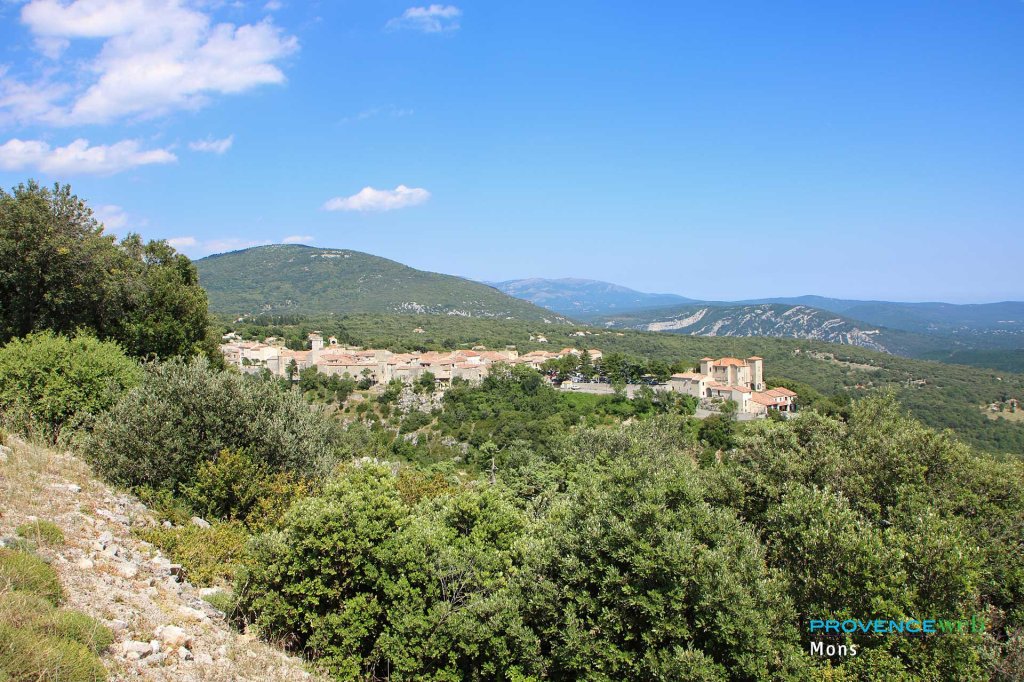
This landmark is called La Roche Taillée. It is a trench carved into the rock by the Romans to accommodate the aqueduct that carried water from the Siagnole River to Fréjus over a distance of forty-five kilometers. The 18-kilometer Megalith Trail connects several dolmens around the village. For seasoned hikers, Mont Lachens rises to 1,714 meters: it is the highest point in the Var.
Fayence
The village of Fayence, which gives its name to the region, still has its clock tower, its Saracen gate, and its Mitan oven. Tourrettes flows seamlessly from it, featuring its agricultural eco-museum.
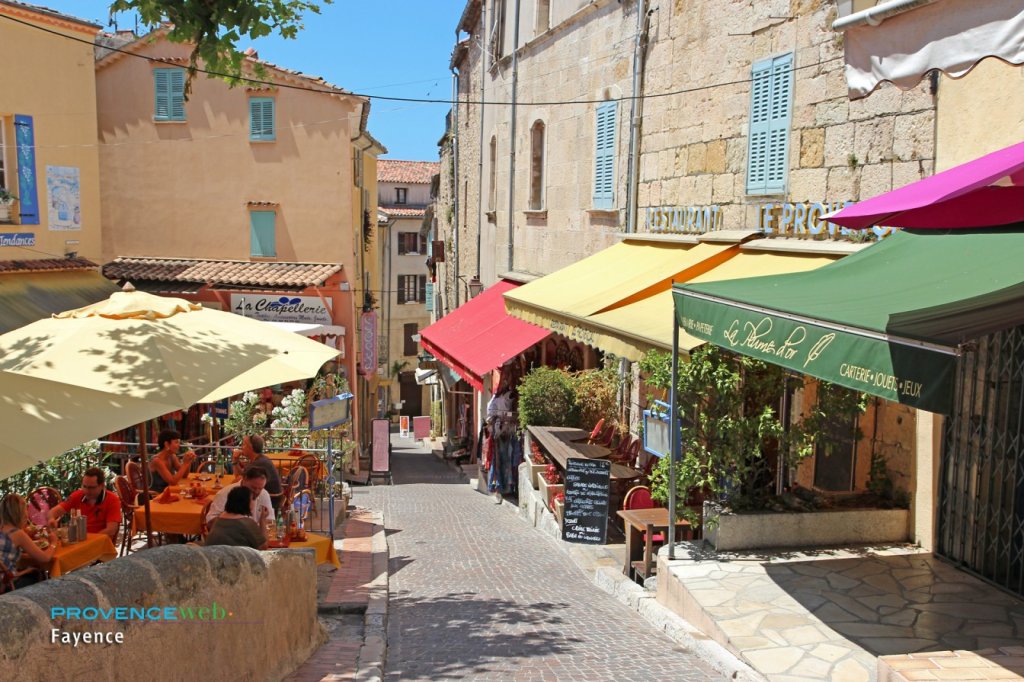
Below, the Fayence plain is home to an airfield entirely dedicated to gliding. Gliders take off there year-round, carried by the thermal currents generated by the surrounding terrain. Introductory flights are available to visitors: it’s the most unique experience offered in the region. Lake Saint-Cassien, just twenty minutes away, rounds out the experience with its supervised swimming area and pedal boats.
The Villages of Dracénie
Head south of the highway and the landscape opens up. Here you’ll find vineyards, olive groves, and the Argens plain.
Bargemon
Bargemon is nestled against a hill at an elevation of 480 meters, facing due south. The village has preserved much of its medieval wall and four gates dating from the 12th and 16th centuries: the Prison Gate, the Castle Gate, the Clock Tower Gate, and the Clos Gate.
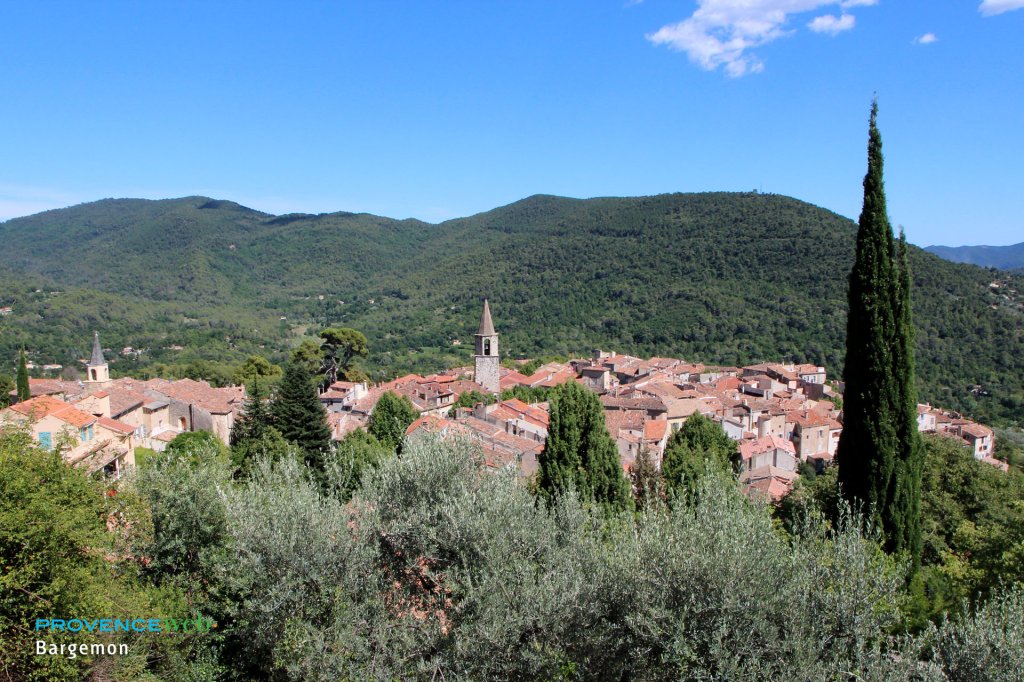
Water sets the tone. Fountains are everywhere, including the one on Place Chauvier and the Poissonnerie fountain, the oldest of them all. The washhouse in the Couchoire neighborhood rounds out the stroll. The Church of Saint-Étienne, built in the 15th century in the Provençal Gothic style, stands outside the old ramparts, allowing it to be admired from several vantage points throughout the village.
The village also has four small museums, including the Honoré Camos Museum and Gallery, housed in a former chapel, and a surprising typewriter museum. Check the hours: the smaller ones often close during the off-season.
Finally, head up to the Col du Bel-Homme to the north. The orientation table overlooks the village from a height of more than five hundred meters, with a view all the way to the sea.
Les Arcs-sur-Argens
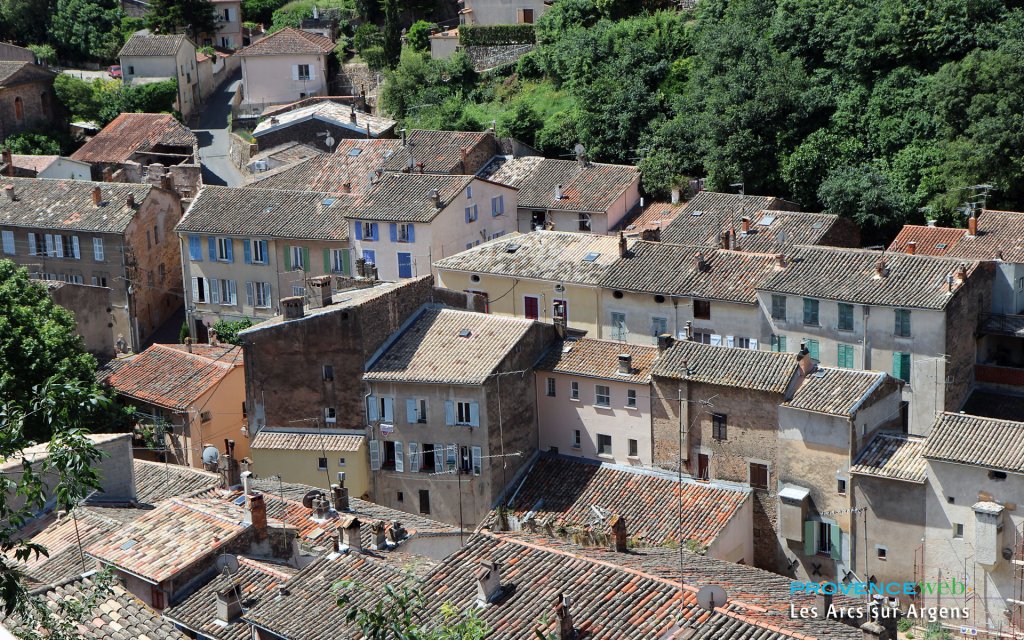
The old village of Les Arcs-sur-Argens, known as Le Parage, winds in a spiral around the castle ruins. Covered alleyways and vaulted passageways form a cohesive whole.
Four kilometers away, the Sainte-Roseline Chapel is worth the trip on its own. The building dates back to the 11th century and houses the remains of Roseline de Villeneuve, who died in 1329. Restored in 1969 thanks to the patronage of Marguerite Maeght, it has been enriched with modern works of art: a large mosaic by Marc Chagall created in 1975, stained-glass windows by Bazaine and Ubac, and a lectern by Diego Giacometti. A rare fusion of Romanesque and 20th-century art.
Lorgues
Lorgues is a large wine-growing town, featuring a square shaded by plane trees and one of the largest churches in the Var. The Tuesday morning market is among the most popular in the hinterland.
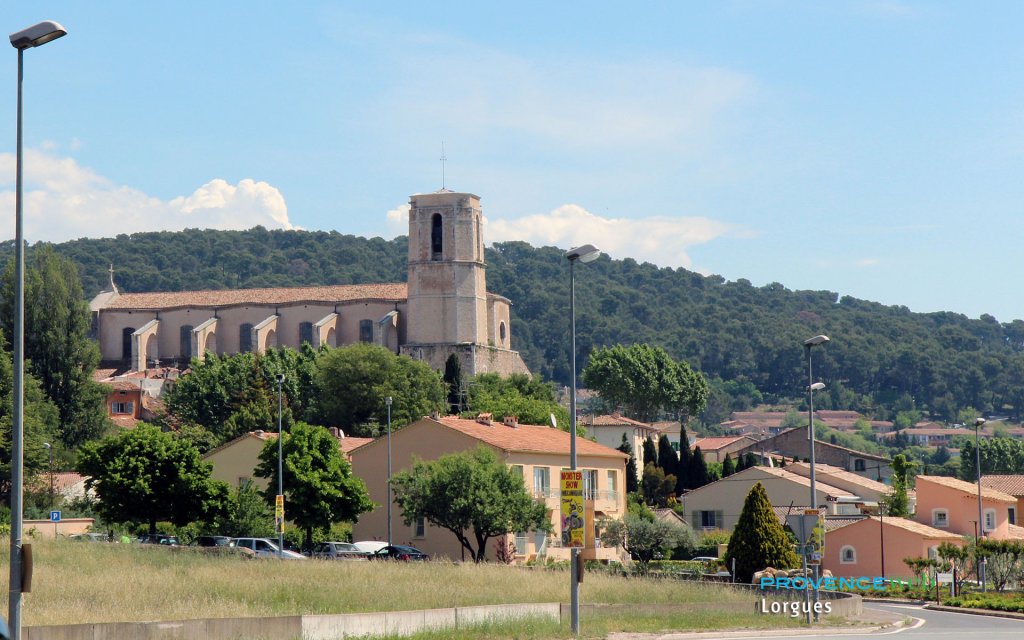
All around, the “Côtes de Provence” appellation vineyards stretch toward Taradeau, Vidauban, and Flayosc. Many are open to visitors and offer tastings. This is the most pleasant part of the region, where you can drive aimlessly from one winery to another.
Draguignan
Draguignan is the region’s main town and its natural gateway. The historic center is centered around its clock tower, with a Provençal market held in the town squares several times a week.
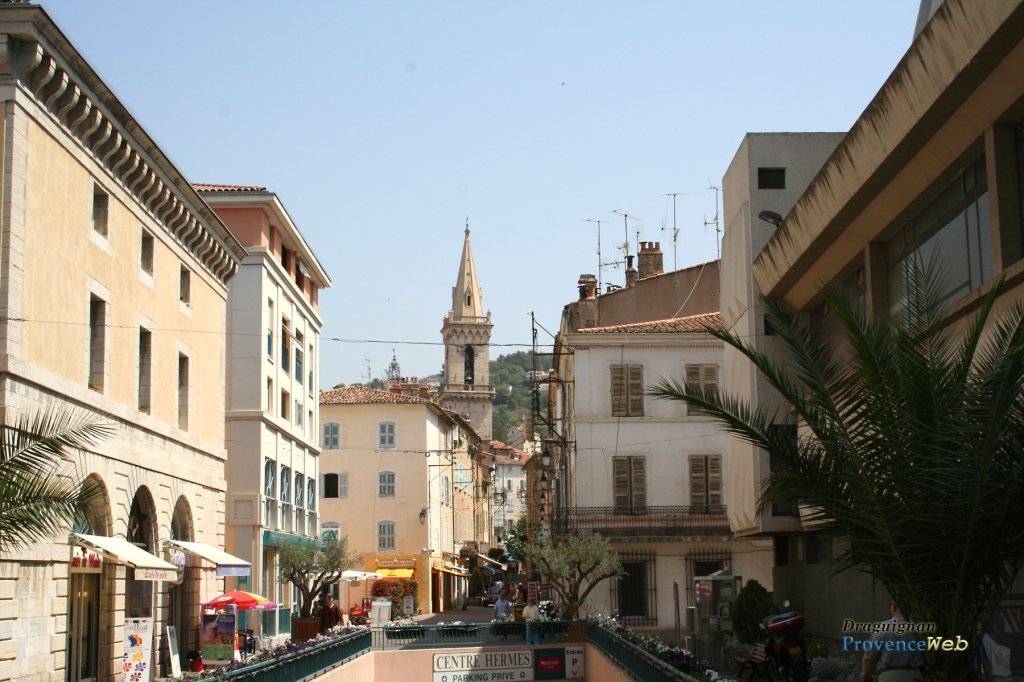
Two sites are worth a stop. The Pierre de la Fée, at the northern exit, is a large dolmen—one of the most imposing in Provence. And the Museum of Folk Arts and Traditions offers a genuine insight into rural life in the Var region, which is helpful before setting out to visit the villages.
The city is also home to the American Cemetery of the Rhône, where soldiers who fell during the Provence landings in August 1944 are buried. The site is understated and perfectly maintained.
Just half an hour from the French Riviera, the Dracénie and the Fayence region offer the same light, the same vineyards, and the same stone villages—but with plenty of space, tranquility, and reasonable prices.