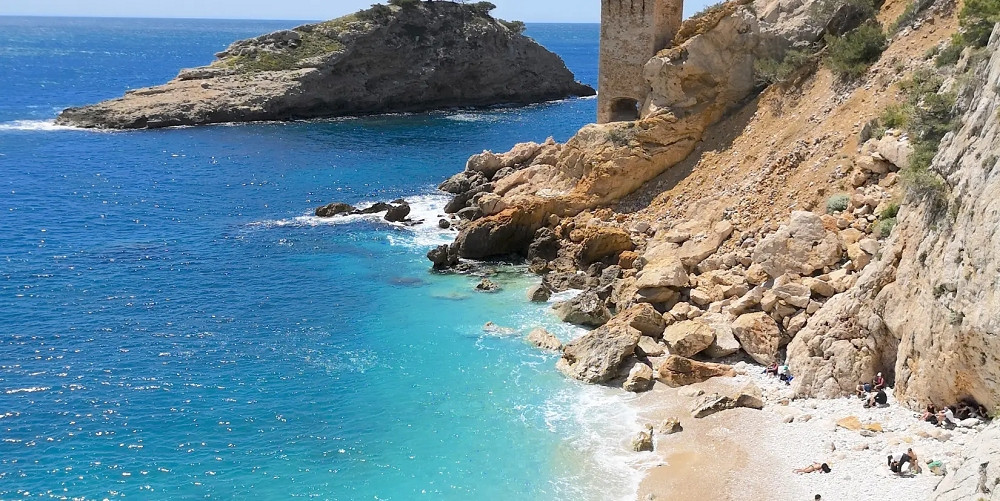

Nestled between Sainte-Victoire and the Durance River, the Pays d'Aix boasts one of France's most elegant cities of art and a constellation of villages where you'll find yourself lingering longer than expected.
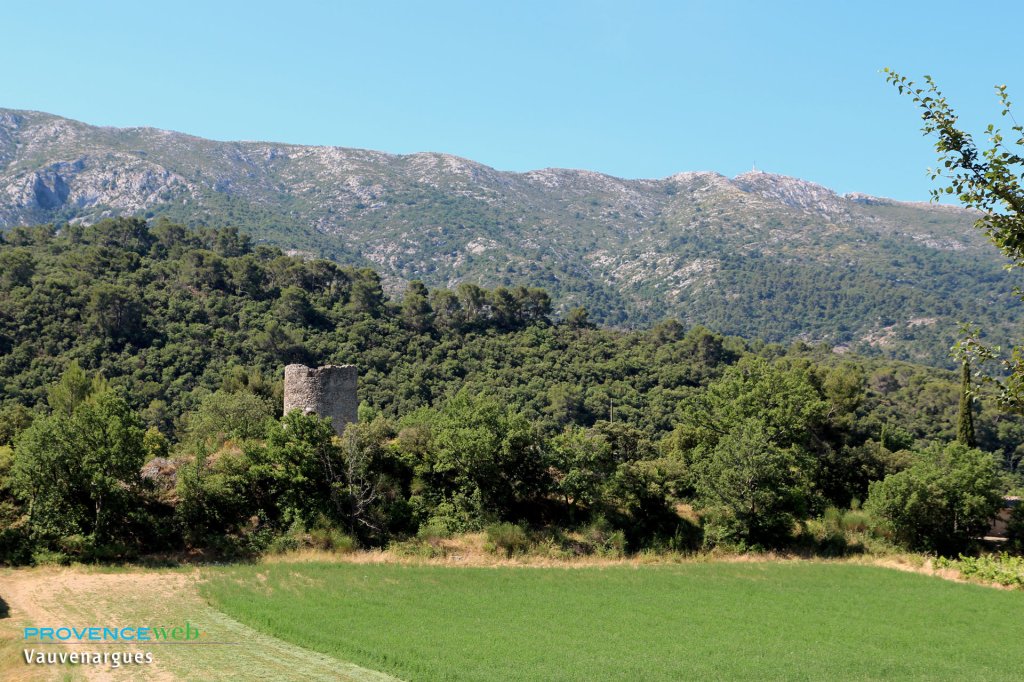
The Pays d’Aix comprises 36 municipalities grouped around Aix-en-Provence, in the heart of the Aix-Marseille-Provence metropolitan area. The Pays d’Aix region stretches from Montagne Sainte-Victoire to the Durance River, from Tholonet to Pertuis. Here you’ll find one of France’s most elegant cities of art, along with villages that change character every fifteen kilometers.
Aix-en-Provence sets the tone: mansions, fountains, music salons, and daily markets. All around, each town in the Pays d’Aix cultivates its own traditions. Ventabren with its terraces, Vauvenargues with its castle, Saint-Antonin-sur-Bayon at the foot of Mont Sainte-Victoire, Rognes with its vineyards, and Meyrargues with its gorges.
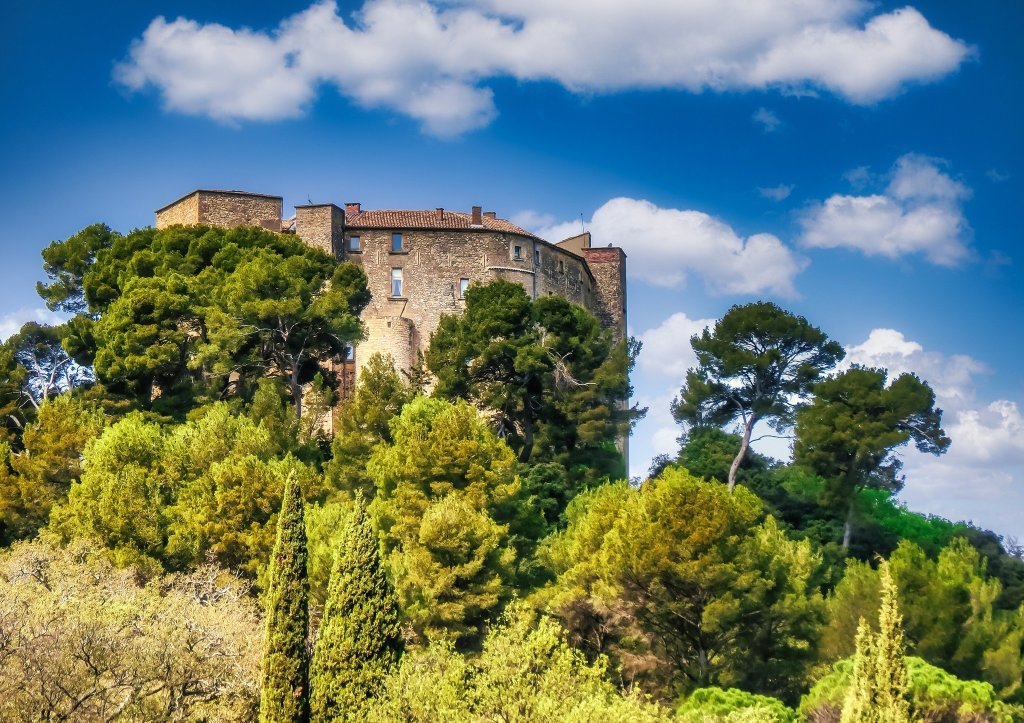
The outdoors makes up the other half of your stay: hiking trails, vineyards, natural sites, and sweeping panoramic views. Plan on three days to see the highlights, or a week to get into the Provençal rhythm.
We’ll point you toward the sites we think are worth seeing, activities to book, transportation information, and useful tips for planning your vacation.
The Beautiful Villages of the Aix Region
Around Aix-en-Provence, every town in the Aix region has its own reason to be visited. Here are four villages that each deserve a half-day visit.
Ventabren
Perched at an elevation of 252 meters, Ventabren overlooks the Arc Valley and offers a distant view of Sainte-Victoire. You can walk up through the old village along its cobblestone streets to the ruins of Queen Jeanne’s castle.
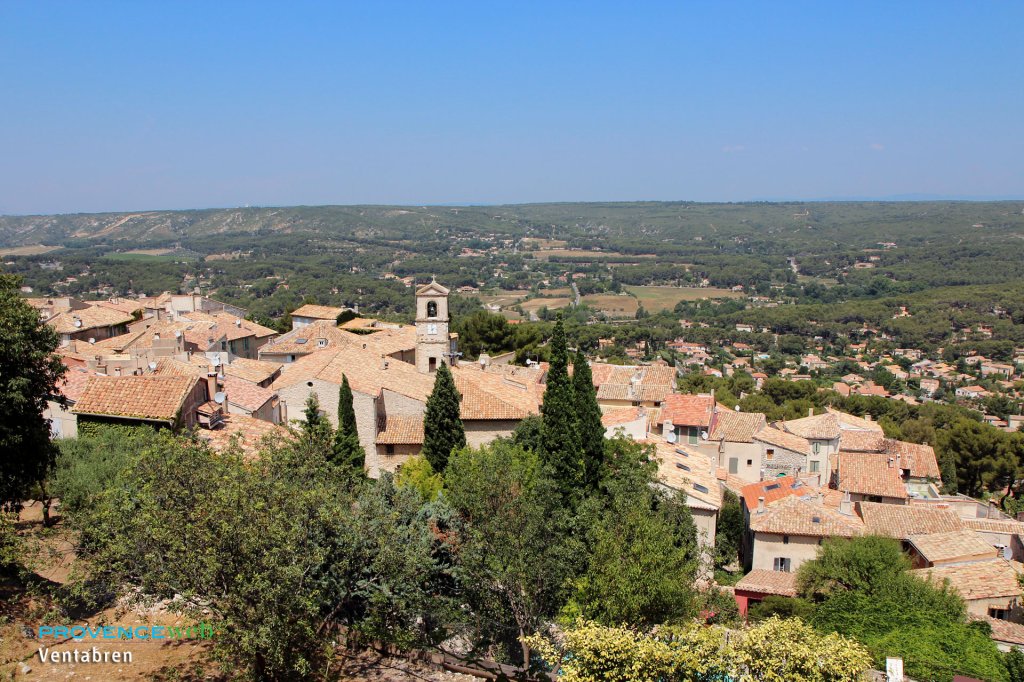
Below, the Roquefavour Aqueduct spans the valley at a height of 83 meters: built between 1842 and 1847 to carry water from the Durance River to Marseille, it is the largest stone structure of its kind in the world. The Sunday morning market remains the best time to stroll through the village.
Le Tholonet
Ten minutes from Aix, the Cézanne Road leads to Le Tholonet along a plane-tree-lined avenue that the painter walked hundreds of times.
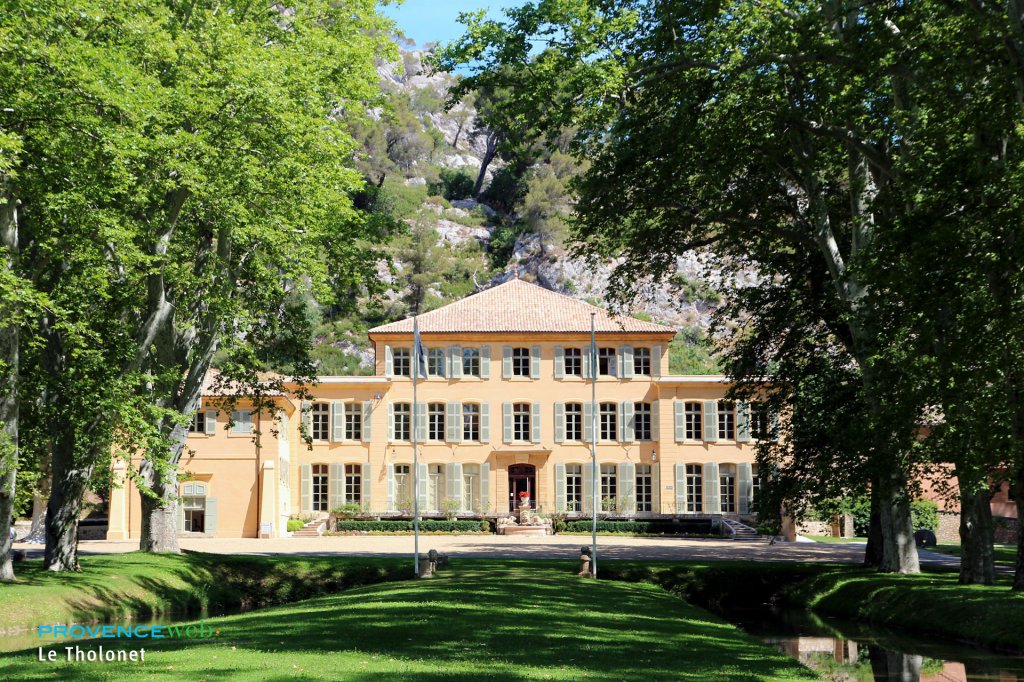
The 18th-century château, now the headquarters of the Société du Canal de Provence, opens onto a traditional park. The village serves as a starting point for hikes to the Zola Dam and the southern slope of Sainte-Victoire. The shaded restaurant terraces round out the experience.
Vauvenargues
On the other side of the mountain range, the road climbs and the landscape becomes more rugged. Vauvenargues is home to its Renaissance castle, which Picasso purchased in 1958 and which became his final resting place.
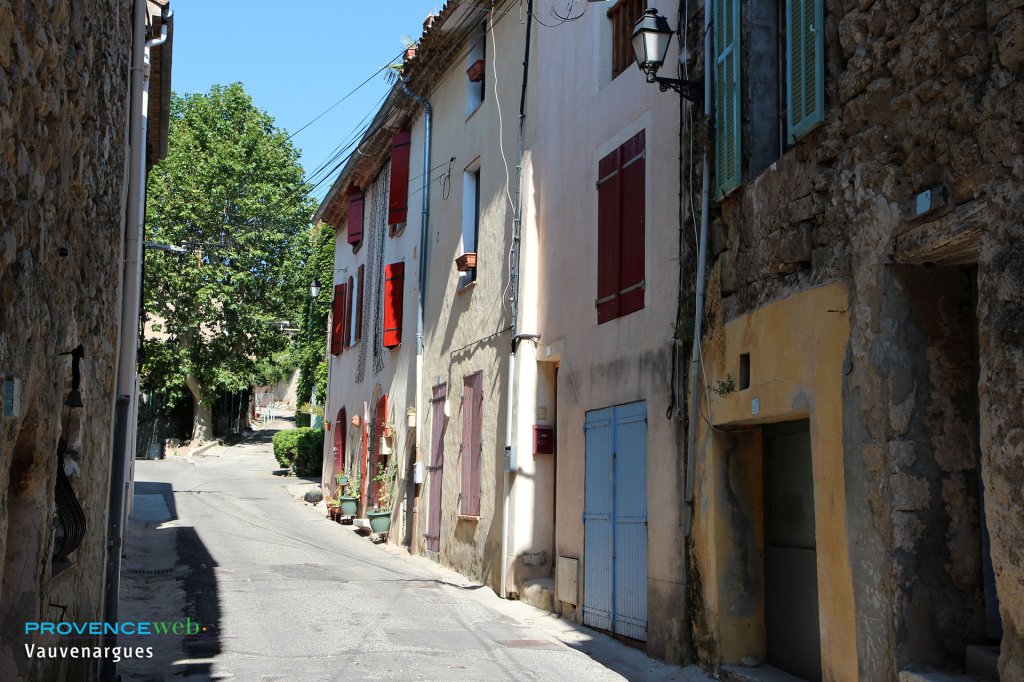
It can be seen from the road, facing the mountain, but the interior is not open to the public. The village also serves as a base for outdoor activities, nestled between the Infernet Valley and the ridges.
La Roque-d’Anthéron
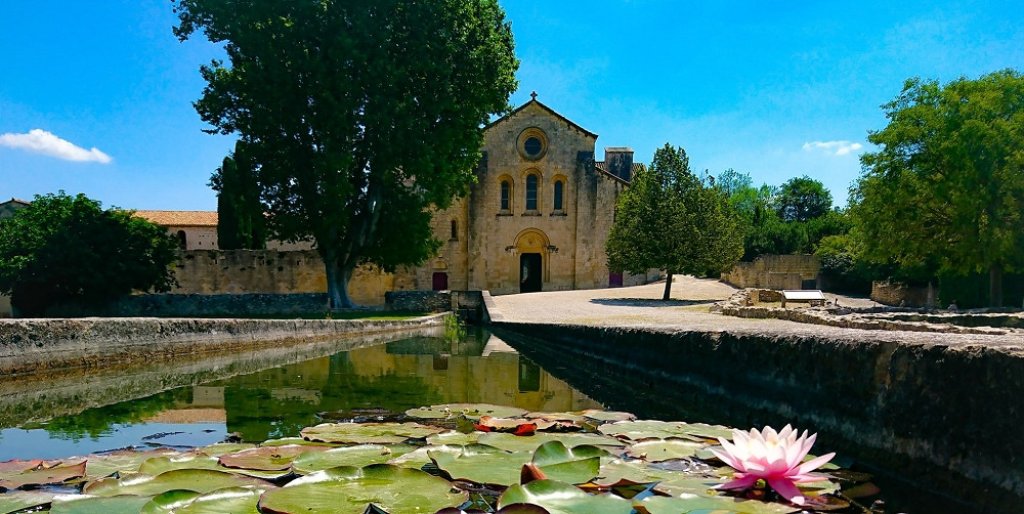
To the north of the region, the Durance River changes the atmosphere: greener, cooler, and quieter. La Roque-d’Anthéron is home to Silvacane Abbey, founded in 1144, one of the three Cistercian abbeys in Provence along with Sénanque and Le Thoronet.
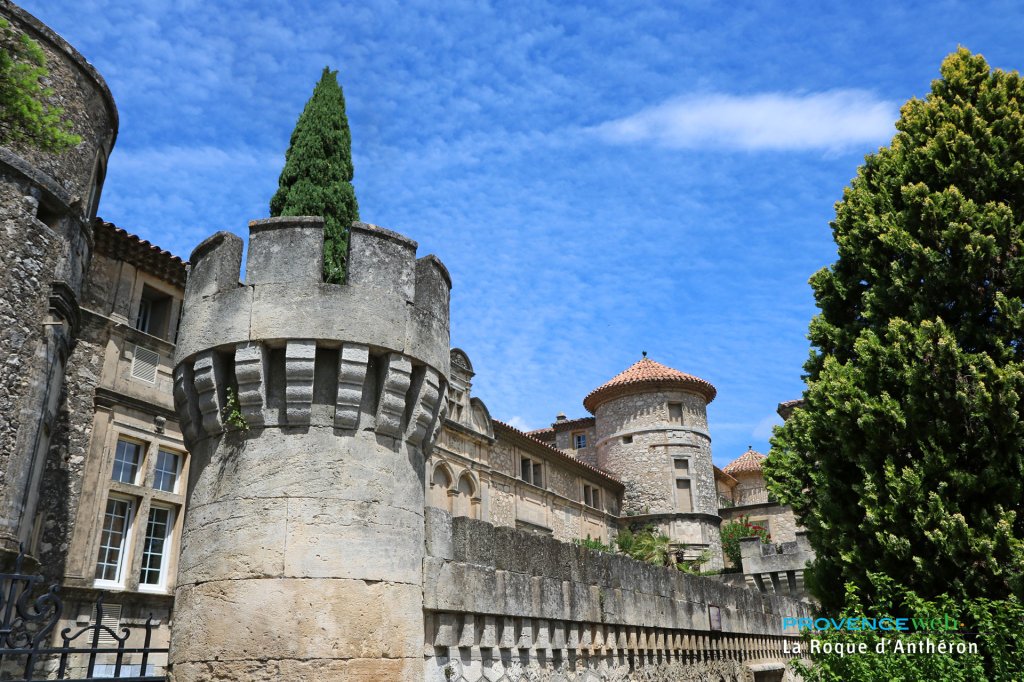
Every summer, the international piano festival takes over the grounds of the Château de Florans, beneath the century-old sequoias. The concerts in the cloister of Silvacane, held in the late afternoon, are the most intimate.
These four villages take no more than two days to visit. But they offer a good sense of what the Aix region has to offer: art, stone, water, and scenic views.
Aix-en-Provence
And then there’s the city, which isn’t a village but which it would be a mistake to treat as just a stopover. Aix-en-Provence boasts a row of 17th- and 18th-century mansions in the Mazarin district, fountains at every intersection, and the Cours Mirabeau lined with plane trees.
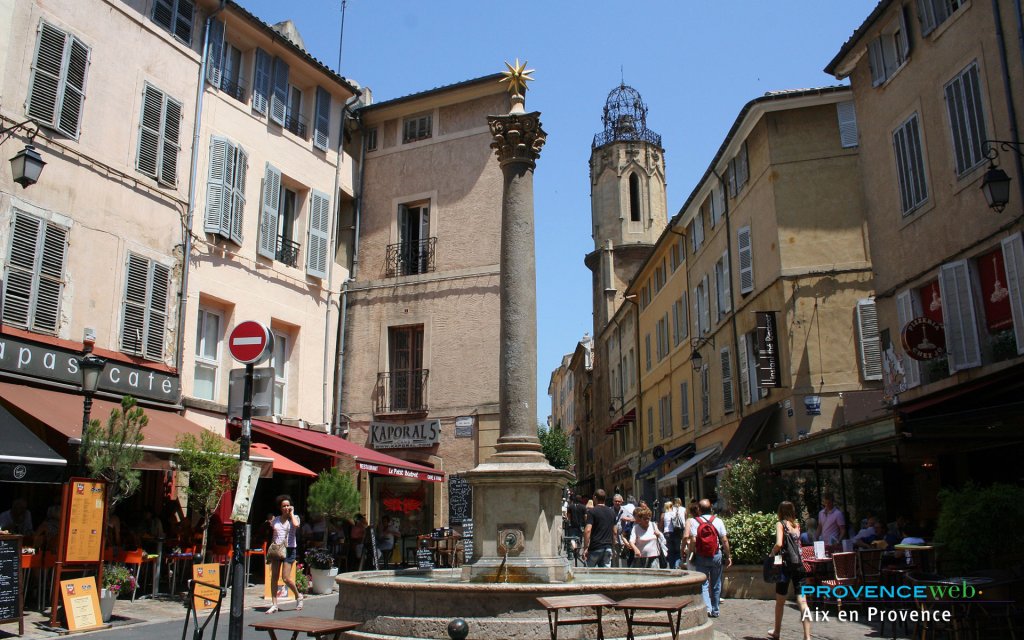
The market at Place Richelme is held every morning, while the one at Les Prêcheurs takes place three times a week. Add to that the Granet Museum, Cézanne’s studio, and the opera festival in July: the city of Aix alone is worth two full days of exploration.
Practical information about the Aix region:
Population: 400,148
Municipalities: 36
Main city: Aix-en-Provence
Department: Bouches-du-Rhône (and Pertuis, in Vaucluse)