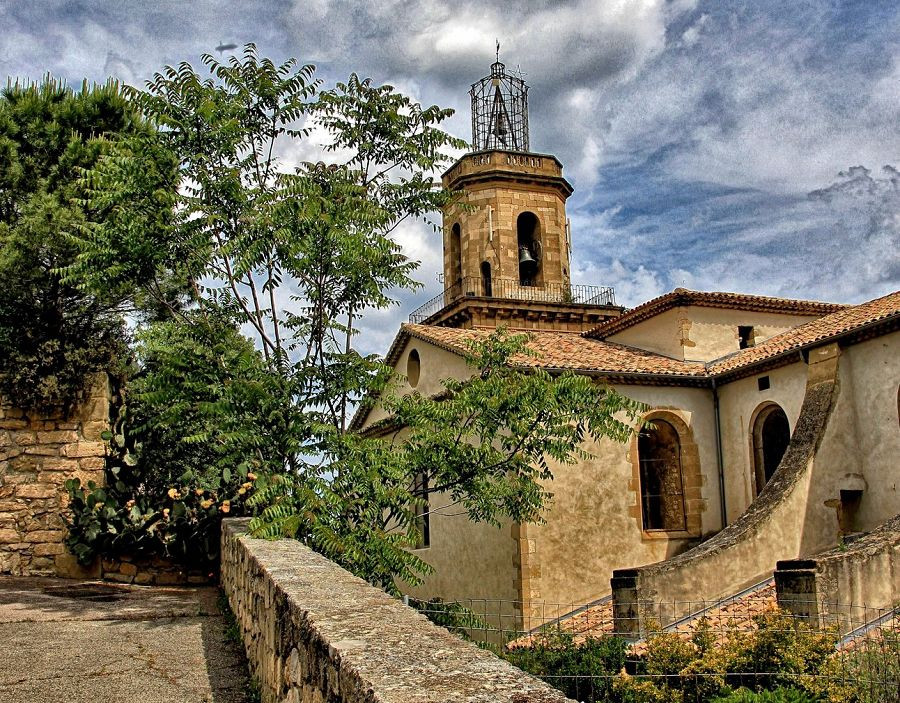

Lamanon
Last update on
Oct 13, 2026
8km north of Salon de Provence, take the N538, then the scenic D17.
8km north of Salon de Provence, take the N538, then the scenic D17.
Lamanon is accessed via a beautiful avenue lined with tall plane trees. It leads to the portico of the château, built in 1660 in the middle of a private park.

The small village then stretches out at the foot of the Alpilles mountain range, 8 km north of Salon-de-Provence. Leave your car in the church square. A hundred meters further on, a trail climbs toward the Calès site. The cliff there is pierced by 116 caves, which were inhabited from prehistoric times through the 16th century.
Located between Cavaillon and Aix-en-Provence, this town in the Bouches-du-Rhône department is best explored on foot, at a leisurely pace. A one-hour stroll is enough to trace back through millennia of history.
Before reaching the village, you’ll pass along a pretty little road lined with tall plane trees that leads to the entrance of Lamanon Castle.
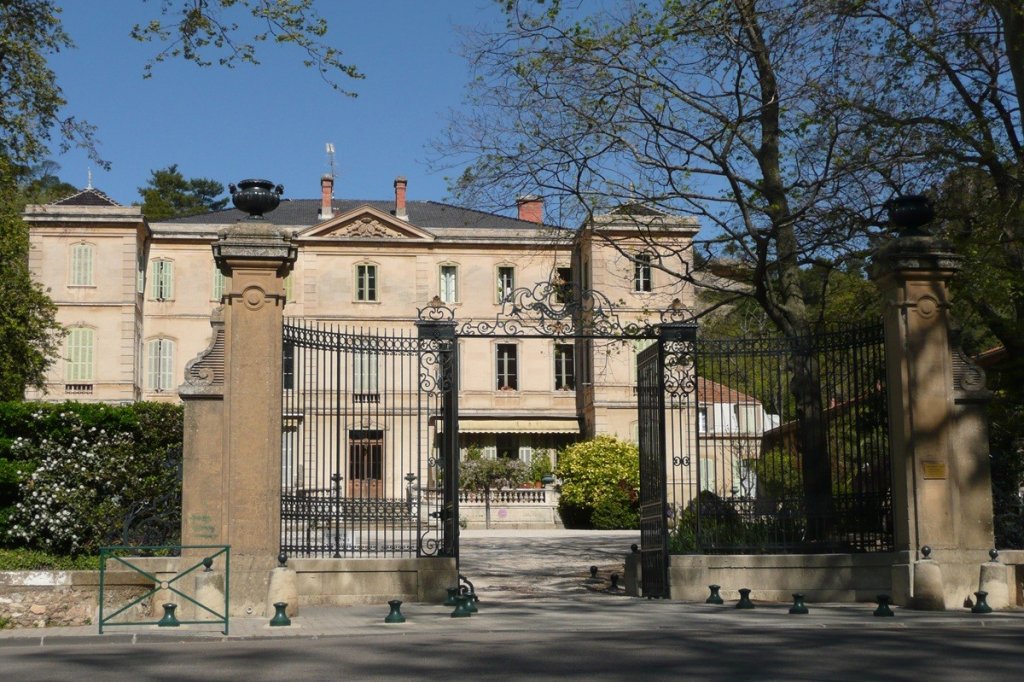
This magnificent residence (private property), surrounded by lush green grounds, was built in 1660 by one of the lords of Cadenet.
In 1745, the Marquis Marck Tripoli de Panisse had about fifty houses built near the castle to house the families of the farmworkers and servants who worked there. This is how the village of Lamanon took shape.
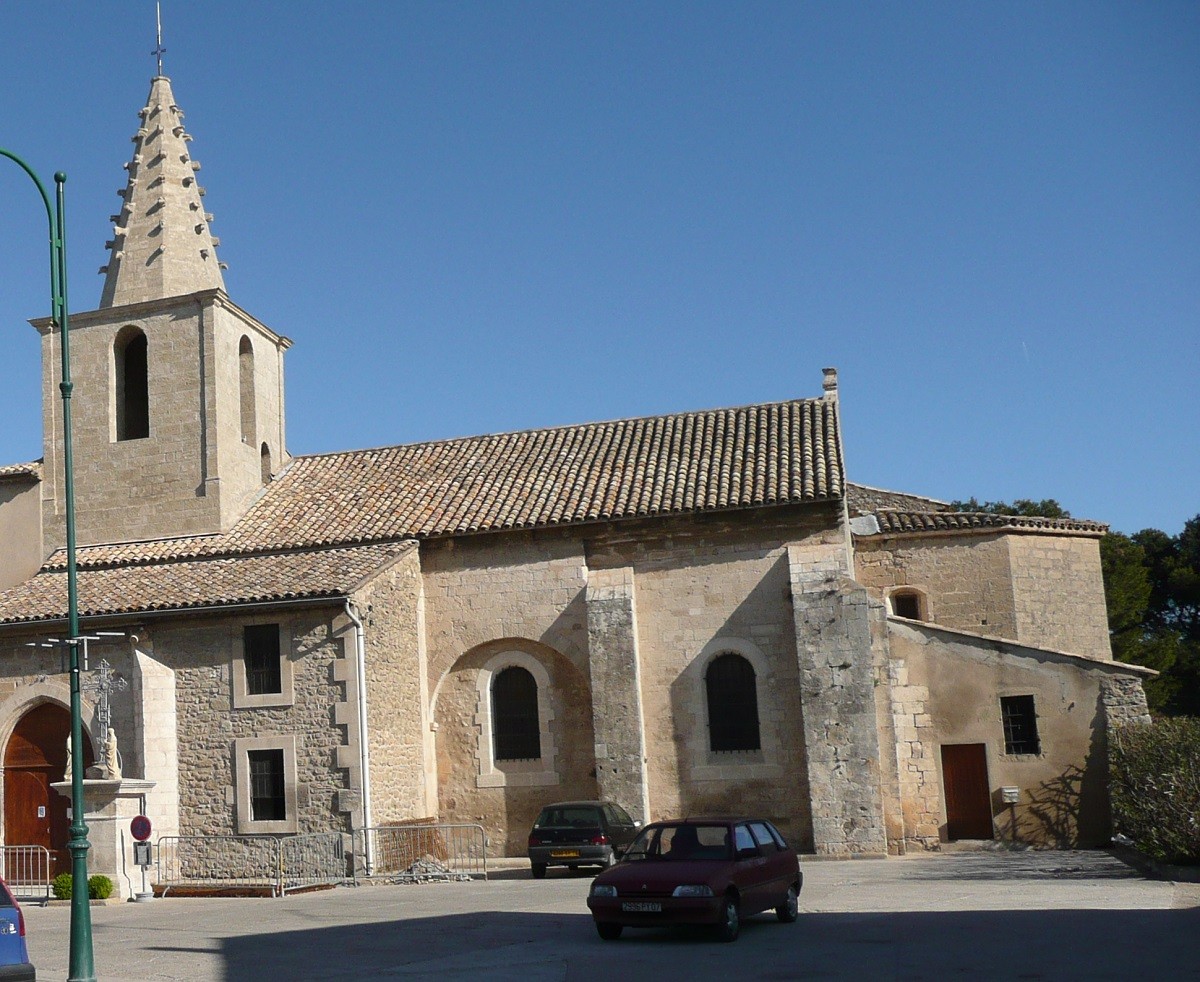
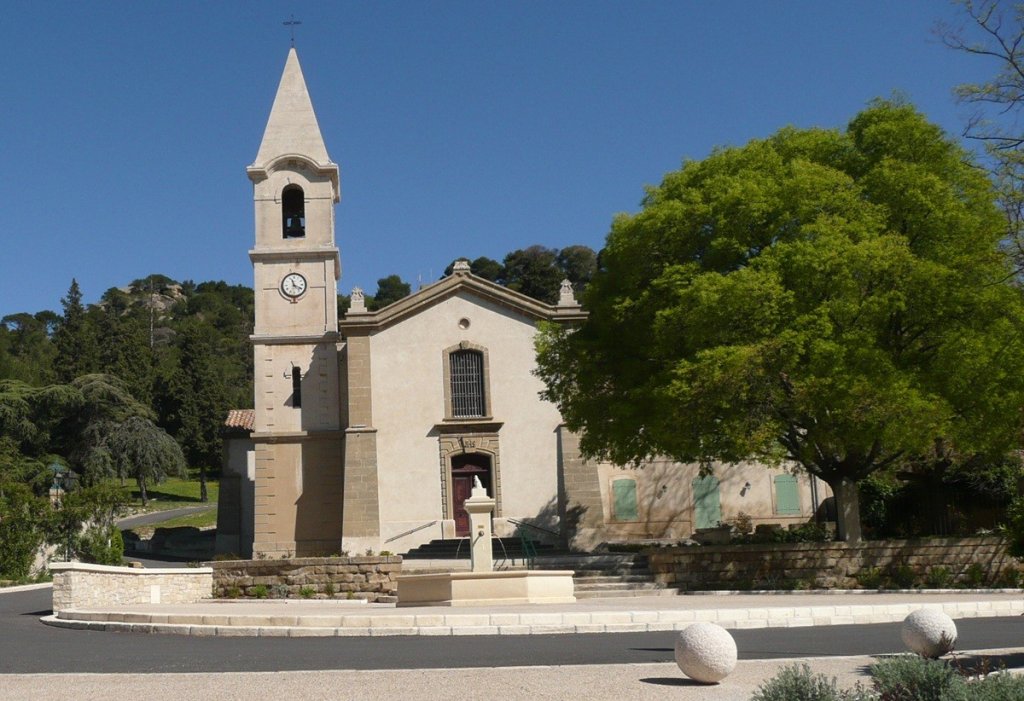
Next to the castle, you’ll find the church and its tall bell tower; completed in 1783, it was restored in 1988. You can park in the square in front of the church and continue your tour on foot.
A few meters away, you’ll see the main street running through the village, lined with rows of small houses, each with a tiny front yard facing the street. They look very similar but are actually all different—charming and sprightly with their stone facades, colorful shutters, restored antique doors, and abundant flowering greenery. You can imagine interiors full of charm, with typical Provençal furniture, an atmosphere more reminiscent of beautiful home decor magazines than the workers’ homes of yesteryear.
You’ll discover a vast, long esplanade framed by cliffs dotted with troglodytic dwellings: the Calès Caves, which sheltered people during the Neolithic period.
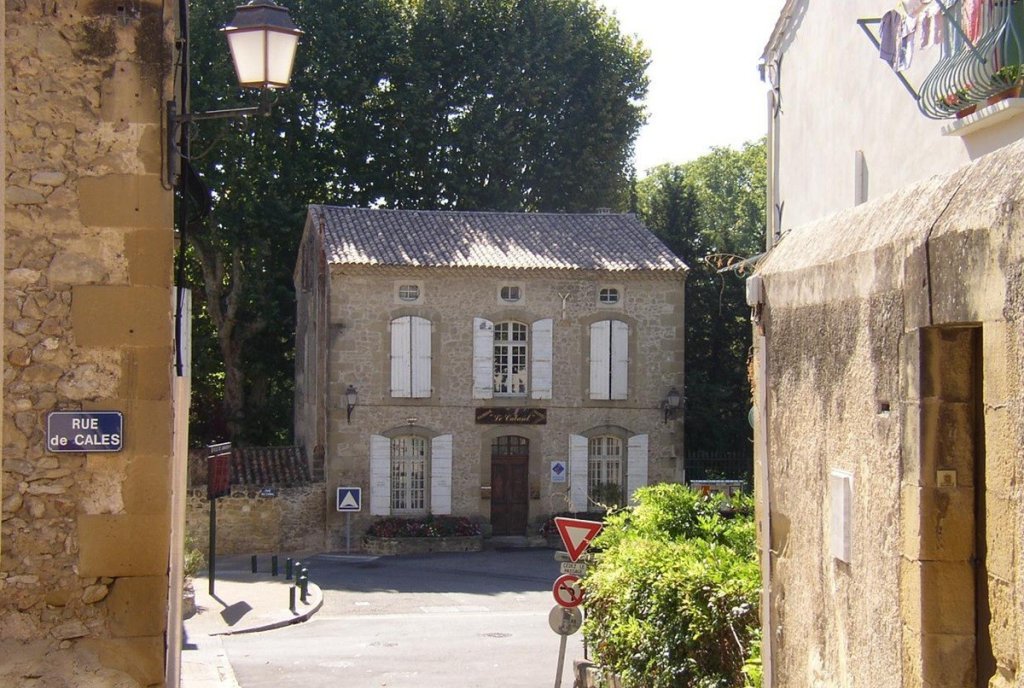
Remains of medieval fortifications were also discovered, as well as the ruins of a castle that are still visible today. You can learn more about the Calès site by visiting the Calès St Denis Museum, located in a former mansion on Place du Cabaret and dedicated to archaeology, the troglodytic site, and traditional crafts.
As you pass by the castle, you can admire a 400-year-old plane tree designated a natural monument: 25 meters tall, with a trunk 8 meters in circumference and a canopy spanning 1,250 square meters.
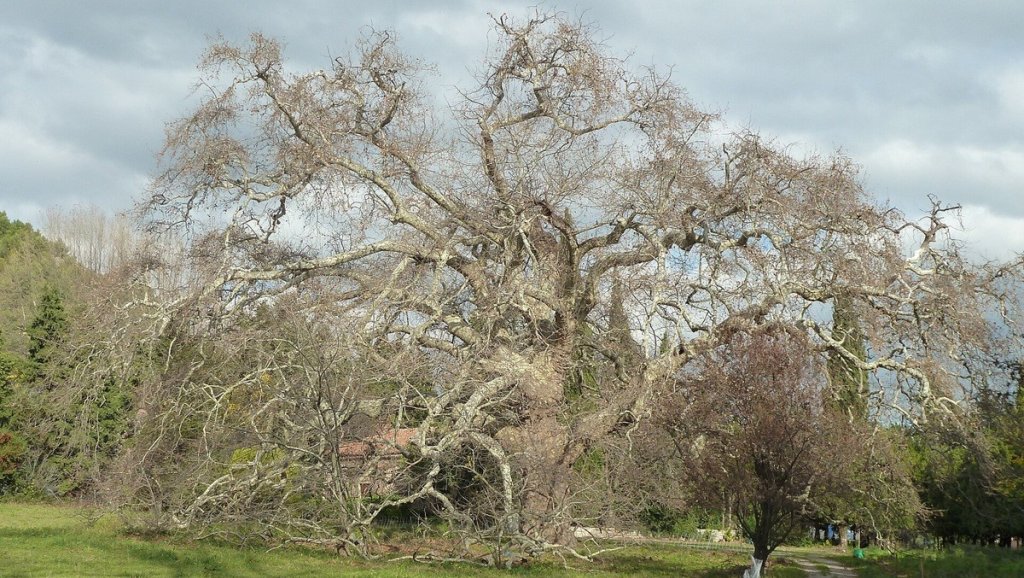
It’s no wonder they call it the Giant of Provence here, it’s truly majestic!
12th-century Chapel of St Denis.
Cales St Denis Museum.
Craft fair in June.
Walking, horse riding and mountain biking.
Tennis. Boules. Pont Royal golf course at Mallemort (10 km).
Summer events.
Discover hotels in this Provençal town and the surrounding area: prices, reviews, and availability. Whether you're looking for charming hotels or convenient options, compare and choose on Expedia.
Discover our selection of houses, villas and apartments on Airbnb for an authentic stay in this Provençal village. You will love your vacation here.
We’ve received several questions from you about this small village in the Bouches-du-Rhône department. Here are our answers to your most frequently asked questions.
A visit to the Calès site is the highlight of any stay in Lamanon. Green markers start 100 meters (330 feet) behind the church. The Calès Saint-Denis association sells a visitor guide for €8.
In the village, the stroll continues along the Grand Rue and its rows of houses. Life here moves at an easy pace. Before you go, check recent reviews and summer access rules for the sites.
By car, take the A7 highway to exit 26, Sénas. The D538 then reaches the village in a few minutes. From Salon-de-Provence, the route follows the N538 and then the D17 for 8 kilometers (5 miles).
By public transportation, the nearest train station is in Salon-de-Provence, just next door. A road map helps you locate the Calès site as soon as you enter the village.
Lamanon's sights are all within a short walk of each other. The Saint-Denis de Calès church dates back to the 12th century. The ruins of the Saint-Jean and Sainte-Marie chapels overlook the site.
To the west, a statue of the Virgin Mary watches over the rooftops and offers lovely views. In the Parc des Platanes, a 16th-century plane tree draws every eye. The interactive map on this page shows each stop.
The Alpilles range begins right at the edge of the village. Several marked loops link the Calès caves to the surrounding countryside. The trails are easy enough for families.
In summer, access to the range is restricted depending on wildfire risk. Check before every hike. For a more challenging outing, Mont Ventoux is just over an hour's drive away.
The village celebrates Saint John's Day in June in the Parc des Platanes. Traditional dancing and a bonfire set the tone for the evening. The Lamanon en Fête association organizes it with the town hall.
In July, Bastille Day takes on a Camargue flavor. On the evening of the 13th, the town hall hosts a free reception. On the 14th, an abrivado bull run and bull games bring the village to life. Check the town hall calendar for upcoming cultural events.
Lamanon mainly offers gîtes and vacation rentals. These suit a quiet vacation at the foot of the Alpilles. Prices vary with the season and the size of the property.
Book early for July and August. Compare guest reviews before you choose. Salon-de-Provence and Sénas add more lodging options nearby.
Lamanon's history begins in the Calès caves, inhabited since prehistoric times. In the Middle Ages, the hilltop village had more than 200 residents. It was abandoned in the 16th century.
In 1660, a lord of Cadenet built the château in the plain below. In 1745, the Marquis de Panisse built about fifty houses for his workers. The old village was reborn at the foot of this historic monument. Today, this heritage shapes local culture and the village's memory.